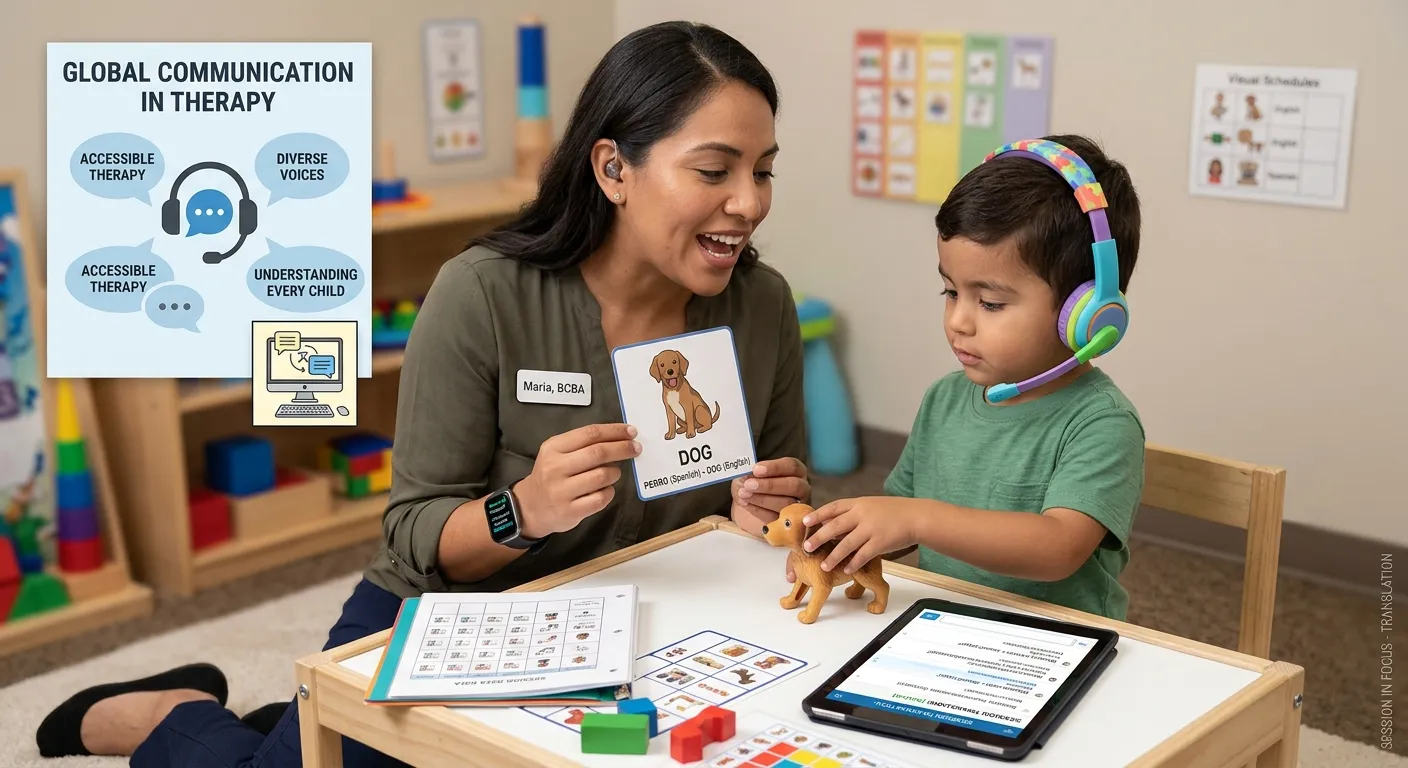

A technician shows up at 3:30 on a Tuesday. Your child is home from school, a grandparent is making tea, and the conversation in the kitchen is happening in Cantonese. The therapy plan was written in English. Who's translating, and how well?
That question matters more than most intake paperwork suggests. ABA works best when everyone at home can follow along, and that includes relatives who don't read English.
Translation and interpreting are two different jobs
Translators work with written words: the treatment plan, progress reports, consent forms. Interpreters work with spoken language in real time, during a session or a meeting. A provider might offer one and not the other, so ask about each separately.
A translated plan you can reread at the kitchen table is useful. So is an interpreter on the phone during a parent training call. You might need both, at different times.
Who's in the room
Quincy has one of the largest Asian American communities in Massachusetts, and plenty of households there speak more than one language at dinner. In Brockton, Randolph and Dorchester, you'll hear Haitian Creole, Cape Verdean Creole and Portuguese in waiting rooms. Many families in those towns want in-home therapy partly because home is where their language lives.
During a session, there are usually three possibilities. A bilingual technician, an interpreter who joins in person or by phone, or a family member who translates informally. The third option is common and it's the weakest. A sibling who's twelve shouldn't be carrying medical terms back and forth, and a parent can't both observe and translate at full attention.
What language should therapy happen in?
Families sometimes worry that therapy in English will push their home language aside. Bring that up at the first meeting. A good behavior analyst will ask which language your child hears most, which one you use for comfort and routines, and where your child is likely to need words outside the house.
Some families pick English for school skills and their home language for daily routines like dressing and meals. Others want everything in the home language for now. There isn't one correct mix, and the plan should reflect your choice.
Paperwork and your rights at school
If your child also has an IEP, the school side has its own rules. Federal special education law gives parents rights in that process, and free help exists for families who don't speak English as a first language. Federal education officials note that Parent Training and Information Centers help families, including parents whose primary language is not English, understand those rights and get through the process. Every state has at least one.
Ask the school for translated copies of evaluations, and for an interpreter at team meetings, before the meeting date, not at the door.
Questions for the first call
Get answers to these before any session is booked:
- Can I get the treatment plan and progress reports translated into our language?
- If a technician doesn't speak our language, how will parent training work?
- Do you use professional interpreters, and are they bound by confidentiality?
- Can grandparents or other caregivers join training sessions with an interpreter?
- What happens if my child switches between two languages during a session?
Don't assume the answer is yes or no. Services vary by agency and by town, and sometimes by the week, depending on staffing.
Making it work at home
Once sessions start, keep a short notebook in whatever language you're most comfortable with. Write down words your child used, a moment that went well, a question for the BCBA. Bring it to each check-in.
If you're looking for in home aba therapy quincy ma families can actually follow, ask about interpreting and translated documents on the very first phone call, and listen for a specific answer rather than "we'll figure it out."
A plan that grandma understands is a plan that gets used on Saturday mornings too.


























Sign in to leave a comment.