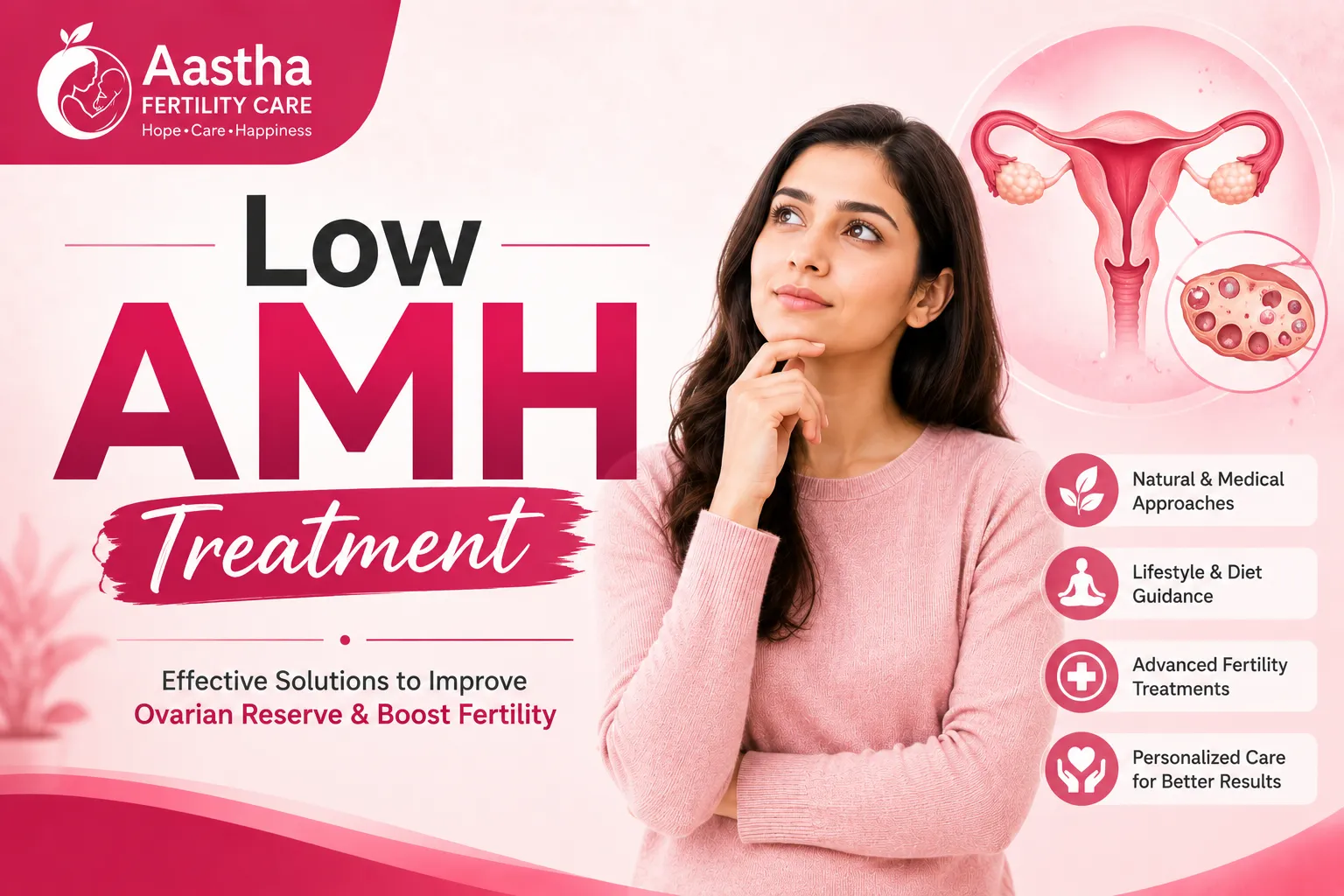

A low AMH result leaves most women with the same urgent question. What now?
What does this mean for my chances? What can be done? Is it too late?
The answer to all of these questions depends on factors that go beyond the number on a blood report. Age, overall health, egg quality, and the expertise of the team guiding treatment all play a significant role in what is possible.
This blog explains what low AMH actually means in practical terms and what treatment options are available in Jaipur for women dealing with this diagnosis.
AMH as a Fertility Marker: What It Tells You and What It Does Not
Anti-Mullerian Hormone reflects the size of the remaining follicle pool in the ovaries. More follicles produce more AMH. Fewer follicles produce less.
It is the most reliable single blood marker for ovarian reserve. But it is not a complete picture of fertility.
It does not tell you about egg quality. It does not tell you whether you will respond well to treatment. And it does not predict the outcome of any individual IVF cycle.
It is a starting point for a conversation, not the final word on what is possible.
Who Is Most Affected by Low AMH
While AMH naturally declines with age, some women are diagnosed with low AMH at an unexpectedly young age. This can occur in women who have had ovarian surgery for endometriomas or other cysts, those who have undergone chemotherapy or radiation, women with autoimmune conditions affecting the ovaries, those with a genetic predisposition to earlier follicle depletion, and women who smoke heavily, as smoking significantly accelerates follicle loss.
Understanding the cause informs both the urgency of treatment and the expected rate of future decline.
The Practical Impact on Conception
Naturally
Lower AMH reduces the probability of natural conception per cycle but does not eliminate it. Many women with low AMH conceive naturally, particularly those who are younger and whose egg quality remains relatively good. If there are no other fertility factors and AMH is mildly low, a period of natural attempts with close monitoring is reasonable.
Through IVF
In an IVF cycle, AMH predicts how many eggs are likely to be retrieved. Low AMH means fewer eggs, fewer embryos, and fewer chances per stimulation cycle.
However the relationship between AMH and IVF outcome is not linear. A woman with very low AMH who produces two chromosomally normal eggs and successfully transfers one has achieved the same outcome as a woman with normal AMH who produced ten eggs. The path is narrower but the destination can be the same.
Women in Jaipur facing a low AMH diagnosis can find targeted, individualised treatment options through a specialist low AMH treatment clinic that focuses on maximising what is available rather than focusing on what is limited.
Treatment Options Available in Jaipur
Individualised IVF Protocols
The most important intervention is not a medication or a supplement. It is the expertise to choose the right stimulation approach for each individual woman.
Some women with low AMH respond better to antagonist protocols. Others do better with flare protocols. Some need higher doses. Others paradoxically respond better to gentler approaches. An experienced team adjusts based on real response rather than applying a formula.
Mini IVF
A reduced stimulation approach that prioritises quality over quantity. Suitable for women who produce very few eggs regardless of dose and who may do better working with their natural response than fighting against it with high medication loads.
Natural Cycle IVF
For women with very low AMH who consistently produce minimal response to stimulation, working with the single naturally selected egg each month in an IVF cycle is sometimes the most practical and effective strategy.
CoQ10 and Targeted Supplementation
Coenzyme Q10 at doses of 400 to 600 mg daily is the most evidence-supported supplement for improving egg quality in women with diminished reserve. It works by supporting the mitochondrial function inside eggs, improving their energy production and developmental potential.
Vitamin D optimisation, omega-3 fatty acids, and a broad antioxidant-rich diet all support the cellular environment in which eggs mature.
DHEA Under Medical Supervision
Some studies support the use of DHEA as a pretreatment for women with low AMH preparing for IVF. It is not universally recommended and requires specialist oversight. When appropriate it is typically used for two to three months before starting an IVF cycle.
Preimplantation Genetic Testing
When embryo numbers are limited, ensuring that the embryos transferred are chromosomally normal is critically important. PGT-A selects the best available embryos and reduces the risk of a failed cycle or miscarriage when chances are already at a premium.
Urgent Egg Freezing
For women who are not yet trying to conceive but have received a low AMH diagnosis, urgent egg freezing is often the most important immediate action. The reserve will continue to decline. Eggs frozen now are preserved at their current quality level. This option becomes progressively less effective as time passes.
Donor Egg IVF
When a woman's own AMH is very low or undetectable, or after multiple failed own-egg IVF cycles, donor eggs provide a highly effective alternative. Young donors with good ovarian reserve provide eggs with significantly higher quality and success rates. The patient carries and delivers the pregnancy and the experience of motherhood is fully hers.
Why Acting Quickly Is Not Panic, It Is Strategy
Low AMH is a time-sensitive diagnosis. Not in a way that should cause panic. But in a way that makes thoughtful, prompt action the wisest response.
A woman of 31 with low AMH who freezes eggs now has options that she may not have at 34 or 35. A couple who begins IVF this year may have chances that narrow if they wait another year without acting.
Getting a consultation. Understanding your specific picture. Making a plan. These are the responses that serve you best.
What the Right Clinic Makes Possible
The treatment of low AMH is as much about expertise as it is about medication. The clinics that achieve the best outcomes for low AMH patients are those that individualise every protocol, monitor responses carefully, adjust quickly when needed, and approach each egg retrieved as a meaningful opportunity.
An experienced best IVF specialist in Jaipur brings that level of expertise and genuine care to every case. Low AMH is not a reason to be dismissed or offered only donor eggs without exhausting personalised options first. It is a reason for more careful, more individualised, more creative treatment.
In Conclusion
Low AMH changes the conversation about fertility. It does not end it.
It means the window may be narrower. It means acting sooner rather than later. It means finding a specialist who knows how to work with limited reserve rather than simply documenting its limitations.
Many women with low AMH have children. Through their own eggs, through donor eggs, or sometimes naturally. The path varies. But for most women, the path exists.
Find your specialist. Understand your specific situation. And take your next step with eyes open and confidence in the process.
























Sign in to leave a comment.