

Reliable laboratory testing depends on more than skilled operators and accurate measurement instruments. The environment in which a test takes place can influence the behavior of materials, components, and finished products. Changes in temperature and humidity may affect dimensions, chemical reactions, moisture absorption, electrical performance, and mechanical properties.
For this reason, laboratories across manufacturing, electronics, pharmaceuticals, automotive engineering, and materials research use controlled environmental conditions to improve repeatability. A well-designed testing process makes it easier to compare samples, investigate failures, and verify whether products meet defined quality requirements.
Why Temperature and Humidity Must Be Controlled
Temperature and humidity often interact. A material may remain stable under dry conditions but absorb moisture when relative humidity increases. Similarly, changes in temperature can influence condensation, evaporation, and the rate of certain chemical reactions.
Electronic assemblies may be affected by moisture-related corrosion, while packaging materials can experience dimensional changes or reduced barrier performance. Pharmaceuticals and other sensitive products may also require specific environmental conditions during stability studies.
Uncontrolled fluctuations can make it difficult to determine whether an observed change comes from the product itself or from differences in the test environment. Controlled conditions help reduce this uncertainty and support more meaningful comparisons.
Applications Across Different Industries
Electronics and electrical components
Electronic products may be exposed to temperature and humidity changes during storage, transportation, and operation. Environmental testing can help identify corrosion risks, insulation problems, connection failures, and weaknesses in protective enclosures.
Automotive manufacturing
Vehicle components encounter changing weather, cabin temperatures, moisture, and demanding operating conditions. Testing helps engineers assess seals, sensors, connectors, interior materials, and other components that must remain dependable.
Pharmaceuticals and packaging
Some pharmaceutical products and packaging systems require controlled conditions for stability evaluation. Temperature and humidity testing can help investigate changes in product quality, packaging integrity, and material behavior when conducted under appropriate validated procedures.
Plastics and construction materials
Polymers, sealants, coatings, and building materials can respond to changes in moisture and temperature. Testing helps manufacturers evaluate dimensional stability, surface condition, and resistance to environmental stress.
Selecting Suitable Environmental Test Equipment
Equipment selection should begin with the testing requirements. Laboratories need to determine the required temperature range, humidity range, chamber volume, control accuracy, uniformity, and recovery performance.
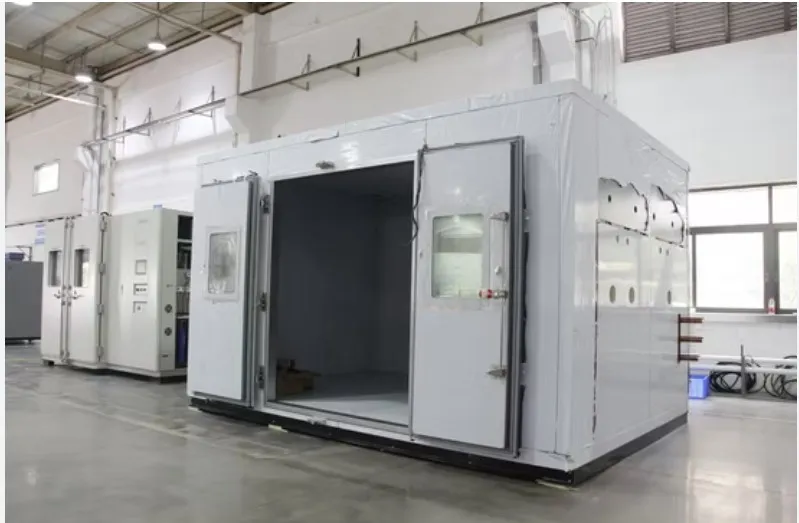
A LIB industry constant temperature and humidity chamber supplier may be considered when sourcing equipment for controlled temperature and humidity testing. Buyers should evaluate technical specifications, supported test methods, calibration provisions, service arrangements, and the supplier's ability to explain equipment limitations.
Chamber capacity also matters. Samples should fit comfortably without obstructing airflow or creating conditions that differ significantly from the intended test profile. Where several products are tested together, the arrangement should be documented and kept consistent across runs.
Designing a Repeatable Test Procedure
A repeatable procedure establishes how the test will be conducted from beginning to end.
Define environmental parameters
The procedure should identify target temperature, relative humidity, stabilization time, exposure duration, and any required transitions. These values should come from the relevant standard, product specification, or approved testing plan.
Prepare and condition specimens
Samples may require cleaning, preconditioning, or baseline measurements before exposure. The preparation method should be consistent so that initial differences do not distort the results.
Monitor conditions throughout the test
Recording environmental conditions helps verify that the required profile was maintained. Any significant deviation should be documented and assessed before the results are accepted.
Evaluate samples using defined criteria
After exposure, the laboratory should compare the samples against predetermined requirements. Measurements may include dimensions, electrical performance, mass, surface appearance, mechanical properties, or other application-specific indicators.
Understanding Temperature and Humidity Uniformity
A chamber's setpoint does not necessarily mean every point inside it has exactly the same conditions. Differences can occur because of airflow patterns, sample loading, heat generated by products, and the chamber's design.
Temperature and humidity uniformity should therefore be considered alongside control accuracy. Laboratories should follow the relevant equipment documentation and applicable standards when determining whether conditions are suitable for a particular test.
Periodic verification can help identify changes in performance. If the chamber is used for critical compliance work, documented calibration and qualification procedures may be necessary.
Maintenance, Calibration, and Documentation
Routine maintenance supports consistent equipment performance. Door seals, sensors, water systems, airflow components, and control systems may need inspection according to the manufacturer's instructions.
Calibration and verification should be performed at appropriate intervals based on the equipment, its use, and applicable requirements. Laboratories should maintain records of maintenance, calibration, test settings, sample identification, deviations, and results.
Clear documentation is especially important when testing supports supplier approval, customer requirements, or regulatory obligations. A well-organized record allows another qualified person to understand how the test was performed and why the final decision was reached.
Improving Laboratory Efficiency
Controlled environmental testing can improve efficiency by reducing ambiguous results and unnecessary repeat tests. When procedures are standardized, laboratories can compare product versions more effectively and investigate the reasons behind unexpected failures.
Testing should nevertheless remain purposeful. Using unnecessarily complex conditions may increase operating costs without providing useful information. The best approach is to select environmental profiles that directly address the risks relevant to the product.
Conclusion
Consistent temperature and humidity control helps laboratories produce more repeatable and meaningful test results. By selecting suitable equipment, documenting procedures, monitoring environmental conditions, and maintaining calibration, organizations can improve quality assurance and make better engineering decisions. A disciplined testing process supports product reliability while reducing uncertainty during development and manufacturing.
FAQs
1. Why are temperature and humidity tested together?
They can interact to influence moisture absorption, corrosion, dimensional stability, and material performance. Testing both variables can provide a more realistic assessment when products are exposed to changing environmental conditions.
2. What should buyers consider when selecting a temperature and humidity chamber?
Important factors include operating ranges, chamber capacity, uniformity, control accuracy, supported test methods, maintenance requirements, calibration, and technical support.
3. How often should environmental testing equipment be calibrated?
The appropriate interval depends on equipment usage, risk, manufacturer guidance, laboratory procedures, and applicable standards. Laboratories should establish and document a suitable calibration schedule.


















Sign in to leave a comment.