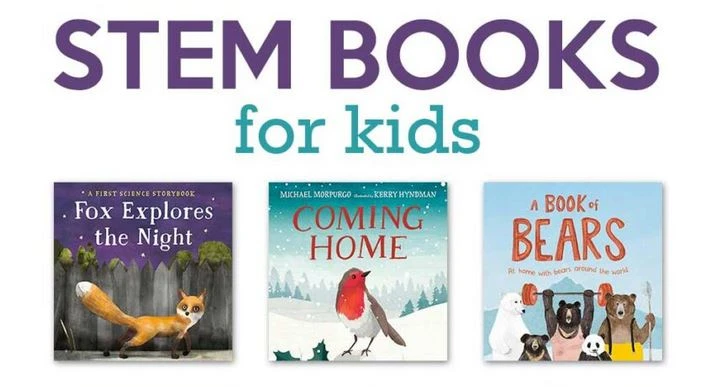

Kids are naturally curious about the world around them. That being said, it is a fact that most kids find science learning boring. Why does this happen? A major reason that makes science boring is the complexity with which it is introduced. For example, the scientific name of Daisy is Bellis perennis. Is it easy to remember, or do we even need to know it? Another reason is the way science is presented as unchangeable facts. It makes an impression that there is nothing more to explore. Above all these, we have a very short attention span. So if something seems boring for the first few seconds, we tend to get distracted. While hands-on experiments, demonstrations, and field observations are a great way to get kids interested in science, the problem still remains of how we introduce the basic concepts in an exciting way?
Stories provide a great context for learning science. Human brains are hardwired for stories. Our brains respond differently to stories and facts. While hearing a good story, the neural activity in our brain increases fivefold. This brain science help kids engage with content and create personal meaning through stories. Stories make us remember, and they make us care. How can we use stories to teach science? Imagine a classroom where a teacher tells her student that Alexander Graham Bell discovered the telephone. A few might remember, and the rest might forget. Instead, think of presenting it as a personal story. The teacher can start with the reason behind Graham Bell's interest in sounds. Bell's mother was deaf, which evoked his interest in helping people who were deaf. He followed his father's path and became a deaf educator. Later he spent time inventing several devices to help deaf people. He started making devices that manipulated sound waves, which ultimately led to the discovery of the telephone. The teacher can also talk about other scientists like Antonio Meucci, who discovered telephone-like devices, and why Bell is credited with discovering the telephone. This gives kids a picture of the motive behind the discovery and the path to the discovery. It is more important to understand this rather than the names.
Think of introducing the concept of habitats to kids. 'Welcome Home Bear' by Il Sing Na is a beautiful picture book that teaches various animal habitats and what makes each animal stick to a particular habitat [1]. 'The very hungry caterpillar' by Eric Carle is one of the all-time favorites of early childhood educators. How wonderfully has the author put together the transformation of a caterpillar into a beautiful butterfly [2]. There is no better way to introduce the concept of metamorphosis to children. 'Is this Panama' by Jan Thornhill tells the story of a Wilson barber named Sammy, who is a migratory bird [3]. The author explains why certain birds and animals migrate while others do not. 'Baako's Wild Journey' tells the story of a wildebeest calf that makes an adventurous journey through the African Savannas [4]. The Savanna ecosystem and its interactions are carefully detailed in this story. 'The Seabalance' introduces the concept of ecosystems and how the different species interactions are important in maintaining an ecosystem stable [5]. 'Who Wants a Body Polish' is a fun-filled story that tells the story of a cleaner fish. This story introduces cooperative behavior in animals and its importance [6]. These books are strong choices for introducing STEM topics, initiating discussions and activities, and encouraging independent reading in the disciplines of science.







Sign in to leave a comment.