
Technology helps businesses move faster—but when it breaks, everything slows down. That’s why more companies are turning to Managed Service Providers, or MSPs. These are tech experts you hire to manage your IT, without needing a full-time team in-house.
If you're looking for reliable, ongoing IT support, this guide explains what MSPs do, how much they cost, and how they can help your business save time and money.
What Is a Managed Service Provider (MSP)?
A Managed Service Provider is a company that handles your IT systems and services. Instead of calling someone only when something breaks, an MSP works behind the scenes every day to keep your technology running.
With an MSP, you get:
- Regular system monitoring
- Quick help when problems pop up
- Security updates and backups
- Long-term support without hiring extra staff
It’s like having an IT department—just outsourced.
What Services Do MSPs Offer?
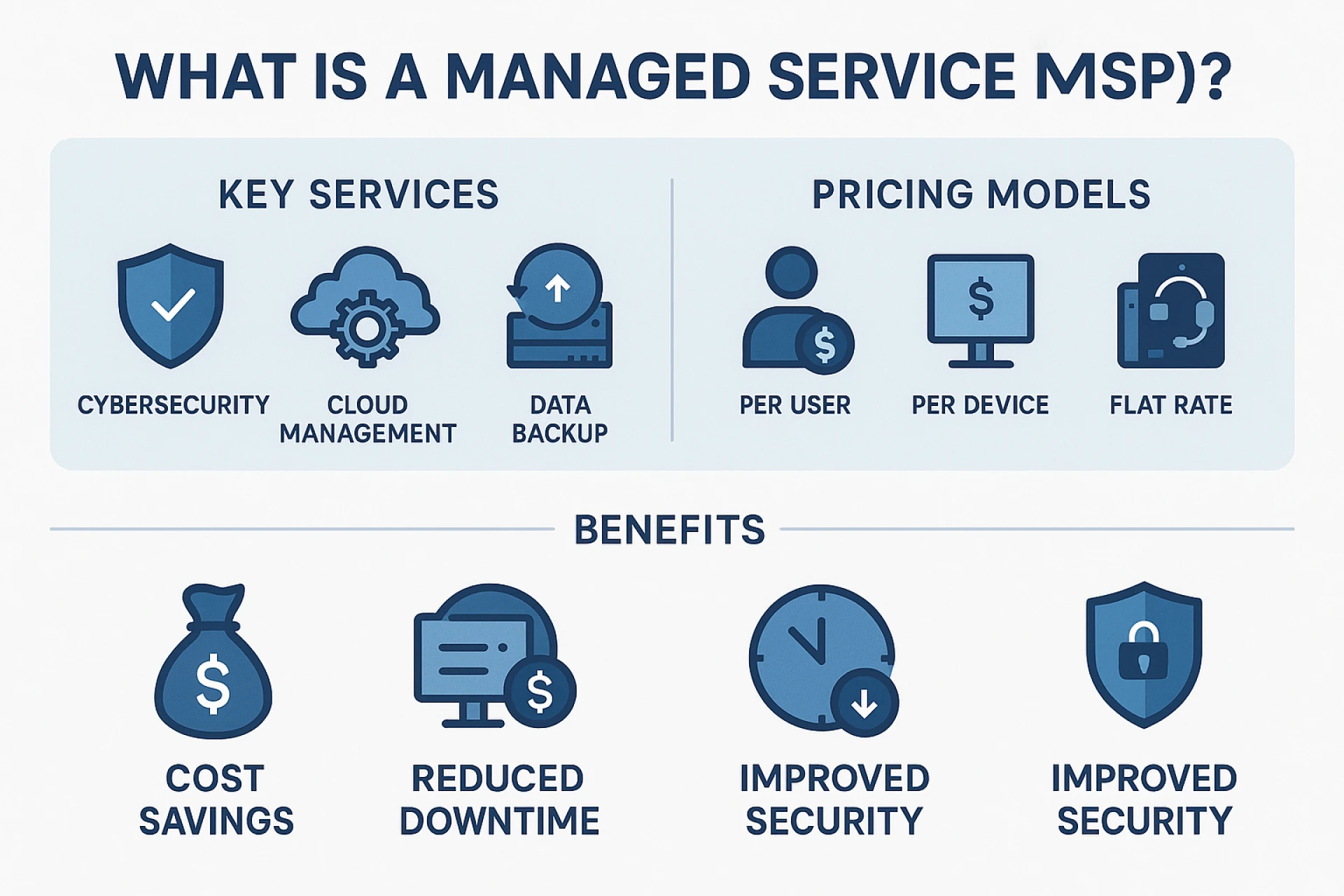
Every business has different needs. The good news is that MSPs usually offer flexible packages. Here are the most common MSP services:
- 24/7 IT support – Tech help any time you need it
- Cybersecurity protection – Defend your systems from threats like malware and phishing
- Cloud services – Help with cloud storage, remote access, and virtual tools
- Data backup & recovery – Keep your files safe and get them back quickly if disaster strikes
- Network management – Maintain smooth, secure connections across your systems
- Helpdesk support – Fast answers for your team when they hit tech snags
Many MSPs customize their services based on your industry, business size, and goals.
How Much Do MSPs Cost?
Understanding MSP pricing depends on a few key things:
- Number of users or devices
- Types of services needed
- Level of support required
- Business size and complexity
MSPs typically offer two pricing models:
- Flat monthly fee – One set price covers your services every month
- Pay-as-you-go – You pay only when you use support or services
The overall cost of an MSP can range widely—from a few hundred to a few thousand dollars per month—depending on your needs. But compared to hiring a full-time IT employee, it’s often much more affordable.
What’s the ROI of Using an MSP?
At first glance, hiring an MSP might seem like just another expense. But the return on investment (ROI) can be significant. Here’s how businesses often benefit:
- Time saved – Your team spends less time troubleshooting tech problems
- Fewer outages – Proactive monitoring prevents downtime
- Better security – MSPs keep your systems patched and protected
- Lower risk – Fast backups and disaster recovery can prevent big losses
- Predictable costs – No surprise fees or emergency repair bills
For example, a small business that experiences one hour of downtime per week could lose thousands each year. With an MSP in place, that downtime can often be cut in half—or eliminated entirely.
Should Your Business Use an MSP?
If your business depends on technology—and let’s be honest, most do—then an MSP can help you stay ahead of problems, avoid costly downtime, and manage your IT budget more effectively.
MSPs are especially helpful for:
- Small businesses without a full-time IT staff
- Growing companies that need scalable IT support
- Organizations that want to improve cybersecurity without hiring in-house experts
Final Thoughts
A Managed Service Provider can give your business the support it needs to stay secure, efficient, and focused. Whether you need round-the-clock help or just a few services, MSPs make it easier to manage technology without the stress.














Sign in to leave a comment.