

Pharmacy owners are constantly juggling a multitude of responsibilities, from patient care and business growth to the intricate details of financial management. Among these tasks, handling payroll can be a significant source of stress, particularly when it comes to the unique arrangements for locums. The question of whether a locum is an employee or self-employed can have major tax implications, and getting it wrong can lead to costly penalties from HMRC.
This is where expert guidance becomes invaluable. The right pharmacy accountants can help you navigate these complex rules, ensuring your business stays compliant and runs smoothly. Here, we’ll break down the crucial differences between PAYE and self-employed locum arrangements, offering practical tips to help you manage your pharmacy payroll with confidence.
Understanding the Locum Dilemma: PAYE vs. Self-Employed
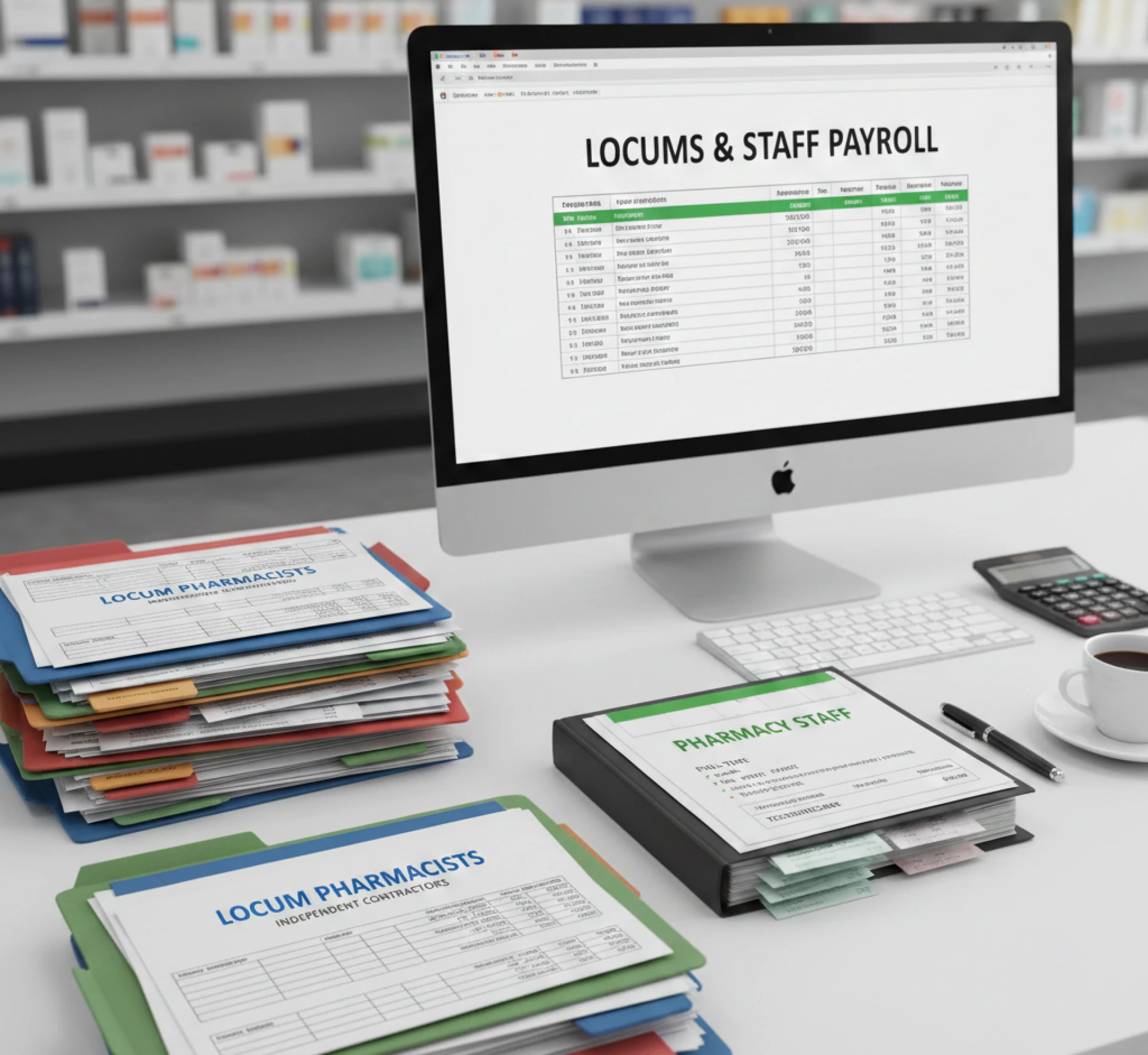
Locums are vital for ensuring continuity of service in any pharmacy. However, the method you use to pay them hinges on their employment status. The two main options are PAYE (Pay As You Earn) and self-employed.
1. The PAYE Locum: What It Means for You
Under the PAYE system, you, the pharmacy owner, are responsible for deducting income tax and National Insurance Contributions (NICs) from the locum’s wages. You then report these deductions to HMRC and pay them on the employee's behalf.
You should classify a locum as a PAYE employee if:
- You control their work: They follow your pharmacy’s policies, work specific hours, and you dictate how the work is done.
- An employment relationship exists: They are not free to work for other pharmacies during your contract, and are integrated into your business operations.
- You provide equipment: You supply them with the necessary tools, such as a computer or uniform, to perform their duties.
The main takeaway here is that you bear the administrative burden of payroll management, but the locum benefits from statutory entitlements like sick pay and holiday pay. Many accountants for pharmacies can help manage this complex process, ensuring you meet all your obligations without stress.
2. The Self-Employed Locum: A Different Arrangement
A self-employed locum is an independent contractor responsible for their own tax and National Insurance payments. You simply pay them the agreed-upon fee, and they handle their own financial filings.
You should classify a locum as self-employed if:
- They have freedom and flexibility: They are free to choose their working hours and methods.
- They work for multiple pharmacies: A self-employed locum will typically work for several different businesses, showcasing their independent status.
- They provide their own resources: They bring their own equipment or tools to the job.
With a self-employed locum, your administrative responsibilities are far lighter. You don't manage their tax deductions, and they aren't entitled to statutory benefits from you. However, you must still ensure they are genuinely self-employed to avoid future issues.
Why This Distinction Matters: The Risks of Misclassification
Misclassifying a locum, whether intentionally or accidentally, can lead to serious consequences from HMRC. If HMRC determines a locum was incorrectly treated as self-employed, they could demand payment of back taxes and NICs, and impose substantial fines. It’s a risk that no pharmacy owner can afford to take.
This is why having specialist pharmacy accountants is crucial. They are well-versed in HMRC guidelines and can help you assess each locum's working arrangement to determine the correct classification. Their expertise can save you from potential audits, penalties, and the stress that comes with non-compliance.
How Pharmatax Can Simplify Your Payroll
Navigating the complexities of PAYE and self-employed locum arrangements is a major challenge for many pharmacy owners. But it doesn't have to be. Professional accountants for pharmacy can provide the peace of mind you need.
At Pharmatax, we specialize in helping pharmacy owners manage their payroll and tax obligations seamlessly. We can help you determine the correct classification for each locum, manage your PAYE payroll efficiently, and ensure compliance with all HMRC regulations.
By partnering with Pharmatax, you can free up valuable time to focus on what you do best: running your pharmacy and caring for your patients. Don’t let payroll stress you out. For tailored solutions and expert advice, visit Pharmatax today and discover how we can help you manage your finances without the stress.





















Sign in to leave a comment.