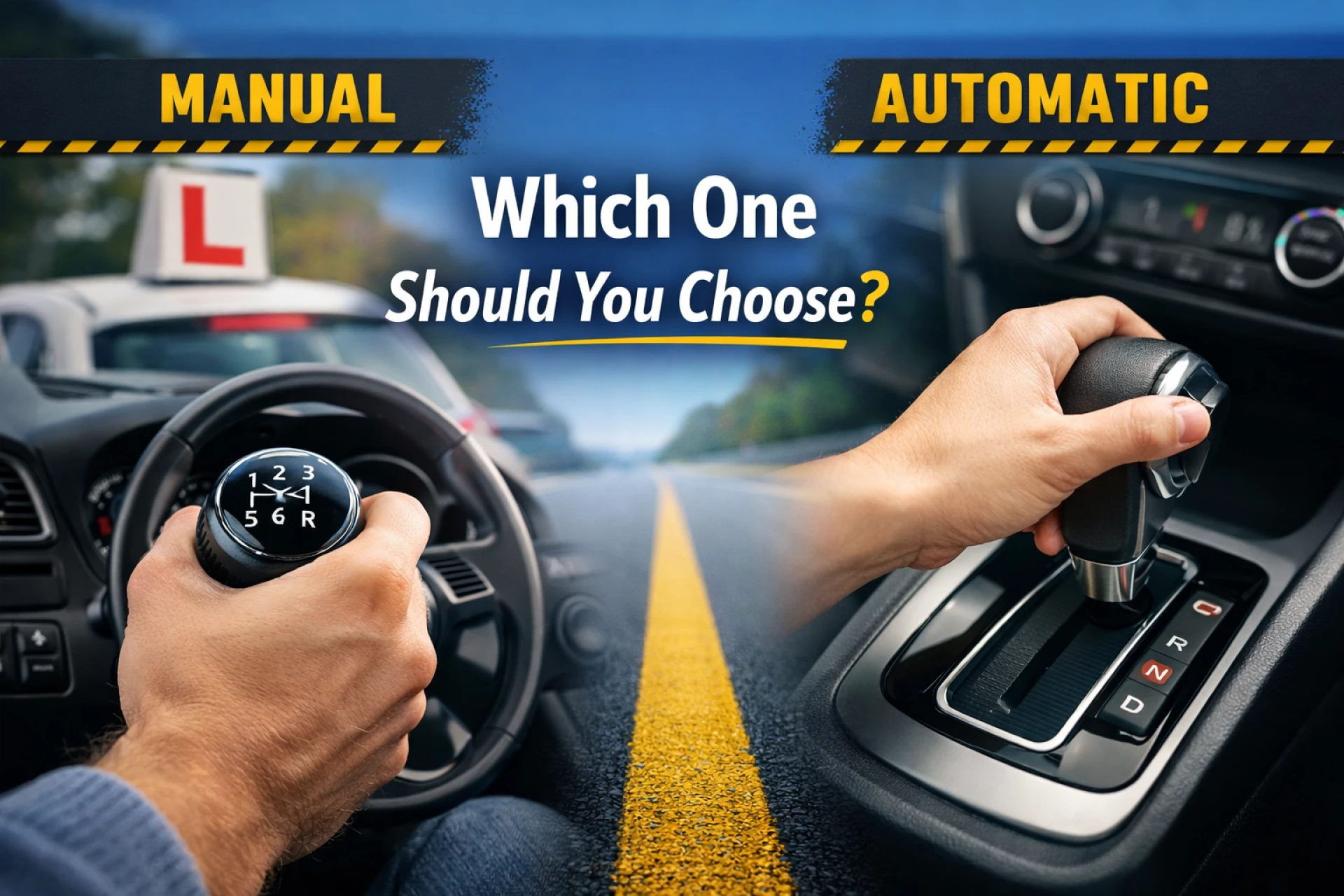

Learning how to drive is a major milestone in life. It gives you independence, flexibility, and the ability to travel safely and conveniently. However, one of the most common questions beginners face before starting their driving journey is whether they should learn manual or automatic driving. Both options have their own advantages, learning curves, and long-term benefits, which makes the decision challenging for many new drivers.
Choosing the right type of driving lessons depends on your goals, comfort level, and future driving needs. Some learners prefer manual vehicles because of the control and flexibility they offer, while others choose automatic cars for their simplicity and ease of use. Understanding the differences between the two will help you make a confident and informed decision.
This guide explores the key differences between manual and automatic driving, their advantages and disadvantages, and how to decide which one is best for you.
Understanding Manual Driving
Manual vehicles require the driver to control gear changes using a clutch and gear lever. This means the driver is actively involved in shifting gears based on speed and road conditions. Many experienced drivers believe that learning to drive manually builds better control and understanding of how a vehicle works.
Manual driving lessons focus on teaching clutch control, gear shifting, acceleration balance, and road awareness. Learners develop coordination between hands and feet, which improves their driving confidence over time.
Key Features of Manual Driving
- Full control over gear and speed
- Better fuel efficiency in many cases
- Improved vehicle handling
- Greater flexibility when driving different vehicles
- Stronger driving skills and awareness
Manual driving requires practice, patience, and concentration in the beginning. However, once mastered, it becomes a valuable lifelong skill.
Understanding Automatic Driving
Automatic vehicles are designed to simplify the driving process by removing the need for manual gear shifting. The car automatically changes gears based on speed and acceleration, allowing the driver to focus more on steering, braking, and road awareness.
Automatic driving is often considered beginner-friendly because it reduces stress and makes driving smoother in heavy traffic or busy city roads.
Key Features of Automatic Driving
- No clutch or manual gear shifting
- Easier to learn and operate
- Less stress in traffic
- Smooth and comfortable driving experience
- Faster learning process for beginners
Many learners prefer automatic vehicles because they require less coordination and allow them to gain confidence quickly.
Key Differences Between Manual and Automatic Driving
Understanding the main differences between manual and automatic driving helps in making a practical decision.
1. Learning Difficulty
Manual driving requires more practice because learners need to manage clutch control and gear shifting. It takes time to develop smooth coordination, especially in traffic or on slopes.
Automatic driving, on the other hand, is easier to learn since the system handles gear changes automatically. This allows beginners to focus more on road awareness and safety.
Verdict: Automatic is easier for beginners, while manual requires more effort but builds stronger skills.
2. Driving Control
Manual vehicles give drivers more control over speed and gear selection. This is useful in challenging driving conditions such as hills, highways, and rough roads.
Automatic vehicles provide convenience but offer less direct control compared to manual cars.
Verdict: Manual offers better control and flexibility.
3. Fuel Efficiency
In many cases, manual vehicles are more fuel-efficient because drivers can control gear shifts based on driving conditions. Automatic vehicles have improved significantly in recent years, but manual cars still often perform better in fuel economy.
Verdict: Manual vehicles may save more fuel over time.
4. Maintenance and Cost
Manual vehicles are generally less expensive to maintain because their transmission systems are simpler. Repairs are often more affordable compared to automatic vehicles.
Automatic vehicles usually have more complex systems, which can increase maintenance and repair costs.
Verdict: Manual is more cost-effective in the long run.
5. Traffic and City Driving
Driving in heavy traffic can be challenging with manual vehicles because of constant clutch and gear usage. This can lead to fatigue during long drives.
Automatic vehicles are more comfortable in traffic because they require less physical effort and constant gear changes.
Verdict: Automatic is better for city and traffic driving.
Advantages of Manual Driving
Manual driving provides several long-term benefits for learners and experienced drivers alike.
1. Better Vehicle Control
Drivers can adjust speed and gear based on road conditions, which improves safety and performance.
2. Flexibility
Knowing how to drive manual allows you to drive both manual and automatic vehicles, expanding your driving opportunities.
3. Cost Savings
Manual vehicles are usually more affordable and economical to maintain.
4. Improved Driving Skills
Manual driving develops strong coordination and awareness, making drivers more skilled and confident.
Advantages of Automatic Driving
Automatic driving offers convenience and comfort, especially for beginners.
1. Easy Learning Process
Beginners can learn quickly without worrying about clutch control.
2. Comfortable Driving
Driving becomes smoother and less stressful, particularly in busy areas.
3. Reduced Fatigue
Less physical effort means more relaxed and enjoyable driving.
4. Better Focus on Road Safety
Drivers can focus more on traffic and surroundings rather than gear changes.
Who Should Choose Manual Driving?
Manual driving is ideal for learners who:
- Want complete control over their vehicle
- Plan to drive different types of vehicles in the future
- Want to save money on fuel and maintenance
- Are willing to invest time in learning driving skills
- Prefer a traditional driving experience
Learners who enjoy understanding how vehicles work often choose manual driving because it provides a deeper level of control and engagement.
Who Should Choose Automatic Driving?
Automatic driving is suitable for people who:
- Want a simple and quick learning experience
- Feel nervous about gear shifting and clutch control
- Drive mostly in city traffic
- Prefer comfort and convenience
- Want to learn driving in a stress-free environment
Many beginners choose automatic vehicles because they make the learning process easier and faster.
Role of Professional Driving Training
Choosing the right driving training program plays a major role in your learning experience. A structured training environment helps learners understand road rules, driving techniques, and safety measures effectively.
A professional car driving school provides structured lessons, experienced instructors, and practical road training that improves confidence and skills. Proper training ensures that learners develop safe driving habits and become responsible drivers.
Similarly, enrolling in an auto driving school helps beginners learn automatic driving in a comfortable and guided environment, making it easier to adapt to modern vehicles and traffic conditions.
Professional training ensures that learners gain the right knowledge, practical experience, and confidence to drive safely in different road situations.
Common Mistakes to Avoid When Choosing
Many beginners make mistakes while choosing between manual and automatic driving. Avoiding these mistakes can help you make a better decision.
1. Choosing Based on Fear
Some learners choose automatic driving only because they feel manual driving is difficult. With proper practice, manual driving becomes easy.
2. Ignoring Future Needs
Consider your long-term driving plans before choosing. If you plan to drive different vehicles, manual may be a better choice.
3. Not Taking Trial Lessons
Trying both manual and automatic driving before deciding can help you understand your comfort level.
4. Focusing Only on Cost
While cost is important, comfort and learning experience should also be considered.
Tips to Make the Right Choice
Here are some simple tips to help you decide:
- Assess your comfort level with vehicle control
- Consider where you will drive most often
- Think about long-term driving goals
- Take trial lessons before finalizing
- Choose a professional training program
- Focus on safety and confidence
Making a thoughtful decision ensures a smoother and more enjoyable learning experience.
Future of Driving: Manual vs Automatic
With advancements in technology, automatic vehicles are becoming more popular worldwide. Many modern cars now come with automatic transmission, advanced safety features, and smart driving systems.
However, manual vehicles still remain relevant because they offer better control, affordability, and flexibility. Both options will continue to exist, giving learners the freedom to choose based on their needs and preferences.
The future of driving is likely to focus more on comfort, safety, and technology, but the importance of proper driving skills will always remain the same.
Conclusion
Choosing between manual and automatic driving depends on your personal preferences, learning goals, and driving needs. Manual driving offers better control, flexibility, and long-term benefits, while automatic driving provides simplicity, comfort, and ease of learning.
There is no universally right or wrong choice. The best option is the one that matches your comfort level and future driving requirements. Taking the time to understand both options, trying trial lessons, and getting professional training can help you make the right decision.
In the end, the goal is not just to learn driving but to become a safe, confident, and responsible driver who can handle real-world road situations with ease. Whether you choose manual or automatic, consistent practice and proper guidance will help you succeed in your driving journey.
























Sign in to leave a comment.