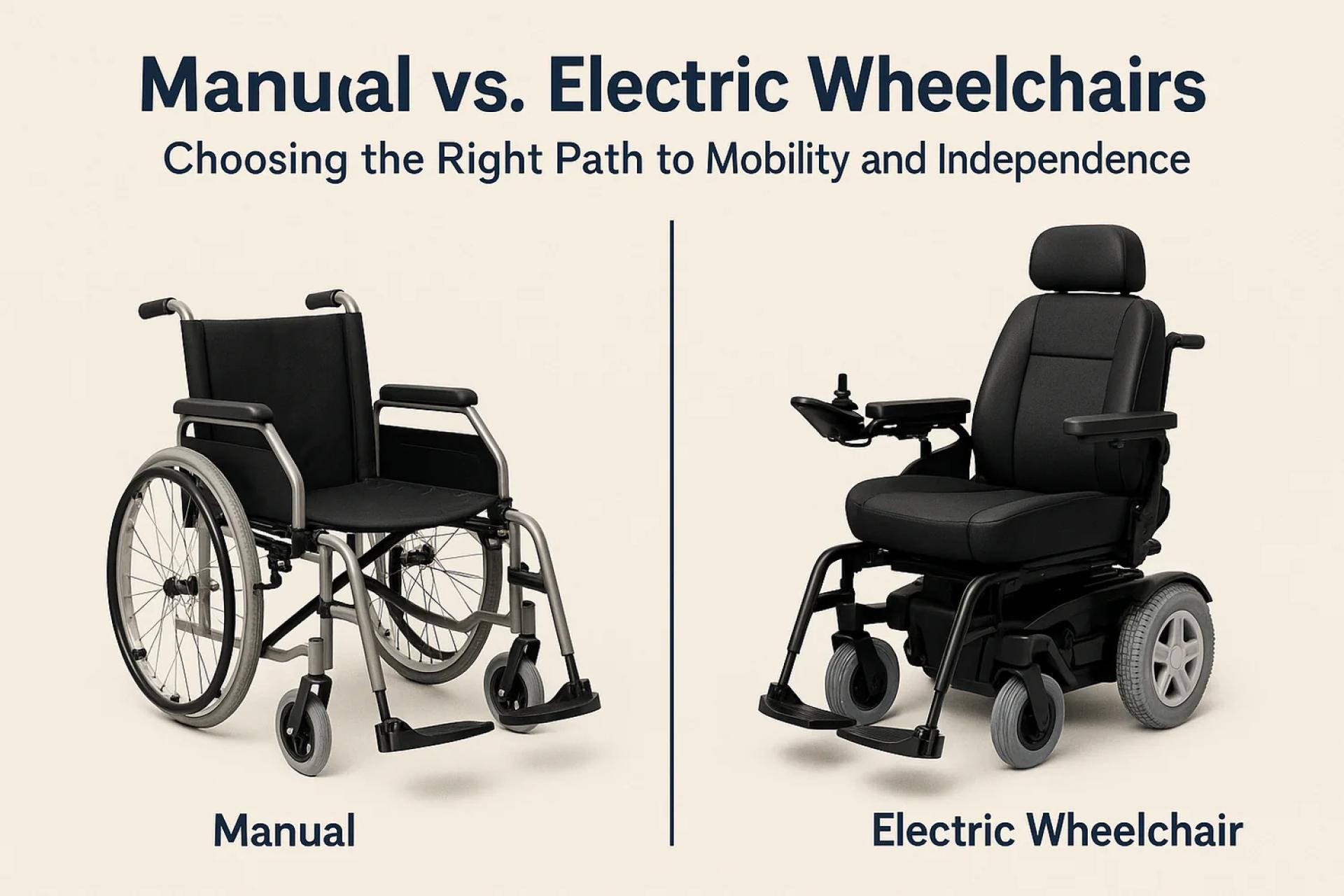
For individuals with limited mobility, selecting the right wheelchair is a crucial decision that impacts independence, comfort, and daily life. The choice between a **manual wheelchair** and an **electric wheelchair (power wheelchair)** depends on various factors, including physical ability, lifestyle, budget, and environment. Understanding the advantages and limitations of each type can help you make an informed decision tailored to your needs.
Manual Wheelchairs: Control and Affordability
Manual wheelchairs are a popular choice for those who prefer a lightweight and cost-effective mobility solution. One of their biggest advantages is portability—they are easy to transport, store, and maneuver in tight spaces. Additionally, self-propelling a manual wheelchair provides upper-body exercise, which can be beneficial for maintaining strength and mobility. These wheelchairs are also durable, with fewer mechanical components that could malfunction over time.
However, manual wheelchairs require sufficient upper-body strength to operate efficiently. Users with limited arm or shoulder strength may find them tiring, especially over long distances or on uneven terrain. Slopes and rough surfaces can also pose challenges, making them less ideal for outdoor use unless assisted by a caregiver.
Best For: Active individuals who have good upper-body strength and need an affordable, easy-to-transport mobility aid.
Electric Wheelchairs: Effortless and Advanced Mobility
Electric wheelchairs offer a convenient and comfortable solution for those who need assistance with mobility. They eliminate the need for physical exertion, making them ideal for users with limited strength or conditions like arthritis, spinal cord injuries, or advanced age. With motorized controls, electric wheelchairs provide smooth movement over longer distances and handle inclines and rough terrain more effectively than manual models.
Many electric wheelchairs come with advanced features, such as reclining seats, elevating leg rests, and programmable controls for customized comfort. However, they are significantly more expensive than manual wheelchairs and require regular battery charging. Their heavier and bulkier design also means they may not be as easy to transport without a wheelchair-accessible vehicle.
Best For: Individuals who need assistance with mobility, travel frequently, or require additional comfort features for extended use.
Key Considerations When Choosing a Wheelchair
When deciding between a manual and electric wheelchair, consider the following factors:
- Mobility Needs: Will you use the wheelchair for short trips or full-day support?
- Physical Ability: Do you have the strength to self-propel, or would motorized assistance be more suitable?
- Budget: Manual wheelchairs are more affordable upfront, while electric models require a higher investment.
- Lifestyle & Environment: Will you navigate mostly indoors, or do you need a wheelchair that can handle outdoor terrain?
- Transportation: Do you have a vehicle that can accommodate an electric wheelchair if needed?
Final Thoughts*
The decision between a manual and electric wheelchair ultimately depends on your unique needs and circumstances. Manual wheelchairs are an excellent choice for those seeking affordability, exercise benefits, and portability. On the other hand, electric wheelchairs provide effortless mobility, making them ideal for users with limited strength or those who require advanced features for comfort.
At BMS MedShop, we offer a wide selection of high-quality manual and electric wheelchairs to suit different lifestyles and budgets. Explore our collection today to find the perfect mobility solution for enhanced independence and comfort.



























Sign in to leave a comment.