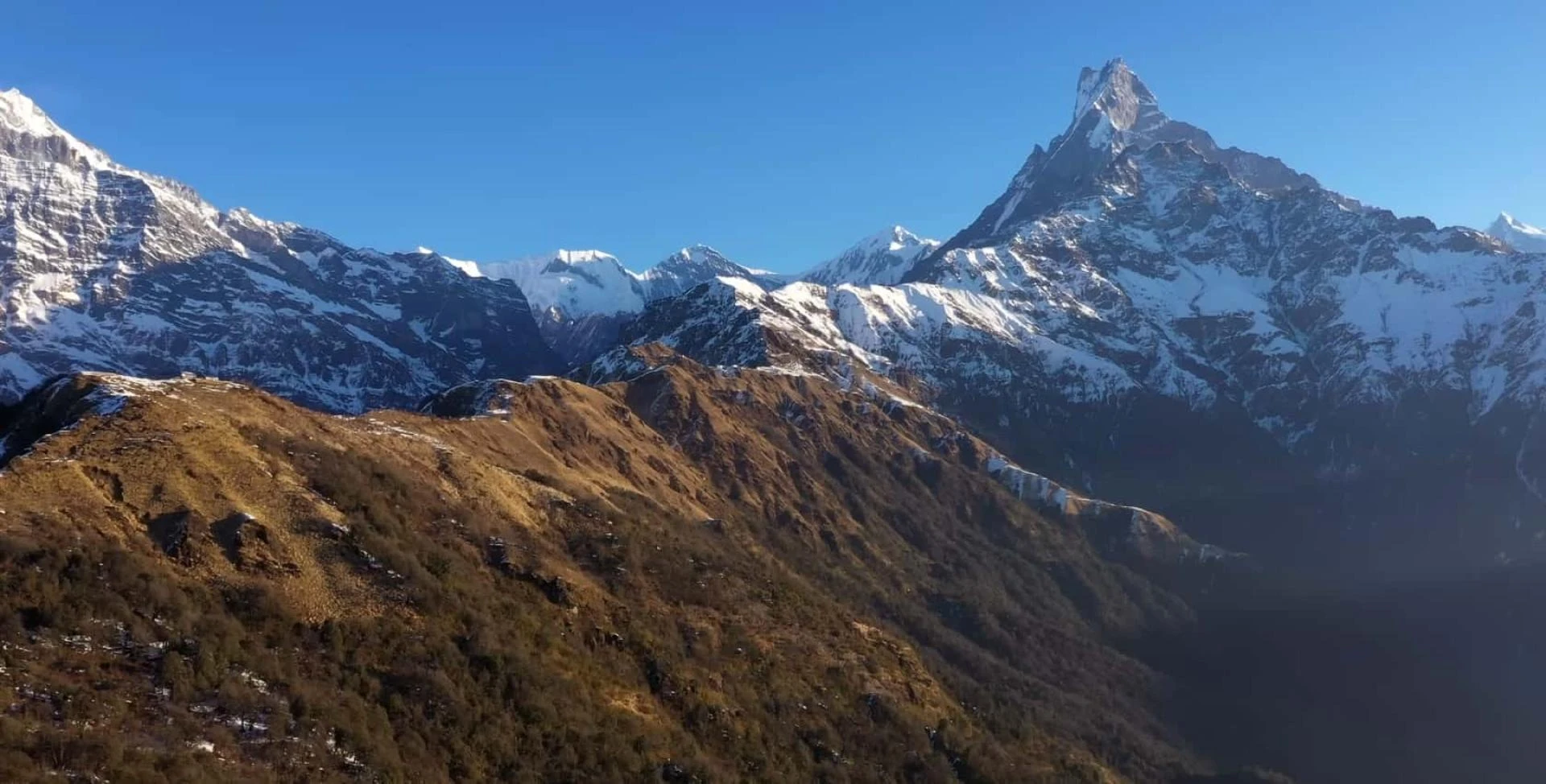

The Mardi Himal Trek is a captivating journey in Nepal's Annapurna region, offering trekkers a blend of natural beauty and cultural experiences. This trek is considered moderately challenging, making it suitable for individuals with a reasonable level of fitness.
Detailed Itinerary
- Day 1: Pokhara to Deurali (2,125 meters)
- A short drive from Pokhara leads to Kande, the starting point of the trek. From Kande, a 4-hour hike through lush forests and terraced fields brings trekkers to Deurali.
- Day 2: Deurali to Low Camp (3,150 meters)
- The trail ascends gradually through dense rhododendron forests, offering glimpses of the Annapurna range. After approximately 7 hours of trekking, Low Camp is reached, providing panoramic mountain views.
- Day 3: Low Camp to High Camp (3,700 meters)
- As the trek progresses, the landscape transitions to alpine meadows. A 4-hour hike leads to High Camp, where trekkers are rewarded with close-up views of Machapuchare (Fishtail) and Mardi Himal.
- Day 4: High Camp to Mardi Himal Base Camp (4,500 meters) and back to High Camp
- An early morning start is essential for the 6 to 7-hour round trip to Mardi Himal Base Camp. The trail is more challenging, with steeper ascents, but the panoramic vistas of the Annapurna range make the effort worthwhile.
- Day 5: High Camp to Siding Village (1,885 meters)
- The descent to Siding Village takes about 6 hours, passing through traditional settlements and terraced fields. This route offers a glimpse into the daily lives of the local Gurung and Magar communities.
- Day 6: Siding Village to Pokhara
- A 3-hour drive from Siding Village returns trekkers to Pokhara, marking the end of the journey.
Trek Difficulty and Preparation
The Mardi Himal Trek is categorized as a moderate trek, suitable for individuals with a reasonable level of fitness. While it is less demanding than treks like Everest Base Camp or Annapurna Circuit, participants should be prepared for daily walks of 4 to 7 hours, involving both ascents and descents. Proper acclimatization is crucial to prevent altitude sickness, especially as the trek reaches elevations above 4,000 meters.
Best Time to Trek
The ideal periods for the Mardi Himal Trek are during the pre-monsoon (March to May) and post-monsoon (September to November) seasons. During these times, the weather is generally stable, and the skies are clear, offering unobstructed views of the surrounding peaks.
Permits and Regulations
Trekkers are required to obtain two permits: the Annapurna Conservation Area Permit (ACAP) and the Trekkers' Information Management System (TIMS) card. As of March 2023, Nepal has introduced regulations requiring foreign trekkers to be accompanied by licensed guides in national parks, including areas like Mardi Himal. This measure aims to enhance safety and ensure sustainable trekking practices. However, enforcement of this rule has been inconsistent, and independent trekking remains common in the Annapurna Conservation Area.
Conclusion
The Mardi Himal Trek offers a harmonious blend of natural splendor and cultural experiences. Its relatively short duration, combined with the opportunity to explore less-traveled paths, makes it an appealing choice for trekkers seeking a unique adventure in Nepal's Himalayas.




























Sign in to leave a comment.