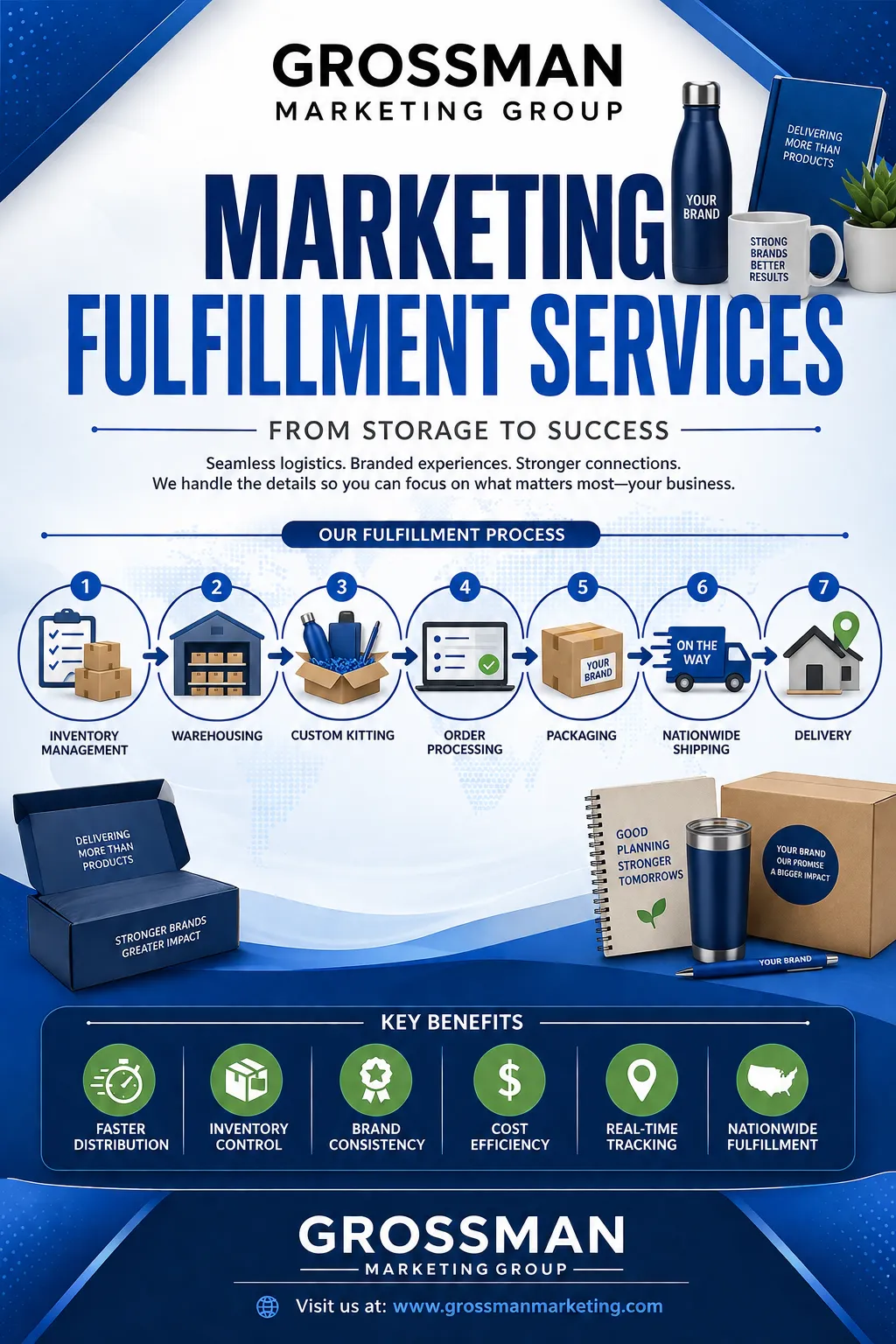

Successful marketing is no longer limited to creative campaigns and engaging advertisements. Behind every product launch, promotional giveaway, trade show, employee onboarding program, and customer appreciation initiative is a logistics system that ensures every item reaches its intended destination on time. Businesses that overlook the operational side of marketing often face inventory shortages, delayed shipments, and inconsistent customer experiences. This is why marketing fulfillment services have become an essential part of modern business operations.
As companies expand across digital platforms, retail locations, and global markets, managing marketing materials and promotional products becomes increasingly complex. Marketing fulfillment services combine inventory management, warehousing, order processing, packaging, shipping, and reporting into one integrated solution. By streamlining these processes, businesses can reduce operational burdens while maintaining a consistent and professional brand image.
The Role of Marketing Fulfillment Services
Marketing campaigns involve much more than designing attractive promotional materials. Every brochure, branded giveaway, sales kit, corporate gift, and event package must be stored, tracked, assembled, and delivered efficiently. Handling these responsibilities internally often requires significant time, warehouse space, staffing, and technology investments.
Professional marketing fulfillment services eliminate these challenges by managing the complete distribution lifecycle. Orders are processed automatically, inventory is monitored in real time, and shipments are coordinated through reliable logistics networks. This allows businesses to focus on strategy, customer engagement, and business development instead of daily operational tasks.
Centralized Inventory Management
One of the greatest advantages of professional fulfillment is centralized inventory control. Businesses frequently manage products across multiple offices, warehouses, distributors, and ecommerce platforms. Without proper inventory visibility, companies risk stockouts, duplicate purchases, or excess inventory that ties up valuable capital.
Modern fulfillment systems provide accurate inventory tracking through cloud-based platforms. Businesses can monitor stock levels, receive automated replenishment alerts, and forecast future demand using historical purchasing data. This transparency helps improve purchasing decisions while minimizing waste and unnecessary storage costs.
Faster Order Processing
Speed has become a major competitive advantage in today's marketplace. Customers and employees alike expect prompt delivery of promotional products, corporate merchandise, and marketing materials. Manual fulfillment processes often introduce unnecessary delays that negatively impact campaign success.
Marketing fulfillment services utilize warehouse automation, barcode scanning, integrated order management systems, and optimized picking procedures to accelerate processing times. Orders move quickly from warehouse shelves to shipping carriers, ensuring recipients receive their packages within expected delivery windows.
This efficiency becomes particularly valuable during product launches, seasonal promotions, conferences, and large-scale marketing campaigns where timing directly influences overall results.
Maintaining Brand Consistency
Every customer interaction contributes to a company's reputation. Whether receiving a welcome kit, promotional package, appreciation gift, or conference giveaway, recipients expect professional presentation and consistent branding.
Marketing fulfillment providers implement standardized packaging procedures that ensure every shipment reflects the company's visual identity. Branded boxes, customized inserts, professionally packed merchandise, and quality control inspections reinforce brand recognition while creating memorable customer experiences.
Consistent fulfillment standards also reduce shipping errors, damaged products, and incorrect orders, protecting both customer satisfaction and brand credibility.
Supporting Omnichannel Marketing
Today's customers interact with businesses across websites, mobile applications, physical stores, social media platforms, and marketplaces. Marketing fulfillment services support omnichannel strategies by integrating with multiple sales channels and automatically synchronizing inventory and order information.
When inventory updates occur in real time across every platform, businesses can confidently manage promotions without overselling products or disappointing customers. Integrated fulfillment systems simplify order management regardless of where purchases originate.
This flexibility enables organizations to provide seamless experiences while expanding into new sales channels with minimal operational disruption.
Improving Customer Experience
Customer expectations continue to rise across every industry. Fast shipping, order accuracy, tracking notifications, and convenient returns have become standard expectations rather than premium services.
Professional fulfillment providers invest in advanced logistics technologies that improve every stage of the customer journey. Automated shipping confirmations, real-time tracking updates, accurate inventory availability, and responsive customer support create positive experiences that encourage repeat business.
Satisfied customers are more likely to recommend brands, leave positive reviews, and continue purchasing products over the long term.
Cost-Effective Operations
Many businesses assume outsourcing fulfillment increases expenses. In reality, maintaining internal warehouses requires investments in facilities, labor, equipment, software, insurance, utilities, and shipping negotiations.
Marketing fulfillment services leverage economies of scale that individual businesses often cannot achieve independently. Shared warehouse infrastructure, optimized shipping contracts, automated systems, and experienced logistics professionals reduce operational expenses while improving efficiency.
Businesses benefit from predictable fulfillment costs without making substantial capital investments in warehouse operations.
Scalable Business Growth
As organizations grow, fulfillment complexity increases significantly. Expanding product catalogs, entering new geographic markets, supporting franchise networks, or launching additional ecommerce stores requires flexible logistics infrastructure.
Professional fulfillment providers offer scalable solutions capable of adapting to changing business requirements. Whether shipping hundreds or tens of thousands of promotional products each month, fulfillment operations can expand without requiring businesses to build additional warehouse capacity.
Scalability also supports seasonal demand fluctuations, allowing organizations to maintain consistent service during peak ordering periods.
Valuable Business Insights
Technology-driven fulfillment platforms generate detailed analytics that support smarter decision-making. Businesses gain visibility into inventory movement, shipping performance, order trends, fulfillment costs, and customer purchasing behavior.
These insights help marketing teams evaluate campaign effectiveness, forecast inventory requirements, identify popular promotional products, and optimize future marketing investments.
Access to real-time operational data enables continuous improvement while supporting more informed strategic planning.
Sustainable Fulfillment Practices
Environmental responsibility has become an important consideration for both businesses and consumers. Many fulfillment providers now implement sustainable logistics practices that reduce environmental impact while improving operational efficiency.
Eco-friendly packaging materials, optimized shipping routes, digital documentation, recyclable packing supplies, and responsible inventory management contribute to lower carbon emissions and reduced waste. Sustainable fulfillment not only supports environmental goals but also strengthens brand reputation among environmentally conscious customers.
Selecting the Best Fulfillment Partner
Choosing a fulfillment provider requires evaluating several important factors, including warehouse capabilities, technology integration, inventory accuracy, customer service, reporting tools, scalability, and shipping performance.
Businesses should seek partners with experience handling promotional merchandise, branded marketing materials, ecommerce fulfillment, employee engagement programs, and corporate gifting initiatives. A provider capable of integrating with existing ecommerce platforms and business systems delivers greater efficiency while simplifying long-term operations.
Reliable communication, transparent reporting, and flexible service offerings are equally important when building a lasting fulfillment partnership.
Conclusion
Efficient logistics play a critical role in the success of every marketing initiative. From promotional merchandise and corporate gifts to ecommerce orders and event materials, reliable marketing fulfillment services ensure products are delivered accurately, professionally, and on schedule. Businesses that invest in streamlined fulfillment operations benefit from improved customer satisfaction, reduced operational costs, greater inventory visibility, and stronger brand consistency.
Organizations looking for a trusted fulfillment partner can rely on Grossman Marketing Group for comprehensive marketing logistics solutions tailored to modern business needs. With decades of experience supporting promotional campaigns, branded merchandise programs, ecommerce operations, warehousing, inventory management, and nationwide distribution, Grossman Marketing Group helps businesses simplify complex fulfillment processes while delivering exceptional experiences for customers, employees, and partners. By combining advanced technology with personalized service, Grossman Marketing Group enables organizations to focus on growing their brands while every fulfillment detail is handled with precision and care.






























Sign in to leave a comment.