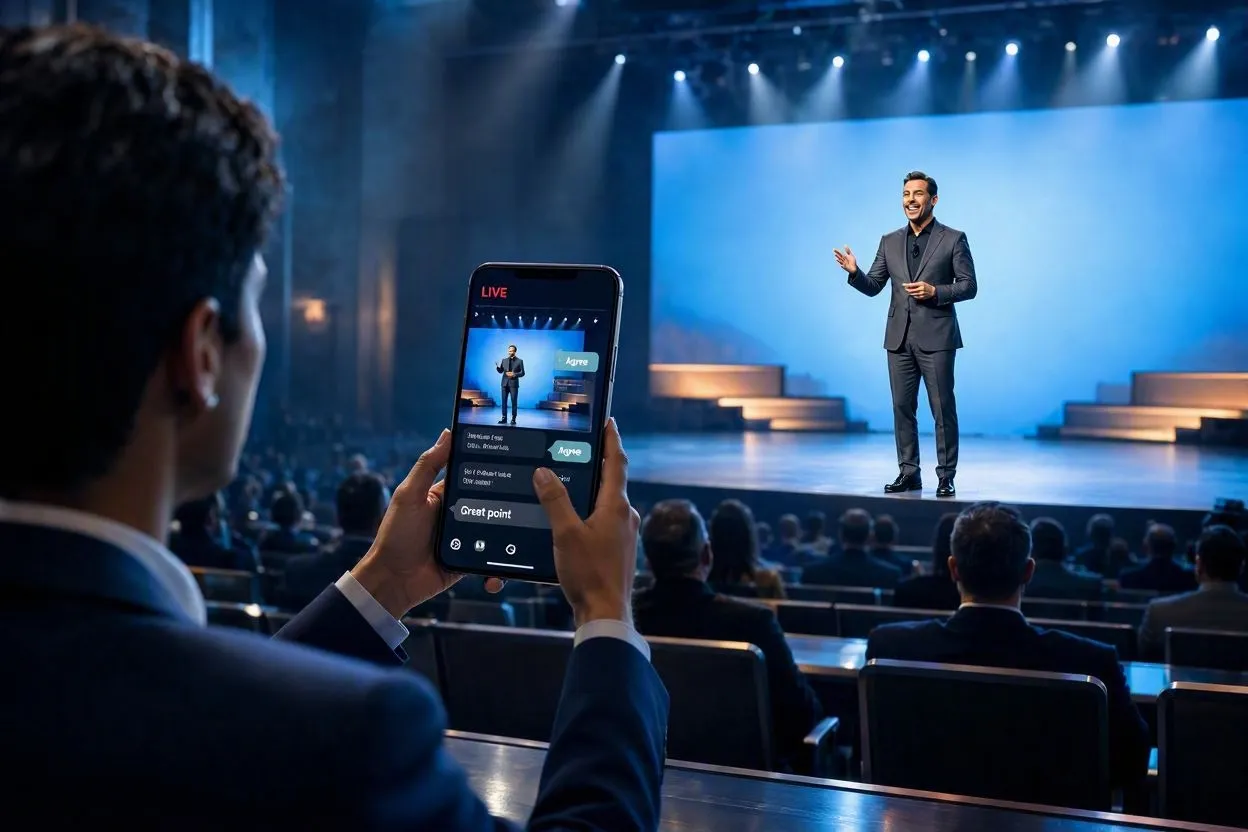

As we finalize our digital media strategies for 2026, the era of passive video consumption is officially over. Today’s audiences do not just want to watch a digital event unfold on their screens; they expect to be an active, recognized part of the narrative.
Whether they are tuning into a global product launch, a high-stakes esports tournament, or an interactive corporate town hall, viewers want to vote in flash polls, ask questions, and influence the outcome of the event in real time. For brands and enterprise creators, this means your video infrastructure can no longer just be a tool for distribution. It must act as a two-way engagement engine.
To thrive in the next chapter of digital media, you must overcome two completely different technical challenges: eradicating broadcast delay to foster genuine interaction, and guaranteeing unshakeable server stability at scale.
The Threat of the "Awkward Silence"
Let’s address the speed of your transmission first. A beautiful, high-definition picture means absolutely nothing if the conversation is broken.
Standard broadcasting protocols inherently introduce a 15 to 30-second delay between the camera capturing the action and the remote viewer seeing it. In a passive viewing environment, this lag goes unnoticed. But the moment you introduce interactivity, that delay becomes a massive conversion killer.
If a presenter launches a flash poll or asks the audience a question, and is met with twenty seconds of dead air while the feed catches up, the energy in the room evaporates. The chat becomes completely disconnected from the visual feed, and the illusion of a shared, communal experience shatters.
To bridge this gap and facilitate genuine, in-the-moment conversations, production teams are abandoning legacy protocols. Upgrading your tech stack to a dedicated Low Latency Live Streaming architecture is now the gold standard for interactive media.
By leveraging advanced delivery frameworks like WebRTC, this specialized technology bypasses traditional internet bottlenecks. It successfully shrinks the transmission delay to less than a single second. This sub-second delivery ensures that when a viewer types a comment or bids in a digital auction, the on-screen reaction is instantaneous, making the event feel truly conversational.
Building a Resilient, Global Foundation
While sub-second delivery is the key to engagement, speed is utterly useless if your servers crash under pressure.
When you launch a highly anticipated digital event, you invite massive, unpredictable spikes in web traffic. Attempting to funnel thousands of concurrent viewers through a consumer-grade social platform or a basic website server is a massive operational gamble. The servers will overload, the feed will buffer, and your brand's credibility will take a highly public hit.
To guarantee pristine visual quality and absolute reliability during critical moments, scaling enterprises anchor their strategies with professional online live streaming infrastructure.
This enterprise-grade backbone leverages global Content Delivery Networks (CDNs) and dynamic auto-scaling to automatically absorb massive surges in traffic. Furthermore, adaptive bitrate technology ensures the broadcast instantly adjusts to the internet speed of every individual viewer. This delivers a crystal-clear, buffer-free experience whether your audience is watching on a fiber-optic desktop connection in London or a cellular network in Tokyo.
Future-Proofing Your Digital Presence
The publishers and enterprise brands that will dominate 2026 are those who respect both the scale of their events and the time of their audiences.
By building your digital strategy on a foundation of ironclad, globally scaled server reliability, and upgrading that foundation with lightning-fast, sub-second delivery, you completely remove the glass wall between your host and your viewers. You ensure your event never drops, while turning passive watchers into a fiercely loyal, highly engaged community.



























Sign in to leave a comment.