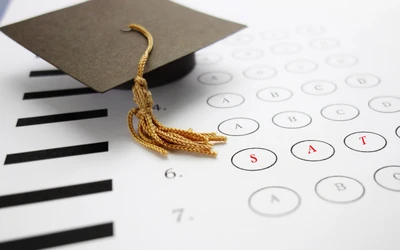

Entrance exams are standardized tests designed to assess the aptitude and knowledge of students who wish to enroll in various educational institutions, ranging from elementary schools to universities. The importance of entrance exams varies depending on the level of education, but they are generally seen as a critical component of the admissions process. In this blog post, we will explore the different types of entrance exams, their purposes, advantages and disadvantages, and tips for preparing for them.
Types of Entrance Exams :
There are several types of entrance exams, and they differ depending on the level of education and the subject matter being tested. Below are some of the most common types of entrance exams :
High School Entrance Exams : These are tests taken by students who are about to graduate from middle school and are looking to enroll in high school. The tests usually cover subjects such as math, English, science, and social studies.
College Entrance Exams : These are tests taken by high school students who are looking to enroll in college. The most popular college entrance exams are the SAT and ACT, which assess students' knowledge of math, reading, and writing.
Graduate School Entrance Exams : These are tests taken by students who are looking to enroll in graduate school. The most popular graduate school entrance exam is the GRE, which assesses students' knowledge of math, verbal reasoning, and analytical writing.
Professional School Entrance Exams : These are tests taken by students who are looking to enroll in professional schools, such as law school or medical school. The most popular professional school entrance exams are the LSAT and MCAT, which assess students' knowledge of law and medicine, respectively.
Purposes of Entrance Exams :
Entrance exams serve several purposes. They are used to assess students' knowledge and aptitude in specific subjects, to evaluate their potential for academic success, and to compare them to other applicants. Entrance exams also provide educational institutions with valuable information about students' academic strengths and weaknesses, which can be used to develop targeted learning plans and support programs. Additionally, entrance exams help to ensure that students are prepared for the academic rigor of the institution they wish to attend.
Advantages of Entrance Exams :
There are several advantages to taking entrance exams. One of the biggest advantages is that they provide a standardized way to evaluate students' knowledge and aptitude, which makes it easier for educational institutions to compare and select applicants. Entrance exams also help to ensure that students are prepared for the academic rigor of the institution they wish to attend, which can lead to greater success in college and beyond. Additionally, entrance exams can provide students with valuable feedback on their academic strengths and weaknesses, which can help them to identify areas for improvement.
Disadvantages of Entrance Exams :
Despite their advantages, entrance exams also have some disadvantages. One of the biggest disadvantages is that they can be stressful for students, particularly those who do not perform well under test conditions. Entrance exams can also be expensive, as students may need to pay for study materials and testing fees. Additionally, some critics argue that entrance exams can perpetuate inequality, as students from low-income backgrounds may not have access to the same resources and support as their wealthier peers.
Tips for Preparing for Entrance Exams :
Preparing for entrance exams can be challenging, but there are several tips that can help students to perform their best on test day :
Start Early : Begin studying for the exam as early as possible to give yourself enough time to learn the material and review it multiple times.
Develop a Study Plan : Create a study plan that outlines the topics you need to cover and the amount of time you will dedicate to each topic.
Use Study Materials : Utilize study materials such as textbooks, online resources, and practice tests to help you prepare for the ex
Practice Time Management : Get familiar with the exam format and time limits, and practice answering questions under timed conditions to improve your time management skills.
Get Support : Consider seeking support from a tutor or study group to help you prepare for the exam and address any areas of weakness.
Stay Healthy : Prioritize your physical and mental health by getting enough sleep, exercising regularly, and eating a balanced diet.
Stay Calm : On the day of the exam, try to stay calm and focused by taking deep breaths and using relaxation techniques such as meditation or visualization.
Conclusion
In conclusion, entrance exams are an essential part of the admissions process for various educational institutions, and they serve numerous purposes, including evaluating students' knowledge and potential for academic success. While entrance exams have several advantages, they can also be stressful and expensive. However, by following the tips on how to prepare for entrance exam, such as starting early, developing a study plan, using study materials, practicing time management, seeking support, prioritizing physical and mental health, and staying calm on the day of the exam, students can increase their chances of performing well on the exam and achieving their academic goals. Therefore, it is crucial for students to prepare effectively for entrance exams to succeed in their academic pursuits.
Sign in to leave a comment.