
Material Composition Testing Laboratory: Unraveling the Building Blocks of Innovation
In the intricate dance of innovation and quality assurance across industries ranging from aerospace to consumer goods, understanding the fundamental composition of materials is paramount. A material composition testing laboratory serves as the critical nexus where the elemental and molecular makeup of materials is analyzed, providing insights that drive decisions in material selection, product development, and quality control. This article delves into the essential role of material composition testing laboratories, outlining their processes, significance, and the transformative impact they have on ensuring product reliability and advancing material science.
The Core Mission of Material Composition Testing Laboratories
Material composition testing laboratories are specialized facilities equipped to dissect the complex chemistry of materials, identifying elements, compounds, and sometimes even the structural arrangement of molecules within a sample. Through sophisticated analytical techniques, these laboratories can detect and quantify the presence of specific materials, impurities, and additives, offering a detailed blueprint of a material\'s composition. This information is vital for industries that rely on precise material characteristics to meet stringent performance and safety standards.
The Testing Process: A Blend of Science and Technology
The process undertaken in a material composition testing laboratory is a meticulous blend of science and technology, involving several key steps:
Sample Preparation: Ensuring the sample is in the appropriate form for analysis, which may involve dissolving, melting, or grinding the material to ensure uniformity and accuracy in testing.
Analytical Techniques: Employing a range of techniques to probe the sample\'s composition. Common methods include:
- Spectroscopy (such as X-ray fluorescence (XRF), atomic absorption (AA), or inductively coupled plasma (ICP) spectroscopy) for elemental analysis.
- Chromatography (including gas chromatography (GC) and liquid chromatography (LC)) for separating complex mixtures and identifying organic compounds.
- Mass Spectrometry (MS) for determining molecular structures and measuring the mass-to-charge ratio of ions.
Data Analysis: Interpreting the data collected from these techniques to provide a comprehensive overview of the material\'s composition, often requiring advanced software and expert knowledge to decode complex spectra and chromatograms.
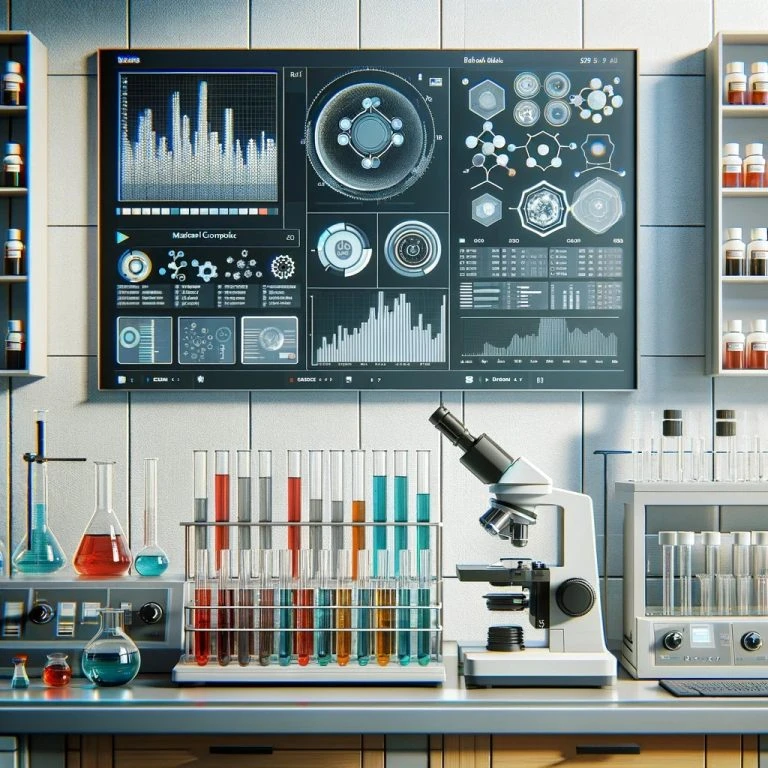 Impact Across Industries
Material composition testing laboratories have a profound impact across various sectors, contributing to:
- Quality Control and Assurance: Ensuring that materials meet predefined specifications and are free from unwanted impurities or contaminants.
- Regulatory Compliance: Helping companies navigate complex regulatory landscapes by providing evidence that products are compliant with relevant standards, particularly in industries like pharmaceuticals, food and beverage, and environmental services.
- Innovation and Product Development: Offering insights that fuel the development of new materials with optimized properties, supporting innovation in fields such as nanotechnology, biotechnology, and sustainable materials.
- Failure Analysis: Identifying the root cause of material failures in products, aiding in corrective actions and enhancing product reliability.
Navigating Challenges and Future Directions
Material composition testing laboratories constantly adapt to the evolving landscape of material science, facing challenges such as the need for faster, more sensitive analysis methods and the ability to decipher increasingly complex materials. Advances in analytical technologies, coupled with the integration of artificial intelligence and machine learning for data interpretation, are poised to address these challenges, pushing the boundaries of what\'s possible in material analysis.
Conclusion
Material composition testing laboratories are indispensable in the quest for material excellence and innovation. By providing a window into the elemental and molecular makeup of materials, these laboratories ensure the reliability, safety, and performance of products across a multitude of industries. As technology advances and new materials emerge, the insights offered by material composition testing will continue to be a cornerstone of industrial innovation, quality assurance, and regulatory compliance.
























Sign in to leave a comment.