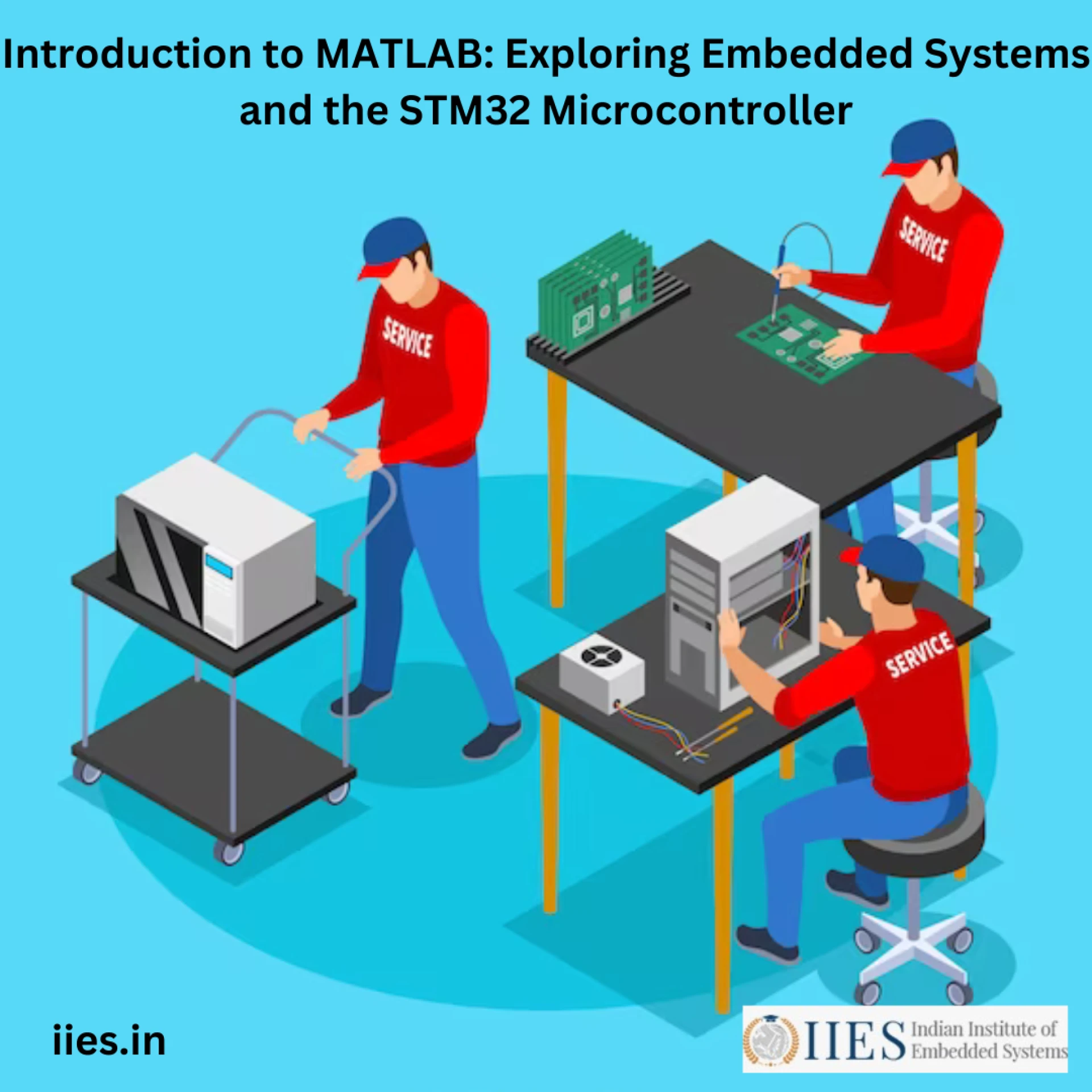

Embedded systems are computer systems that interact with the physical world and are designed to perform specific tasks. They are used in a wide range of applications, from automotive systems to medical devices. Embedded systems require efficient software design, testing, and validation, which can be achieved with MATLAB. In this blog, we will discuss ARM Cortex-based embedded systems and how MATLAB can be used to develop embedded system.
What is an ARM Cortex-based embedded system?
ARM Cortex processors are widely used in embedded systems due to their low power consumption and high-performance characteristics. ARM Cortex-based embedded systems are designed to control the operations of electronic devices, and they have become increasingly popular in recent years, driving the development of new consumer electronics devices.
Why use MATLAB for ARM Cortex-based embedded system development?
MATLAB provides a comprehensive environment for the development of embedded systems. The use of MATLAB for embedded system development has many benefits, such as:
Rapid prototyping: MATLAB provides an interactive environment that allows for the fast design, testing, and validation of prototypes.Automatic code generation: MATLAB can generate efficient, optimized, and reliable C code from MATLAB code. This saves development time and reduces the risk of errors and coding mistakes.Testing and debugging: MATLAB provides a powerful debugging environment that allows users to test and troubleshoot embedded code.Integration with other tools: MATLAB can integrate with other popular embedded development tools, such as Simulink, Stateflow, and Embedded Coder.ARM Cortex-based embedded system software design with MATLAB
MATLAB can be used for software design and development for ARM Cortex-based embedded systems. The following are some examples of how MATLAB can be used for embedded system development:
Image ProcessingFor embedded systems that use image processing algorithms, MATLAB provides an optimized code generation capability in which C code can be generated and efficiently executed on ARM Cortex processors. MATLAB functions can be designed and implemented to perform tasks such as image filtering, feature detection, and object recognition. MATLAB also provides an image acquisition toolbox to acquire images from cameras or video streams in real-time.
Motor ControlMATLAB provides tools to design, implement, and validate motor control systems. MATLAB can be used for motor control applications including servo motors, DC motors, and stepper motors. The control algorithms can be simulated in MATLAB, and the optimized C code can be generated using the MATLAB Coder that runs on an ARM-Cortex processor.
Wireless CommunicationMATLAB provides built-in wireless communication support for popular protocols, such as WiFi, Bluetooth, and ZigBee. Using MATLAB, developers can design wireless communication modules for monitoring and controlling embedded systems.
How to get started with MATLAB for ARM Cortex-based embedded system development
MATLAB provides a comprehensive environment for the development of embedded systems. The following are some steps to get started with using MATLAB for ARM Cortex-based embedded system development:
Download MATLAB from the MathWorks website.Get familiar with MATLAB and its features.Learn the basics of the ARM Cortex-based embedded system architecture and how it works with MATLAB.Use MATLAB to develop some simple applications for ARM Cortex-based embedded systems.Explore the code generation capabilities of MATLAB and how it can be used for optimization.Use MATLAB to develop more complex applications for ARM Cortex-based embedded systems.Conclusion
In this blog, we have discussed ARM Cortex-based embedded systems and how MATLAB can be used to develop embedded systems. We have reviewed the benefits of using MATLAB for embedded system development and showed examples of how MATLAB can be used for software design and development for ARM Cortex-based embedded systems. MATLAB's efficient C code generation capability saves development time and reduces coding errors, which are essential for developing reliable and efficient embedded systems.
If you are interested in learning more about MATLAB and embedded system development, check out the Indian Institute of Embedded Systems (IIES). IIES provides comprehensive instructor-led and self-paced embedded system online courses and development using MATLAB. Learn new skills or improve your existing ones while networking with other professionals in the industry. Register now and unleash your potential!
Call to action
Explore the Indian Institute of Embedded Systems (IIES) for further learning opportunities in programming.







Sign in to leave a comment.