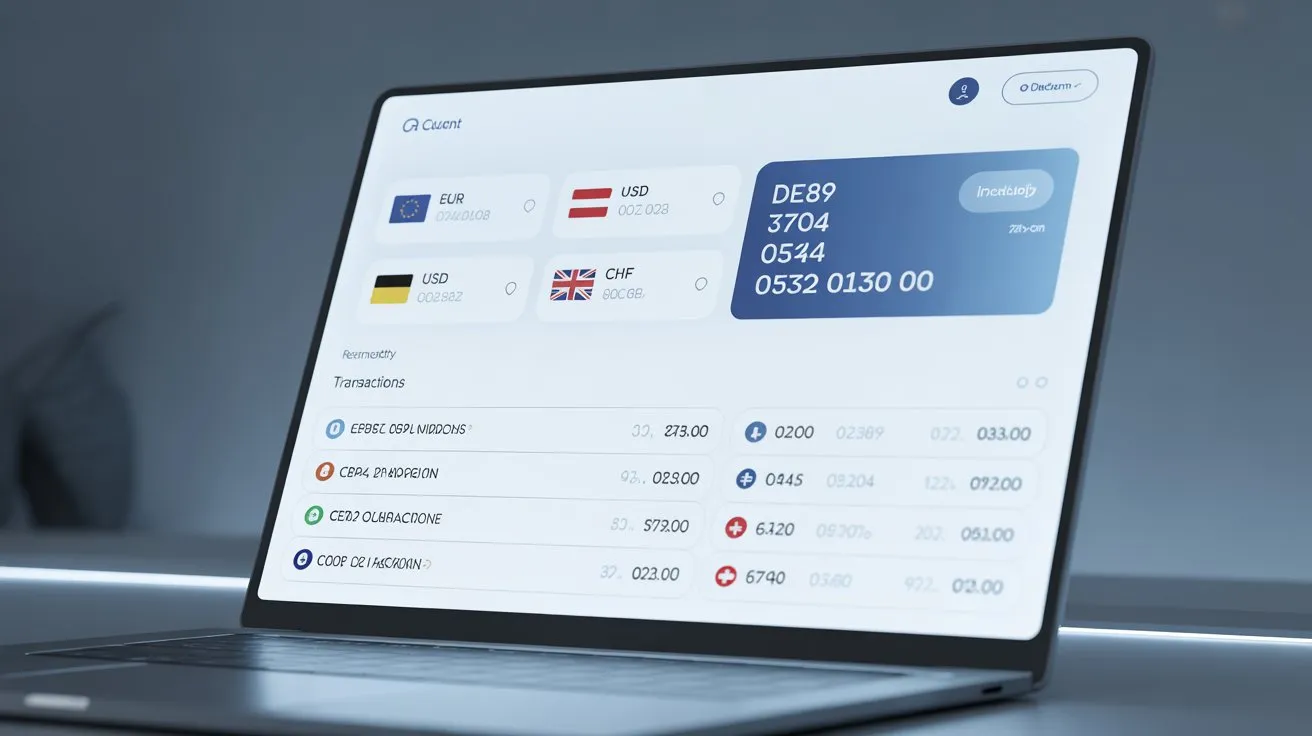

The landscape of modern commerce is fundamentally borderless. Today, a digital agency based in one country can effortlessly manage specialized software engineering talent in Eastern Europe, host its infrastructure via a US-based cloud provider, and sign enterprise clients across East Asia. While expanding your operational reach has never been simpler, scaling your underlying financial foundation to keep pace remains a notorious bottleneck. Traditional legacy banks are fundamentally products of domestic design. When a fast-growing business attempts to expand internationally using a standard single-currency account, it is routinely hit with slow processing times, complex intermediary routing paths, and aggressive currency conversion fees that silently chip away at hard-earned profit margins. To truly thrive internationally, forward-thinking businesses are moving away from these rigid constraints. Transitioning to a dedicated multi-currency iban account gives your enterprise a localized financial footprint across multiple global markets, all managed through a single, centralized digital interface.
An International Bank Account Number (IBAN) with native multi-currency capabilities completely rewrites the rules of international cash flow management. Instead of forcing automatic, expensive conversions every time an overseas invoice settles, this advanced setup allows your business to collect, hold, and deploy funds in major global currencies like Euros, British Pounds, and US Dollars exactly as if you were a local domestic merchant. When you invoice an international client, they can pay you in their preferred currency without triggering international wire fees, drastically shortening settlement times down to minutes. You gain total control over your foreign exchange strategy, allowing your treasury team to safely hold foreign balances and convert them at competitive wholesale market rates only when conditions directly favor your company's bottom line.
Beyond the immediate transactional cost savings, a unified multi-currency infrastructure significantly cuts down your operational and administrative overhead. Managing five different bank accounts across five different countries to handle international commerce quickly turns bookkeeping into an absolute nightmare. A single digital multi-currency hub consolidates all of your global transaction data into one clear ledger. This allows you to effortlessly plug your day-to-day banking directly into automated cloud accounting software, real-time payroll systems, and global e-commerce payment gateways. This level of financial automation keeps your core team lean, agile, and focused on scaling your market presence rather than manually reconciling cross-border transfers.
However, because the digital banking and fintech sectors are growing so rapidly, selecting the perfect corporate partner requires a highly strategic approach. Every digital institution operates under unique financial licenses, meaning their baseline fee structures, supported currency pairs, and compliance onboarding protocols vary wildly across the industry. Some platforms tailor their software explicitly for high-volume e-commerce marketplaces, while others focus on robust compliance and security for specialized B2B corporate entities. Partnering with an mismatched provider can result in unexpected volume restrictions or high maintenance fees that stall your momentum. To ensure your business operations remain secure, automated, and highly cost-effective, it is always a smart strategy to compare global providers so you can confidently pick the ideal financial foundation for your borderless enterprise.
























Sign in to leave a comment.