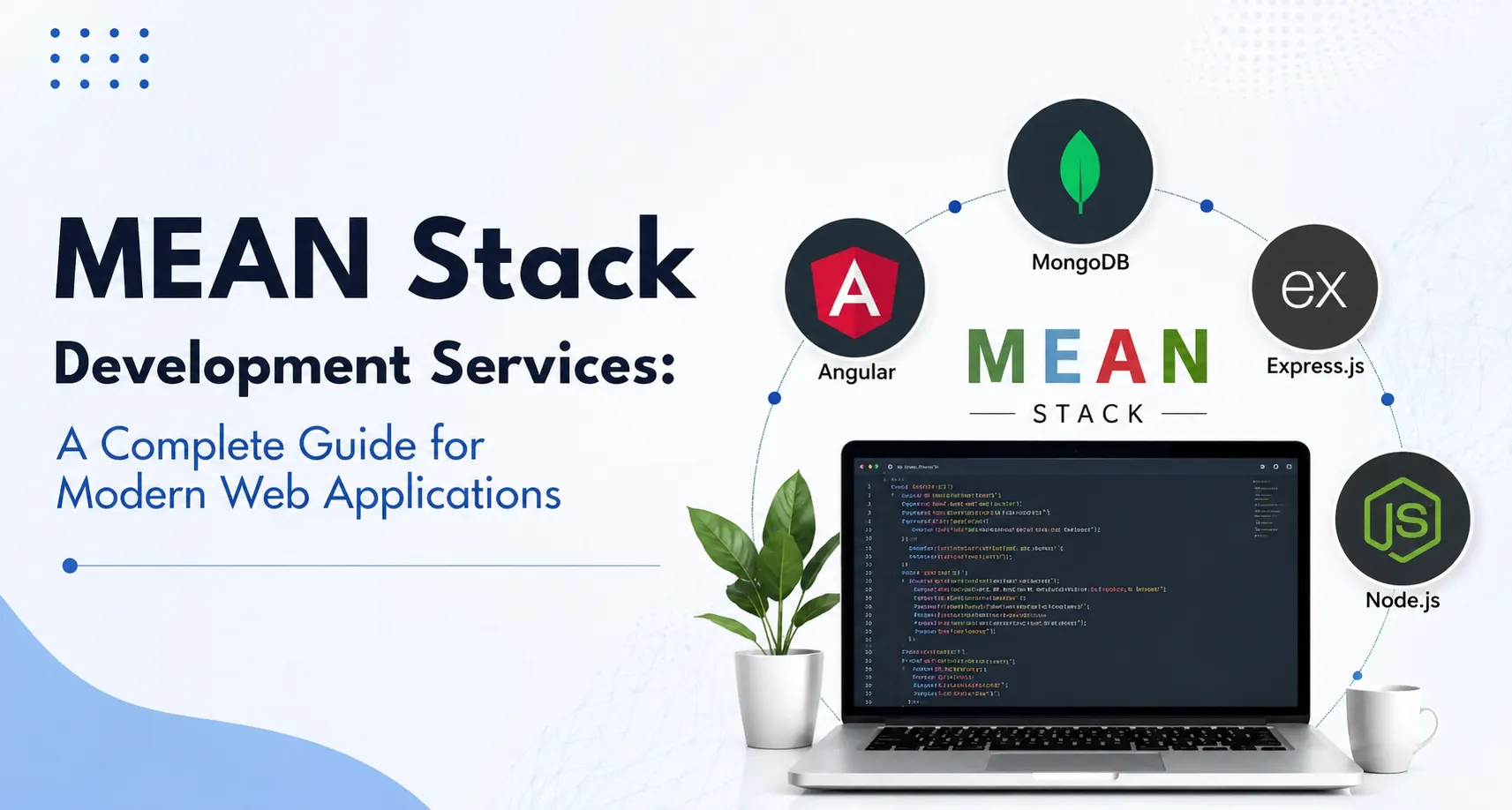


Modern businesses need web applications that are reliable, scalable, secure, and easy to maintain. The technology stack selected for a project can influence application performance, development efficiency, maintenance requirements, and future expansion. MEAN stack development services provide a practical approach for businesses that want to create modern web applications using JavaScript-based technologies.
MEAN consists of MongoDB, Express.js, Angular, and Node.js. Together, these technologies cover the database, backend, frontend, and server-side runtime requirements of a web application. Using JavaScript and related technologies across different layers can also make collaboration easier for development teams.
Whether a business needs a customer portal, SaaS platform, enterprise application, eCommerce solution, or real-time dashboard, MEAN stack development can be considered when its technical characteristics match the project's requirements.
What Is MEAN Stack Development?
MEAN stack development is a full-stack web development approach based on four core technologies:
- MongoDB: A document-oriented NoSQL database used to store and manage application data.
- Express.js: A lightweight Node.js framework used for backend development and API creation.
- Angular: A TypeScript-based frontend framework for developing structured and interactive web interfaces.
- Node.js: A JavaScript runtime used to execute JavaScript on the server.
These technologies can work together as a complete application stack. Angular manages the user interface, Node.js and Express.js handle server-side operations and APIs, while MongoDB manages application data.
The stack is not a universal solution for every project. Database relationships, application complexity, performance requirements, development expertise, and long-term maintenance should all be considered before selecting it.
Why Businesses Choose MEAN Stack Development Services
Businesses choose MEAN stack development services for several technical and practical reasons. The combination of frontend and backend technologies can support many types of web applications.
JavaScript-Based Development
One of the main characteristics of MEAN is that JavaScript is used throughout much of the application stack. Developers can work with a familiar programming language across frontend and backend development.
This can simplify communication within development teams and reduce the need to manage completely different programming environments.
Efficient Application Development
A consistent technology environment can support efficient development. Developers can use established libraries, frameworks, development tools, and testing approaches to build application components.
Development speed still depends on project complexity, requirements, team experience, architecture, and testing needs.
Flexible Data Structure
MongoDB uses document-based data storage, which can be useful for applications where data structures may evolve. Developers can design documents around application requirements without always following a rigid relational table structure.
However, MongoDB should be selected based on actual data and query requirements rather than using it simply because it is included in the MEAN stack.
Support for Interactive Applications
Node.js uses an event-driven architecture that can work well for applications with many concurrent connections and I/O operations.
With suitable architecture, MEAN can support:
- Real-time dashboards
- Messaging applications
- Collaboration platforms
- Notification systems
- Booking applications
- Customer portals
- SaaS applications
Scalability
MEAN applications can be designed with modular architecture, APIs, caching, load balancing, cloud infrastructure, and other scalability techniques.
However, scalability does not come automatically from the technology stack. Database design, application architecture, infrastructure, code quality, and monitoring all affect how well an application performs as usage increases.
Key Technologies in the MEAN Stack
Understanding each component helps businesses determine how the technology stack can support their application.
MongoDB
MongoDB is a NoSQL document database that stores data in BSON documents. It is commonly used for applications that need flexible data structures and document-oriented data management.
Common applications include:
- User profiles
- Product catalogs
- Content management
- Application settings
- Activity records
- Customer information
Indexes, data validation, schema design, and query optimization remain important when working with MongoDB at scale.
Express.js
Express.js is a Node.js web framework used to build backend services and APIs.
It provides functionality for:
- Routing
- HTTP requests
- Middleware
- API endpoints
- Authentication flows
- Error handling
Its relatively lightweight structure gives developers flexibility in organizing backend applications.
Angular
Angular is a TypeScript-based framework for building frontend applications. It provides features such as components, routing, forms, dependency injection, and application structure.
Angular can be particularly suitable for larger applications where organized frontend architecture and maintainability are important.
Node.js
Node.js allows JavaScript to run outside the browser and is commonly used for backend services and APIs.
It can support:
- REST APIs
- Backend applications
- Real-time communication
- Authentication services
- Data processing
- Microservices
The application's architecture should determine how Node.js is used and how workloads are distributed.
Common Applications of MEAN Stack Development
MEAN stack web development can be used for various business and consumer applications.
Common use cases include:
- SaaS applications
- Enterprise web applications
- eCommerce platforms
- Online marketplaces
- Customer portals
- Booking platforms
- Learning management systems
- Content management systems
- Real-time dashboards
- Project management applications
- Business automation platforms
- Communication applications
The best technology choice depends on the application's specific requirements. For example, applications with highly complex relational data may be better suited to a relational database, while document-oriented data may fit MongoDB more naturally.
Custom MEAN Development for Business Requirements
Custom MEAN development involves building an application around specific business processes, user requirements, technical specifications, and integration needs.
Instead of adapting an existing generic platform, businesses can define application functionality based on their own workflows.
A custom MEAN application may include:
- Custom user roles
- Role-based permissions
- Third-party API integrations
- Advanced dashboards
- Custom reporting
- Payment gateway integration
- CRM integration
- Automated workflows
- Multi-tenant architecture
- Custom authentication
- Cloud deployment
Custom development also allows the technical team to plan the architecture around expected traffic, data volume, security requirements, integrations, and future expansion.
MEAN Stack Development Process
A structured development process helps reduce technical risks and improves project management.
1. Requirement Analysis
The first stage involves understanding business objectives, target users, required features, workflows, integrations, data requirements, and technical constraints.
Clear requirements help development teams estimate the scope and identify potential technical challenges before coding begins.
2. UI/UX Design
Designers create user flows, wireframes, prototypes, and application interfaces.
Good UX design should make important functions easy to find and reduce unnecessary steps for users. The interface should also be designed for different screen sizes and accessibility requirements where applicable.
3. Architecture Planning
The development team defines the frontend structure, backend services, database model, API architecture, authentication system, hosting environment, and security controls.
Architecture decisions should consider:
- Application performance
- Security
- Scalability
- Maintainability
- Data requirements
- Integration needs
4. Development
Developers build the Angular frontend, Node.js and Express.js backend, MongoDB database, APIs, authentication systems, and required integrations.
Development should follow appropriate coding standards, documentation practices, and security guidelines.
5. Testing
Testing is necessary to identify functional and technical problems before production deployment.
Testing may include:
- Functional testing
- API testing
- Database testing
- Security testing
- Performance testing
- Compatibility testing
- Usability testing
Automated tests can also help identify regressions when new features or updates are introduced.
6. Deployment
Once development and testing are completed, the application can be deployed to the production environment.
Deployment planning may include:
- Cloud infrastructure
- Domain and hosting configuration
- Database setup
- Monitoring
- Logging
- Backup systems
- Security controls
7. Maintenance and Updates
Application development does not end after deployment. Regular maintenance may include security updates, bug fixes, dependency upgrades, performance improvements, monitoring, and new feature development.
Ongoing maintenance helps keep applications compatible with changing technologies and business requirements.
How to Choose a MEAN Stack Development Company
Choosing the right MEAN stack development company is an important decision because the quality of architecture and development can directly affect application performance and maintenance.
Businesses should evaluate a potential development partner based on:
- Previous MEAN stack projects
- Full-stack development experience
- Angular and Node.js expertise
- MongoDB database knowledge
- API development capabilities
- Security practices
- Testing methodology
- Cloud and DevOps experience
- Communication and project management
- Post-launch support
Businesses should also ask about the development team's approach to database optimization, security testing, scalability, application monitoring, and long-term maintenance.
Technical case studies and previous project experience can provide useful information when comparing development providers.
Challenges of MEAN Stack Development
Although MEAN offers several advantages, businesses should also understand its limitations.
Database Selection
MongoDB is not ideal for every type of data model. Applications with highly interconnected relational data may require a relational database depending on their requirements.
Frontend Complexity
Angular provides a structured framework, but large applications still require proper component architecture, state management, performance optimization, and code organization.
Backend Performance
Node.js is well suited to many I/O-heavy workloads, but CPU-intensive operations may require additional architectural planning.
Security
Security must be addressed across every layer of the application, including Angular, APIs, Node.js, Express.js, MongoDB, authentication systems, and cloud infrastructure.
Maintenance
Dependencies, frameworks, libraries, browsers, operating systems, and third-party services change over time. Regular maintenance is therefore necessary.
Best Practices for MEAN Web Development
Following established development practices can improve application quality and maintainability.
Important practices include:
- Use secure authentication and authorization.
- Apply role-based access controls where required.
- Validate and sanitize user input.
- Protect APIs from unauthorized access.
- Use HTTPS for data transmission.
- Create appropriate database indexes.
- Monitor application performance.
- Maintain clear documentation.
- Use automated testing where practical.
- Keep dependencies updated.
- Establish backup and recovery procedures.
- Monitor production applications for errors and security issues.
These practices should be adapted to the application's risk level, industry requirements, and technical architecture.
When Should You Choose MEAN Stack Development?
MEAN can be a suitable option when a business needs a JavaScript-based full-stack application with a dynamic frontend, API-driven backend, and flexible document-oriented data storage.
It may be worth considering for:
- New SaaS products
- Business dashboards
- Customer-facing portals
- Real-time applications
- Online marketplaces
- Enterprise web platforms
- Content-based applications
However, technology selection should begin with business and technical requirements rather than a predetermined framework.
Conclusion
MEAN stack development services provide a practical approach to creating modern web applications with MongoDB, Express.js, Angular, and Node.js. The stack can support a wide range of applications, including SaaS platforms, enterprise systems, dashboards, marketplaces, customer portals, and business applications.
The effectiveness of MEAN stack development depends on proper architecture, database design, secure API development, frontend organization, testing, performance optimization, and ongoing maintenance.
For businesses with specialized workflows or technical requirements, MEAN stack solutions can provide an application designed around specific needs instead of forcing existing processes into a generic solution. Working with an experienced development company can help businesses make informed technology decisions and build applications that are secure, maintainable, scalable, and suitable for long-term use.

























Sign in to leave a comment.