
MEAN-Stack Vs. Full-Stack Developer — The Differences
Full-stack web developers are adept at managing both the front-end and back-end operations of the website. To provide a seamless user experience for visitors, these full-stack developers manage the website's web design, interface, and back-end operations using a variety of programming languages and tools. However, it is unclear how full-stack and MEAN stack are related.
One of the JavaScript stacks used by full stack developers to build websites and web apps is the mean stack. The Mean Stack framework handles the server-side and client-side execution of JavaScript scripts.
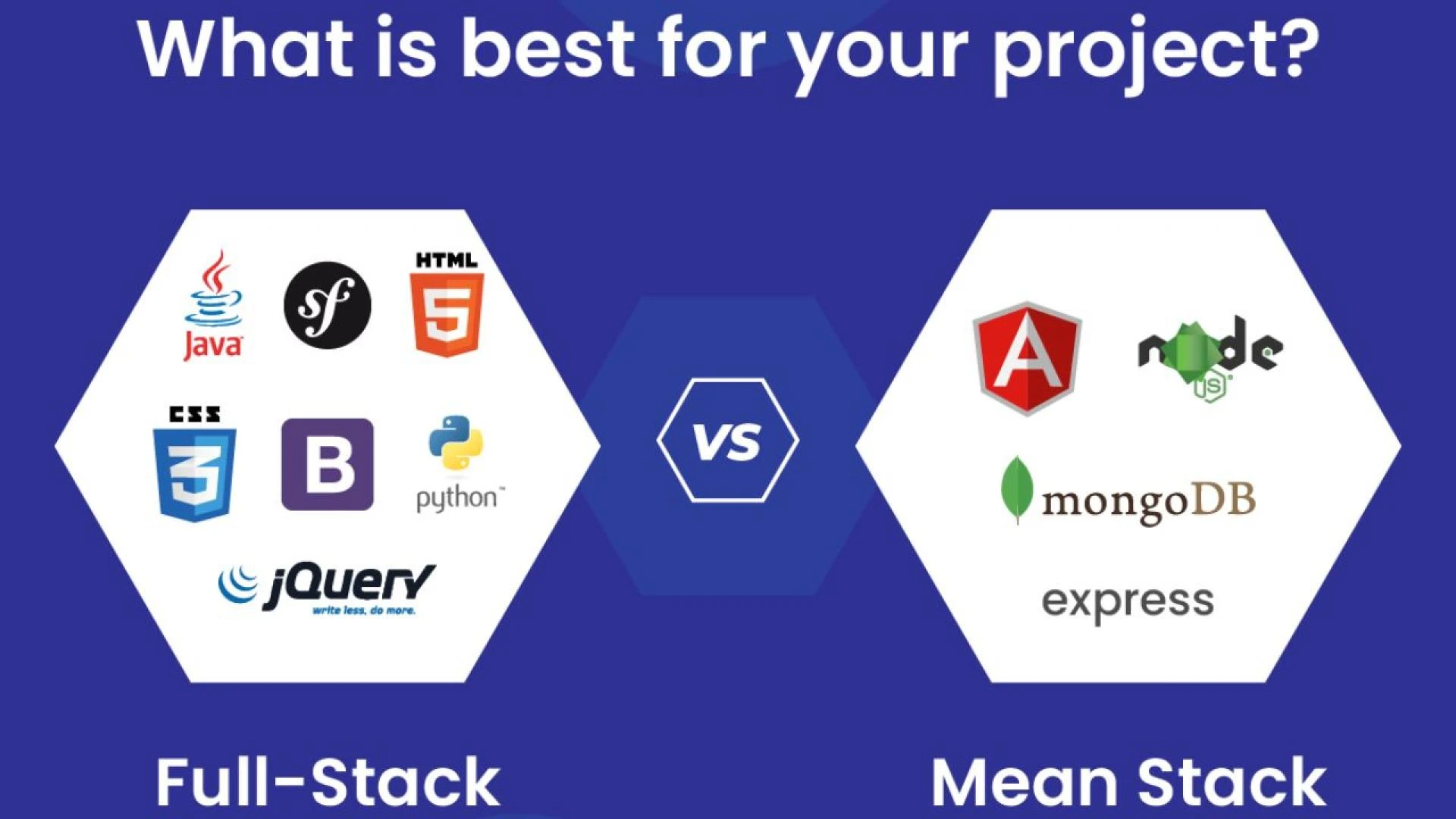
Full Stack vs. Mean Stack
In contrast to the MEAN stack, which solely leverages the Javascript framework, full-stack development can use a powerful server-side programming language. In addition, MongoDB is the only database available for MEAN stack development. On the other hand, full-stack development uses databases like MySQL, SQL, etc.
Comparison of the MEAN Stack with the Full Stack
In order to convey one's needs and goals verbally and orally, one must use both auditory and oral skills. This is what is meant by language development. As you create your application, the MEAN stack's primary development languages will either be JavaScript or TypeScript. Fortunately, you can use whatever server-side programming language you like with Full Stack, including PHP and Python.
Database Support
The type of database that full stack and MEAN stack support are referred to as database support. You should be aware of the types of databases that Full Stack and MEAN Stack support in order to use them effectively. MongoDB is utilized as the database to accomplish the functionality of the MEAN stack. You may manage databases using the open-source databases MySQL, MongoDB, and SQLite3 with Full Stack.
Technology Stack
A technology stack is the collection of the numerous technologies that a company uses to run and develop projects and applications. Node.js, Express, AngularJS, and MongoDB are all components of the MEAN stack. PHP, MySQL, MariaDB, or PostgreSQL databases are utilized in Full Stack applications, and front-end frameworks like Zend Framework and Laravel are used for front-end development.
Mobile Support
The ability of a program or application to be used on a mobile phone or other portable device is referred to as mobile support. One of the mobile development frameworks that work with the MEAN stack is Ionic Framework. Full stack supports PhoneGap/Cordova and Appcelerator Titanium as its two supported platforms.
Server-side templating
When using server-side templating, the content is rendered from the server's back end or from the HTML code created there. The handlebar is a server-side templating language that is used by the MEAN stack. The server-side templating languages supported by the Full Stack platform are PHP, Twig, or Jade.
Performance
Performance in the full stack and MEAN stack is primarily characterized by speed and attention. You can see that one of them is quicker to construct than the other, and it also focuses on the particular use cases for which it was intended. MEAN stack can be developed more quickly than Full Stack because it is more focused on specific use cases. Full stack construction requires more time than MEAN stack because it is not focused on a single use case.
Open-source
A group of programs that are open source can have their source code viewed, altered, and improved by anyone with the right motivation. The MEAN stack's open-source nature is a significant component. Full stacks are not open source, nor are stacks that run on them.
How do MEAN Stack and the full stack compare?
JavaScript, MongoDB, Express, Angular, and Node.js are all used in both MEAN and Full Stack in a highly comparable manner. This is because both of them are full-stack frameworks, meaning they come with everything you need to develop a web application from top to bottom.
On the other hand, the MEAN stack concentrates more on the front end, whereas the Full Stack concentrates more on the back end. MongoDB is a database, Express is a server-side JavaScript framework, AngularJS is a front-end framework, and Node.js is a programming language (back-end framework).
Web application frameworks that include the front end, middle tier (database), and back end are referred to as "full stack" in general (server).
By now you might have got an idea of how Full stack development differs from MEAN-Stack development. Understanding them is important before beginning a career in full-stack development with the best full-stack software development course in Canada. Visit the site for more information.
0






Sign in to leave a comment.