

Behind every well-run process facility is a quiet but constant balancing act: knowing exactly what's flowing through the system, and making sure it's separated, measured, and managed correctly at every stage. Get this wrong, and the consequences ripple outward, from inaccurate production data to equipment strain that shortens the life of expensive components. Get it right, and operations run with a level of predictability that makes everything downstream easier to manage. This article looks at two foundational elements of that balancing act: separation and flow measurement, and why both deserve more attention than they often receive.
Why Accurate Measurement Underpins Everything Else
It's easy to think of flow measurement as a background task, something instruments handle automatically without much thought. In reality, the accuracy of these readings affects nearly every decision made on a process floor, from production reporting to regulatory compliance to identifying inefficiencies before they become costly problems.
Inaccurate measurement doesn't always announce itself loudly either. Small discrepancies can persist for months, quietly skewing data and leading to decisions based on numbers that don't reflect what's actually happening in the system. This makes choosing the right measurement technology a far more consequential decision than it might initially appear, particularly in facilities where production figures feed directly into commercial reporting and regulatory submissions.
The First Step: Effective Separation
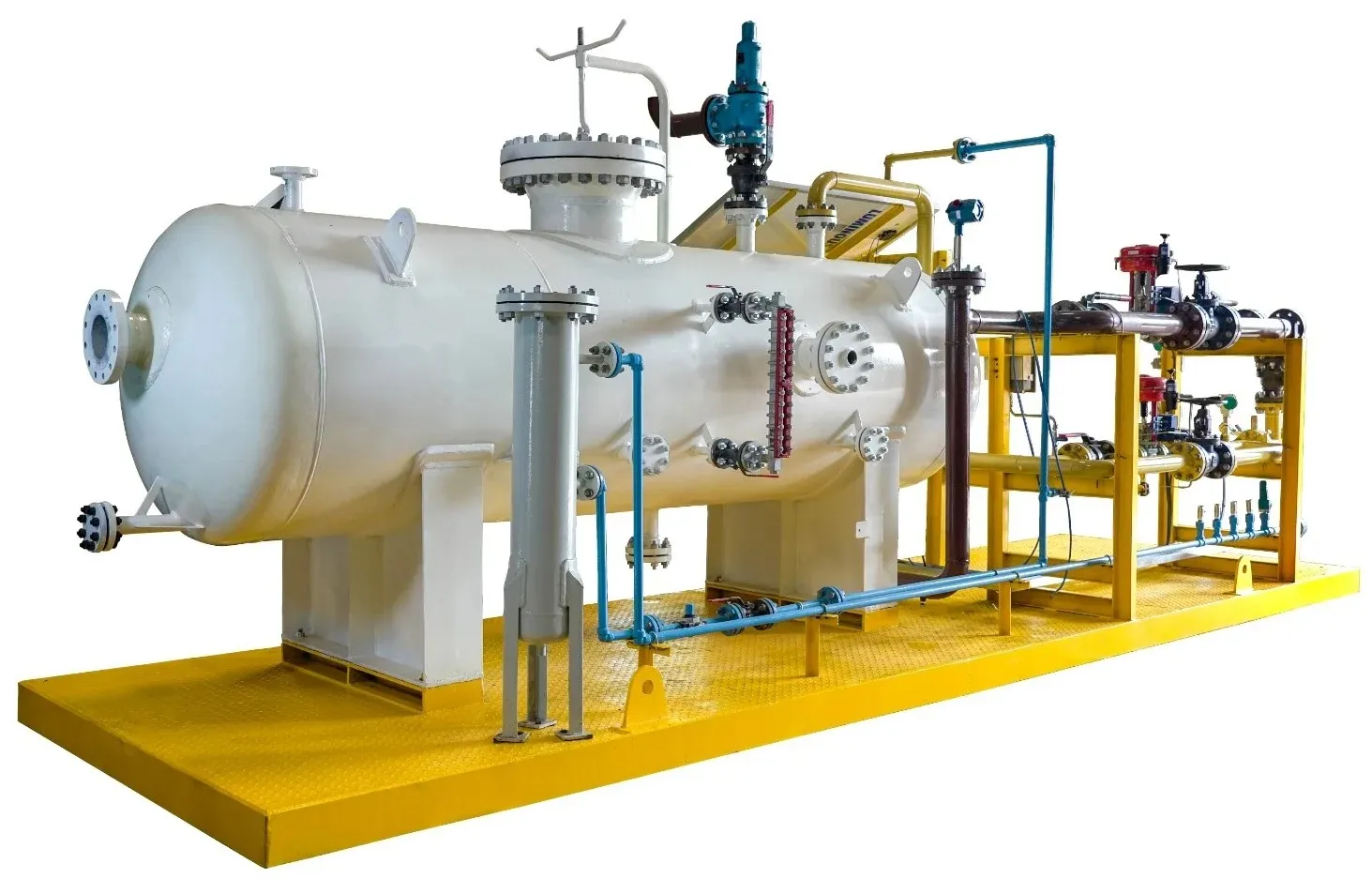
Before flow can be meaningfully measured in many applications, the components of a production stream often need to be separated first. Raw streams typically arrive as a combination of liquids and gases, and processing them effectively starts with dividing these elements cleanly.
Reliable gas separators handle this by using pressure changes and gravity to divide incoming streams into their respective components, allowing each to be processed, measured, and managed independently. Poorly performing separation equipment can lead to carryover between phases, which in turn affects the accuracy of any measurement taken downstream, creating a problem that compounds rather than stays isolated.
A facility dealing with persistent carryover issues, for instance, often finds the root cause traces back to separation equipment that was undersized or poorly matched to actual flow conditions in the first place, rather than a fault anywhere downstream. Catching this early, before it affects broader operations, tends to save considerable time and cost over the life of a facility. It also tends to be far cheaper to correct at this stage than after it has already influenced months of downstream data.
Choosing the Right Flow Measurement Technology
Once separation is handled properly, accurate flow measurement becomes the next priority. Several technologies exist for this purpose, and the right choice tends to depend heavily on the specific conditions of the application. Orifice meters remain a common, general-purpose option thanks to their simplicity and widespread industry standardisation. Coriolis meters suit situations where mass flow data is essential rather than volumetric readings. Ultrasonic meters appeal where a non-intrusive approach is preferred, since they involve no moving parts and correspondingly lower maintenance demands.
Among these options, a properly specified venturi tube flow meter stands out for applications where both accuracy and minimal pressure loss matter most. This makes it a particularly common choice across oil and gas, chemical, and similar process environments where operators are closely monitoring efficiency alongside accuracy. The design itself has remained popular for decades precisely because it manages to deliver high accuracy without imposing the kind of operational penalty that some alternative technologies bring with them.
Why Pressure Loss Matters More Than It Seems
One often underappreciated factor in flow measurement is how much pressure a device consumes during the measurement process itself. Devices that create excessive pressure drop force pumping systems to work harder to compensate, increasing energy costs across the operation. This is part of why venturi-style designs, which are engineered specifically to minimise this loss while maintaining accuracy, remain a preferred option for operators focused on long-term efficiency rather than just upfront cost. Over time, this efficiency advantage tends to outweigh the marginally higher upfront cost compared to simpler measurement devices, particularly in facilities running continuous operations where even small energy savings compound significantly across a year.
Bringing Separation and Measurement Together
These two elements, separation and measurement, rarely operate in isolation. Poor separation undermines measurement accuracy, while inaccurate measurement can mask underlying separation issues until they become significant problems. Facilities that approach both as part of a single, integrated system tend to achieve far more consistent and reliable operations than those treating each as a standalone concern, addressed only when something goes visibly wrong.
This integrated thinking also tends to influence how facilities approach maintenance scheduling, since issues in one area so often have knock-on effects in the other. Treating separation and measurement as connected parts of the same process, rather than isolated line items, tends to produce far steadier results across an entire operation, and makes troubleshooting considerably more straightforward when something does eventually need attention.
Bringing It All Together
Reliable process operations depend on getting the fundamentals right: clean separation and accurate measurement working hand in hand. When these elements are properly engineered and matched to actual operating conditions, the benefits extend across the entire facility, from data accuracy to energy efficiency to equipment longevity. For operators looking to strengthen this part of their operations, NND Oil & Gas brings the kind of engineering experience that helps turn these foundational processes into a genuine operational advantage.

























Sign in to leave a comment.