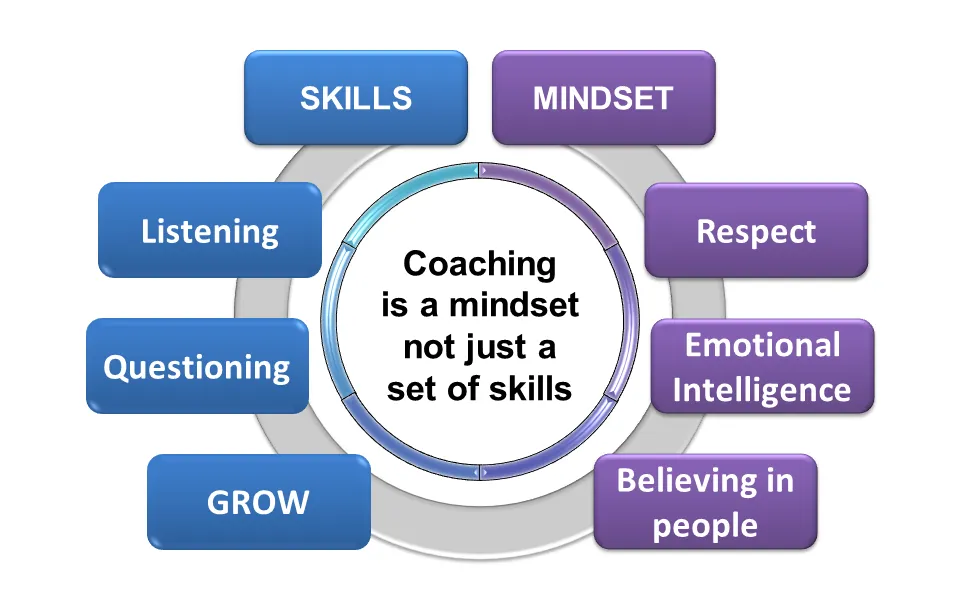

Most people who invest in personal growth start the same way: they try to think differently. They read the books, adopt the morning routines, repeat the affirmations, and for a while, it works. Confidence rises. Motivation returns. Then, months later, the old patterns creep back in and it feels like nothing really changed at all.
This is one of the most common frustrations in coaching and leadership development, and it usually comes down to a single misunderstanding: confusing mindset work with identity work. They aren't the same thing, and knowing the difference can completely change how sustainable your growth actually is.
What Mindset Coaching Actually Does
Mindset coaching focuses on the way you think. It helps you challenge limiting beliefs, build resilience, manage self-doubt, and reframe setbacks as opportunities rather than failures. It's why phrases like "growth mindset" and "change your thoughts, change your life" have become so central to leadership training and personal development programs.
For many situations, this works well. A leader nervous about a big presentation can benefit enormously from mindset coaching that replaces self-doubt with confidence. An entrepreneur facing a setback can learn to see failure as feedback instead of proof they're not good enough. Mindset coaching gives people practical, immediate tools for performance and resilience.
But mindset coaching answers how you think. It doesn't always answer why you think that way in the first place.
Where Identity Coaching Comes In
Identity coaching goes one layer deeper. Instead of just addressing thought patterns, it looks at the beliefs, values, and self-perception underneath them the internal story that shapes how you see yourself as a leader, a professional, and a person.
Here's a simple way to picture the difference: if personal growth were a house, mindset would be the interior design how the space feels day to day. Identity would be the foundation what determines whether the whole structure can actually hold up over time. You can redecorate as often as you like, but if the foundation hasn't shifted, the same cracks tend to reappear.
This explains a pattern many coaches and executives have noticed: two people can go through the exact same leadership training, learn identical strategies, and get identical advice yet six months later, one has confidently stepped into new responsibilities while the other has quietly slipped back into old habits. The difference usually isn't intelligence or effort. It's whether their underlying identity actually shifted, or just their thinking did for a while.
Why Successful People Still Feel Stuck
This distinction matters most for people who've already achieved a lot. Founders who sell their businesses. Executives who finally reach the C-suite. High performers who've checked every box on the list of "success" and still feel like something's missing.
These aren't confidence problems. They're identity problems. The version of yourself that got you here might not be the version you need going forward, and no amount of positive thinking resolves that gap. What resolves it is asking a different question entirely not "how do I think differently?" but "who am I becoming?"
Which One Do You Actually Need?
Neither approach is better than the other they simply solve different problems.
Mindset coaching tends to help when the challenge is about performance: building confidence before a big move, staying resilient through change, or breaking through a specific mental block.
Identity coaching tends to help when the challenge is more personal: questioning your purpose, feeling disconnected from a role you've outgrown, or sensing that outward success no longer feels aligned with who you are.
If you've done the mindset work and the change still hasn't stuck, that's usually the signal it's time to look one layer deeper at the identity driving the thoughts, not just the thoughts themselves.



















Sign in to leave a comment.