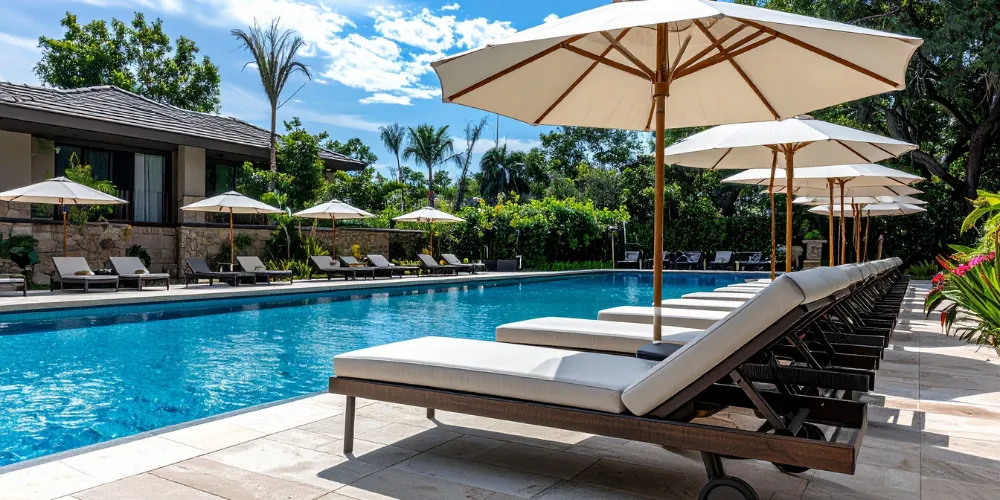

Poolside comfort is essential for a resort, as the choice of shade solutions directly impacts guest satisfaction and their length of stay.
An underperforming or deteriorating pool umbrella not only affects one season but also increases ongoing costs, harms the pool area's appearance, and reflects poorly on the property's overall standard.
Making the right choice from the start is crucial. Here are common mistakes resort operators make when buying pool umbrellas and what to consider instead.
Choosing the Wrong Size
Scale is one of the first things to get right, and one of the most common things to get wrong. Before making an umbrella purchase, consider:
- The dimensions of the pool area and the surrounding deck
- The size and arrangement of seating zones
- Canopy shape and diameter relative to the furniture beneath it
- How shade requirements shift as the sun moves throughout the day
A square umbrella can work well over a defined dining or lounge zone, while a larger round canopy may suit open pool deck areas where coverage needs to extend across multiple chairs and tables.
Focusing Only on Upfront Cost
Cost is always a factor, but basing purchase decisions on upfront price often leads to poor outcomes in a resort environment.
Pool umbrellas endure constant exposure to UV rays, wind, moisture, and pool chemicals. Products not designed for these conditions deteriorate and require frequent replacement. Investing in high-quality outdoor umbrellas that maintain their appearance over multiple seasons offers better long-term value. Damaged umbrellas on a pool deck create a negative impact on the property's presentation and detract from the guest experience.
Underestimating Wind Exposure
Wind performance is a crucial factor that resort operators often overlook when choosing shade solutions.
An umbrella that becomes unstable in windy conditions not only poses safety hazards but also creates operational difficulties. Canopies with wind vents or double wind vents allow hot air to escape, improving stability and reducing strain on the umbrella frame during gusty weather. Proper anchoring, whether through weighted bases, in-ground concrete footings, or fixed mounts, is essential, as the securing method impacts the umbrella’s performance throughout the season.
Overlooking Canopy Fabric Performance
The umbrella canopy is the most visible part of a pool umbrella, and its performance over time has a direct bearing on how the pool area looks and functions.
Resort operators sometimes place too much weight on colour and style when selecting a fabric canopy. Fabrics that fade or lose their shape after a season create a maintenance burden that guests notice. Materials such as Sunbrella are worth considering for resort applications, as they withstand prolonged exposure without deterioration. Cleaning with mild soap and water is sufficient, but if the fabric itself is built to last.
Not Accounting for Sun Movement
A pool umbrella that provides solid coverage in the morning may leave guests exposed by the early afternoon if the design does not allow for repositioning.
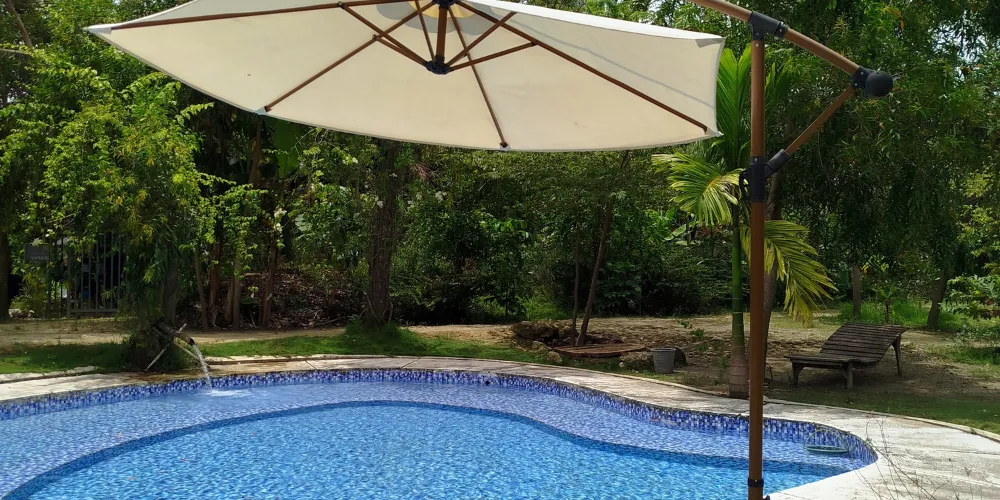
Resort operators who purchase umbrellas without considering adjustability often find coverage is inconsistent across the day. Cantilever umbrellas offer a practical advantage here. Without a centre pole blocking the middle of the space, a cantilever design allows the canopy to be repositioned without disrupting the furniture layout beneath it, giving staff the ability to provide shade where guests need it throughout the day.
Prioritising Appearance Over Performance
The appearance of a pool umbrella matters in a resort setting and contributes to the overall presentation of the outdoor space.
However, an umbrella that looks good but fails on shade coverage, structural integrity, or ease of operation creates problems that aesthetic appeal cannot offset. In a resort environment where umbrellas are in use across long operating days and varied weather conditions, performance has to come first. The best umbrella for a resort pool area brings both together and doesn't require constant attention from staff to stay in good order.
Ignoring the Surrounding Layout
A pool umbrella does not operate in isolation. It shares the space with sun loungers, dining tables, patio furniture, walkways, and pool access points, and how it interacts with these affects how well the outdoor space functions.
An umbrella that seems well-suited in isolation can create obstructions or limit movement once in place. Resort operators who plan the layout as a whole before purchasing are better positioned to choose an umbrella that integrates with the space. Sufficient clearance around each umbrella, both when open and when closed, should be part of that planning process.
Underestimating Maintenance Demands
Different umbrella constructions and materials require different levels of ongoing maintenance, and the demands of a resort environment make this worth thinking through before purchasing.
Metal components should be evaluated for rust resistance, as pool environments expose frames and fittings to moisture and chemicals on a regular basis. An umbrella frame built from corrosion-resistant material will hold up better and require less intervention over time. Understanding maintenance requirements before purchasing helps resort operators make a more informed decision and avoid problems after installation.
Final Thoughts
The pool area is one of the most used and most visible spaces on a resort property. The shade solutions chosen for it shape the guest experience, affect the property's appearance, and have ongoing cost implications depending on how well they perform over time.
Avoiding the most common purchasing mistakes, from sizing and canopy shape decisions to umbrella frame quality, wind performance, and layout planning, puts resort operators in a position to choose a pool umbrella that delivers across every season and meets the standard the property demands.
























Sign in to leave a comment.