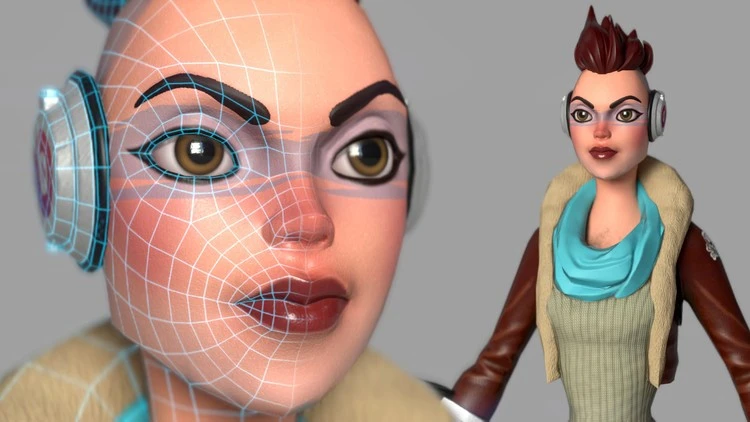

Modeling and texturing are two of the most crucial processes in the creation of animated content. They form the foundation upon which the visual elements of animation are built, enabling creators to bring characters, environments, and objects to life with stunning detail and realism. These processes, though often overlooked by casual viewers, are vital in ensuring that the final animated product captivates its audience and serves its intended purpose, whether in films, games, or advertising.
What is 3D Modeling?
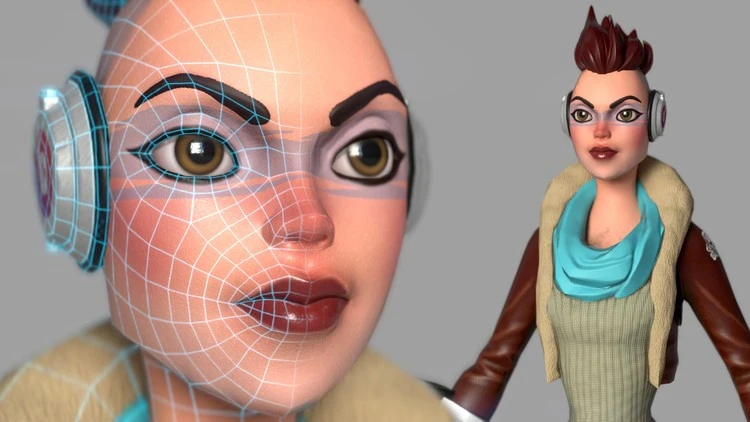
At its core, 3D modeling is the process of creating a three-dimensional representation of an object, character, or environment within a digital space. This is done using specialized software like Blender, Autodesk Maya, 3ds Max, or ZBrush. A model is essentially a mathematical representation of a physical object, built using polygons, vertices, and edges. These components form the structure or "skeleton" of the model, which animators later manipulate to give motion and life to their creations.
3D modeling can be categorized into three main types:
- Polygonal Modeling: This is the most common technique, where objects are constructed using polygons. It provides a good balance between detail and computational efficiency, making it ideal for real-time applications like video games.
- Sculpting: Digital sculpting mimics the process of sculpting clay. Artists work on a digital surface, pushing, pulling, and shaping it to create detailed models with complex features. This is often used for organic forms like characters and creatures.
- NURBS (Non-Uniform Rational B-Splines): NURBS are used for creating smooth and precise surfaces, often utilized in industrial design and engineering but occasionally applied in animation for highly polished models.
The process begins with a basic shape or template, which is then refined to include finer details. Tools such as extrusion, beveling, and smoothing are employed to manipulate the geometry of the model, allowing artists to achieve the desired complexity and form.
The Role of Texturing
Once a model is created, it lacks surface details such as colors, patterns, or material properties. This is where texturing comes in. Texturing involves applying 2D images, known as textures, onto the surface of a 3D model to give it depth, realism, and character. For example, a character model may be textured with skin tones, wrinkles, and pores, while an environment model could be covered in wood, metal, or stone textures.
The texturing process can be broken down into several key steps:
- UV Mapping: Before textures can be applied, the 3D model must be "unwrapped" into a 2D representation. This is called UV mapping, where the "U" and "V" represent the axes of the texture map. Think of it as peeling an orange and laying its skin flat. Proper UV mapping ensures textures are applied seamlessly without distortions.
- Painting and Detailing: Textures can be created from scratch using painting software like Adobe Substance Painter or Photoshop, or they can be based on real-world photographs. Artists often layer multiple textures to achieve a realistic look, adding details such as scratches, dirt, or wear and tear.
- Shading and Material Properties: In addition to applying textures, artists define the physical properties of a surface using shaders. Shaders determine how a surface interacts with light, including its reflectivity, transparency, and roughness. This step is essential in achieving realism.
Importance in Animation
Modeling and texturing play pivotal roles in animation by providing the visual foundation upon which all other aspects of the production depend. Here’s why they are indispensable:
- Realism and Immersion: Detailed models and lifelike textures make animated content believable and engaging. Whether it's the intricate details of a dragon's scales or the weathered look of a medieval castle, these elements contribute to a more immersive experience.
- Character Development: In storytelling, characters need to be visually compelling to resonate with the audience. Through modeling and texturing, artists define not only a character's physical appearance but also its personality. For example, a villain may have sharp, angular features and dark, worn textures, while a hero might be modeled with soft contours and bright, vibrant materials.
- World-Building: In animation, environments are as important as the characters themselves. A well-modeled and textured world establishes the mood, tone, and setting of a story. Textures, in particular, help differentiate between various surfaces and materials, adding depth to the world.
Challenges and Innovations
While modeling and texturing are essential, they come with their challenges. Creating highly detailed models can be time-consuming and computationally intensive. Ensuring that textures are realistic yet efficient for rendering is another hurdle, especially in real-time applications like gaming.
Recent innovations, however, have significantly streamlined these processes. For instance:
- Procedural Texturing: This technique uses algorithms to generate textures, reducing the need for manual painting. It allows for infinite variations and is particularly useful for large-scale environments.
- AI and Automation: Machine learning algorithms can now assist in generating realistic textures and optimizing models for animation, saving countless hours of manual labor.
- Photogrammetry: This technology involves scanning real-world objects and environments to create highly accurate 3D models and textures, enhancing realism in animation.
Conclusion
Modeling and texturing are the backbone of animation, transforming ideas and concepts into visually stunning realities. They demand a blend of artistic talent and technical expertise, requiring animators to not only master the tools of their trade but also understand the principles of design, physics, and storytelling.
From the graceful curves of a character’s face to the rugged texture of a mountainside, these processes breathe life into animation, enabling creators to captivate audiences and push the boundaries of imagination. As technology continues to evolve, the future of modeling and texturing promises even greater possibilities, ensuring that animation remains a vibrant and dynamic art form.






















Sign in to leave a comment.