

Introduction to Modular Construction
Modular construction market has emerged as a revolutionary approach in the construction industry, redefining traditional building methods. Unlike conventional construction, which involves building structures on-site from the ground up, modular construction entails assembling pre-fabricated modules in a controlled factory setting and then transporting them to the construction site for final assembly.
Advantages of Modular Construction
Faster Construction Time
One of the primary benefits of modular construction is its ability to significantly reduce construction time. With modules being constructed simultaneously with site preparation work, projects can be completed up to 50% faster compared to conventional methods.
Cost Efficiency
Modular construction offers cost savings in various aspects, including reduced labor costs, minimized material waste, and streamlined construction processes. Additionally, the controlled factory environment ensures greater efficiency and consistency in production.
Quality Control
By fabricating modules in a controlled factory setting, modular construction allows for strict quality control measures to be implemented throughout the manufacturing process. This results in higher quality buildings with fewer defects and greater durability.
Applications of Modular Construction
Residential Buildings
Modular construction is increasingly being utilized in the residential sector for the rapid construction of single-family homes, multi-family dwellings, and apartment complexes. This approach offers homeowners and developers faster project timelines and customizable design options.
Commercial Buildings
From office buildings to retail spaces, modular construction offers flexibility and efficiency in the development of various commercial structures. Retailers and businesses can benefit from shorter construction schedules and minimal disruption to operations.
Healthcare Facilities
Modular construction is well-suited for the healthcare sector, where speed and quality are paramount. Modular hospitals, clinics, and medical offices can be constructed quickly to meet the growing demand for healthcare infrastructure.
Challenges in Modular Construction
Transportation Issues
Transporting large modular units from the factory to the construction site can present logistical challenges, especially when dealing with oversized modules or remote locations. Proper planning and coordination are essential to ensure timely delivery and installation.
Design Limitations
While modular construction offers design flexibility, there may be limitations in terms of architectural complexity and customization compared to traditional construction methods. Designers and architects must work within the constraints of modular components to achieve desired outcomes.
Perceptions and Misconceptions
Despite its numerous benefits, modular construction still faces skepticism and misconceptions within the industry and among the general public. Educating stakeholders about the advantages and capabilities of modular construction is crucial for widespread acceptance and adoption.
Innovation in Modular Construction
3D Printing
Advancements in 3D printing technology are revolutionizing the modular construction industry by enabling the fabrication of complex building components with precision and efficiency. 3D-printed modules offer unparalleled design freedom and customization options.
Sustainable Materials
Modular construction promotes sustainability through the use of environmentally friendly materials and energy-efficient practices. Recycled materials, renewable resources, and modular components designed for disassembly contribute to reducing the environmental impact of construction projects.
Smart Technologies
Integration of smart technologies, such as IoT sensors and automation systems, enhances the functionality and efficiency of modular buildings. Smart modular solutions offer improved energy management, occupant comfort, and maintenance monitoring.
Future Trends in the Modular Construction Market
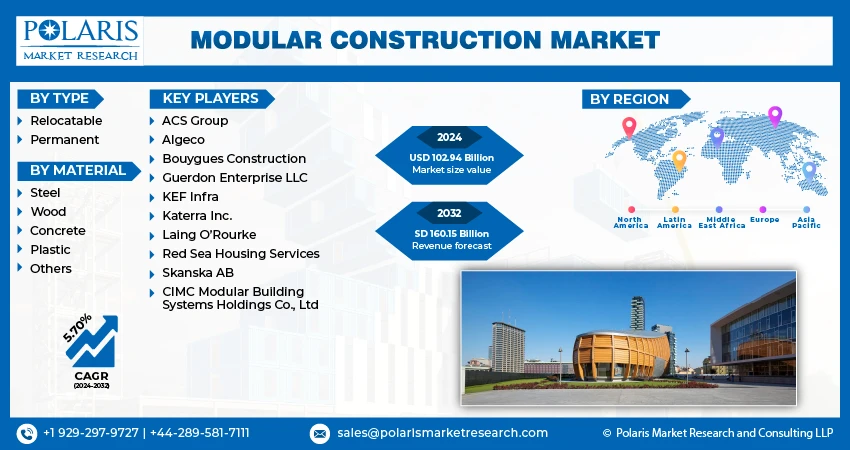
The modular construction market is poised for continued growth and innovation in the coming years. Key trends include the adoption of advanced manufacturing techniques, increased collaboration between stakeholders, and expansion into new sectors such as infrastructure and hospitality.
Case Studies
Case Study 1: Modular Hotel Construction
A leading hotel chain utilized modular construction to build a new hotel in record time, reducing construction schedules by 30% and minimizing disruptions to guests. The modular hotel features innovative design elements and sustainable features.
Case Study 2: Modular School Buildings
A school district implemented modular construction to address overcrowding and budget constraints, quickly delivering modular classrooms and facilities to meet growing student enrollment. The modular school buildings offer modern learning environments and cost-effective solutions.
Conclusion
Modular construction offers a paradigm shift in the construction industry, delivering faster, more cost-effective, and higher quality building solutions. Despite challenges, ongoing innovation and adoption of modular methods promise a bright future for construction projects worldwide.
View Sample Report for Additional Insights on the Modular Construction Market Forecast, Download a Free Report Sample






Sign in to leave a comment.