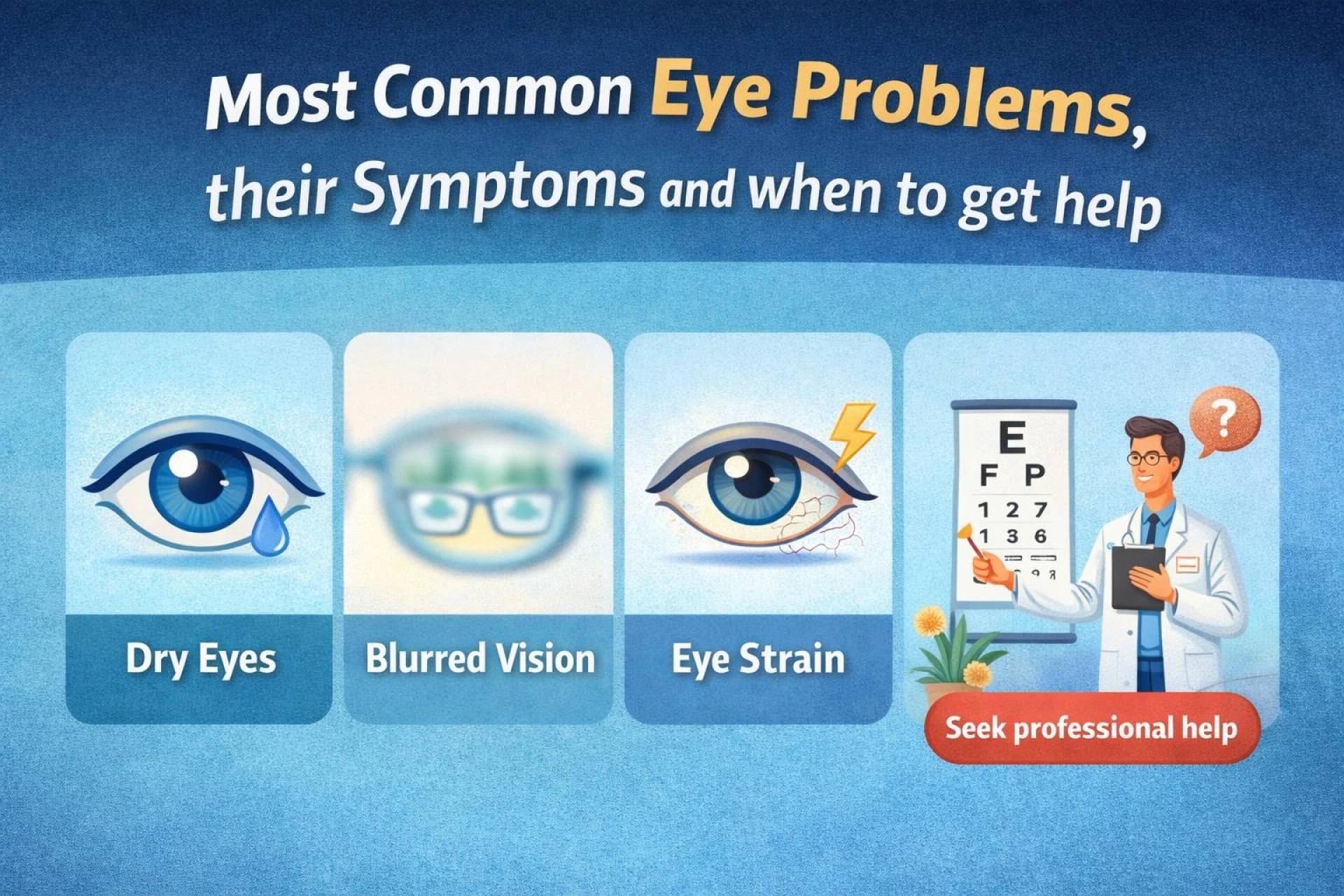

We use our eyes for almost everything: driving, working, reading, scrolling, and watching our favorite shows. So when our vision seems "off," it can be annoying and even a little scary.
A lot of common eye problems can be treated, especially if they are caught early. The most important thing is to know what symptoms to look for and when to make an appointment instead of putting it off. If you want to schedule a professional eye exam fl – choose Modern Optical, and get your eyes tested from the best eye doctor coral springs fl.
Let's make it easier to understand.
Blurry Vision: Not Just a Bad Day
If you're tired or stare at screens for too long, your vision may get blurry from time to time. But if it keeps happening, it could be a sign of refractive errors like nearsightedness (myopia), farsightedness (hyperopia), or astigmatism.
Some common signs are:
- Hard to see road signs far away
- Having trouble reading small print
- A lot of squinting
- Headaches or eye strain
The good news? These problems can usually be fixed easily with glasses or contacts. It's time for a full eye exam if you keep seeing things that are blurry. People shouldn't have to choose between clear vision and not.
Eyes that are dry, itchy, or burning
You may have dry eye syndrome if your eyes feel gritty, watery, or irritated, especially after being outside or looking at a screen.
Some common symptoms are:
- Feeling like you are burning or stinging
- Redness
- Sensitive to light
- Having the feeling that something is in your eye
Artificial tears may help for a short time, but you should see a doctor if you have chronic dry eye. Over time, dry eye that isn't treated can cause inflammation and damage to the eye's surface.
Don't ignore discomfort if it happens often or gets in the way of your daily life.
Sudden flashes, floaters, or dark spots in your vision
You shouldn't wait in this case.
Seeing sudden flashes of light, a lot more floaters (tiny specks that float in your vision), or a shadow or curtain over part of your vision could mean that something is wrong with your retina, maybe even a retinal detachment.
This is thought to be urgent. If you suddenly notice these symptoms, get eye care right away. Taking action right away can keep your eyesight safe.
Eye Pressure Without Clear Signs
Some eye problems are hard to spot. People often call glaucoma the "silent thief of sight" because it can start without any obvious symptoms.
It might cause over time:
- Slow loss of side vision
- Tunnel vision in later stages
Regular eye exams are very important, especially if you're over 40 or have a family history of glaucoma, because it doesn't always show up right away. Finding it early can stop vision loss from happening.
Vision that is cloudy or dim
Cataracts could be to blame if things start to look cloudy, hazy, or less colorful, especially at night. As we get older, this condition becomes more common and can also make lights look brighter.
You may see:
- Hard to drive at night
- Colors that look dull
- Changes to your glasses prescription often
Cataracts grow slowly, and surgery works very well when it is needed. The most important thing is to keep an eye on your progress with your eye doctor.
Digital Fatigue and Eye Strain
Digital eye strain is very common these days because we spend so much time on screens. Too much time spent on computers, tablets, and phones can cause:
- Headaches
- Seeing things blurry after using a screen
- Lack of moisture
- Pain in the neck and shoulders
The 20-20-20 rule (look 20 feet away for 20 seconds every 20 minutes) can help, but if you often feel strain, you may need to change your prescription or lens type.
A small change can sometimes make a big difference.
When should you get help?
This is a simple guide:
If you have any of the following, make an appointment for an eye exam:
- Vision that is always blurry
- Headaches or eye strain that happen a lot
- Dryness or irritation that doesn't go away
- Having trouble seeing at night
If you see the following, go to urgent care:
- Loss of vision all of a sudden
- Light flashes
- A sudden rise in floaters
- Pain or injury to the eye
It's always better to be safe than sorry when it comes to your eyes.
The Bottom Line: Don't Wait for Things to Get Worse
Your eyes are very strong, but they also need regular care. It's easy to treat a lot of common eye problems if you catch them early. Routine eye exams don't just check your prescription; they also look for diseases that you might not even know are growing. If something doesn't feel right, is uncomfortable, or is hard to understand, trust your gut and get it checked out. Because taking care of your eyes now will help you see clearly for many years to come.

























Sign in to leave a comment.