Multi-Task Makeup Remover and Cleanser: A Gentle Approach to Clean, Hydrated Skin

Removing makeup at the end of the day is more than a cosmetic step. It is an important part of maintaining clean, comfortable-looking skin. Foundation, concealer, sunscreen, setting products, excess oil, and environmental debris can remain on the skin throughout the day. If they are not removed properly, the skin may feel congested, dry, or uncomfortable.
A Multi-Task Makeup Remover and Cleanser can simplify this process by combining makeup removal with cleansing. Rather than relying on vigorous rubbing or several separate products, an oil-based cleanser can help loosen makeup and surface buildup while supporting a softer skin feel.
What Is a Multi-Task Makeup Remover and Cleanser?
A Multi-Task Makeup Remover and Cleanser is designed to perform two related jobs: dissolve makeup and cleanse the skin. Oil-based formulas are particularly useful because oils can interact with oil-soluble makeup ingredients, helping loosen products that may be difficult to remove with water alone.
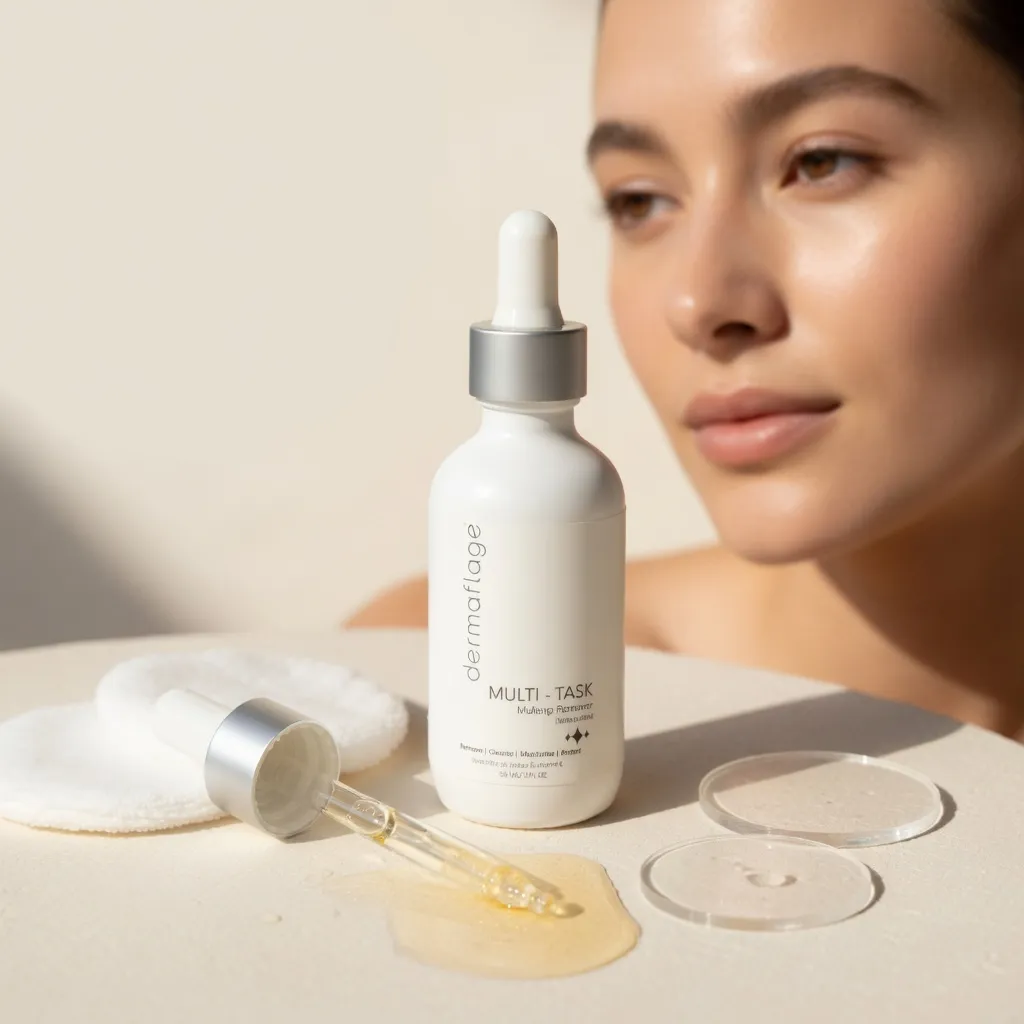
The Dermaflage Multi-Task Makeup Remover and Cleanser, for example, is formulated with ingredients including jojoba oil, olive oil, squalane, and vitamin E. It is designed to remove long-wear makeup while leaving the skin feeling clean and conditioned.
Featured Snippet: What Does a Multi-Task Makeup Remover and Cleanser Do?
A Multi-Task Makeup Remover and Cleanser helps dissolve makeup, sunscreen, excess oil, and surface impurities while cleansing the skin. Oil-based formulas can loosen stubborn makeup without requiring excessive rubbing, making them useful for simple evening skincare routines.
Why Gentle Makeup Removal Matters
One common mistake in a skincare routine is assuming that stronger cleansing always produces better results. Excessive rubbing, repeated washing, or harsh cleansing products can leave the skin feeling dry and uncomfortable.
A practical makeup-removal routine should focus on loosening products rather than scrubbing them away. Giving the cleanser enough time to dissolve makeup can reduce the need for unnecessary friction.
Benefits of an Oil-Based Makeup Cleanser
Oil cleansers work differently from traditional foaming face washes. Instead of depending primarily on surfactants, an oil-based cleanser uses oil-compatible ingredients to help loosen makeup and other oily substances.
Potential advantages include:
- Helps dissolve long-wear foundation and concealer
- Reduces the need for vigorous rubbing
- Can remove sunscreen and daily buildup
- May leave skin feeling softer after cleansing
- Can simplify a nighttime skincare routine
- Useful for people who prefer a conditioning cleansing step
Dermaflage describes its Multi-Task formula as an oil cleanser intended to dissolve long-wear makeup and topical filler while cleansing and conditioning the skin.
Individual skin can respond differently to cleansing products. People with very reactive skin should introduce any new product gradually and pay attention to signs of irritation.
How to Use a Multi-Task Makeup Remover and Cleanser
Correct application can make a noticeable difference. Always follow the product's specific directions.
Step 1: Start With Dry Skin
Apply a small amount to dry skin and gently massage it across areas covered with makeup. Concentrate on the cheeks, forehead, around the nose, and other areas where foundation or concealer has been applied.
Step 2: Allow Makeup to Dissolve
Instead of immediately wiping the product away, massage gently for enough time to loosen makeup. The Dermaflage directions recommend leaving the product on for up to 60 seconds when a deeper cleanse is desired.
Step 3: Rinse Thoroughly
Remove the cleanser with warm water or a soft face cloth, then gently pat the skin dry. Avoid aggressive rubbing with towels.
Step 4: Continue With Skincare
After cleansing, apply products appropriate for your skin's needs, such as a hydrating serum or moisturizer. A consistent routine is generally more useful than repeatedly adding new products.
Makeup Removal and Skin Texture
Clean skin provides a better starting point for the rest of a skincare routine. Makeup residue and surface buildup can make the complexion appear dull or uneven, while excessive cleansing can contribute to dryness and discomfort.
For people interested in corrective skincare solutions, cleansing should be viewed as the foundation rather than the complete treatment. After removing makeup, a suitable moisturizer or corrective skincare product can address specific concerns such as dryness, uneven texture, or a lack of softness.
For example, those exploring products designed to support the appearance of smoother, healthier-looking skin can learn more about Dermaflage's Multi-Task Makeup Remover and Cleanser as part of a broader cleansing and skincare routine. The product page describes its formula as combining makeup removal and cleansing with ingredients such as squalane, jojoba oil, olive oil, and vitamin E.
The important point is that makeup removal and corrective skincare serve different purposes. A cleanser removes daily buildup, while targeted skincare can be selected according to individual concerns.
Is It Suitable for Sensitive Skin?
Sensitive skin can benefit from simple routines that avoid unnecessary friction and excessive cleansing. However, individual responses to skincare products vary.
When choosing a makeup remover, consider the overall formula, how your skin responds after cleansing, and whether the product causes persistent redness, burning, or tightness.
Patch testing a new product on a small area can also be a sensible precaution, particularly for people who know they react easily to skincare products.
Common Mistakes to Avoid
Even a makeup remover can be used incorrectly. Some common mistakes include:
- Rubbing too aggressively: Let the cleanser loosen makeup instead of forcing it off.
- Using very hot water: Lukewarm water is generally a more comfortable choice.
- Over-cleansing: Washing repeatedly can contribute to dryness.
- Skipping moisturizer: Cleansing is only one part of a complete skincare routine.
- Ignoring individual skin needs: Oily, dry, combination, and sensitive skin may require different approaches.
A balanced routine should remove unwanted buildup without unnecessarily disrupting the skin's natural protective function.
Frequently Asked Questions
1. Can an oil cleanser remove long-wear makeup?
Yes. Oil-based cleansers are designed to help loosen oil-soluble makeup ingredients. The Multi-Task formula from Dermaflage is specifically described as helping dissolve long-wear makeup and topical filler.
2. Should I use a makeup remover before cleansing?
It depends on the product. A Multi-Task Makeup Remover and Cleanser is designed to combine makeup removal and cleansing in one step, which can simplify an evening routine.
3. Can cleansing affect skin hydration?
Yes. Cleansing can influence how the skin feels after washing. Harsh cleansing may contribute to dryness or tightness, while appropriately formulated cleansers can be designed with moisturizing or conditioning ingredients.
Final Thoughts
A Multi-Task Makeup Remover and Cleanser can make an evening skincare routine simpler while helping remove makeup and daily buildup. The key is not simply getting the skin "squeaky clean," but finding a cleansing approach that effectively removes unwanted residue without unnecessary friction or discomfort.
When combined with appropriate hydration and targeted skincare, gentle cleansing can provide a practical foundation for maintaining a clean, comfortable, and smoother-looking complexion.




Sign in to leave a comment.