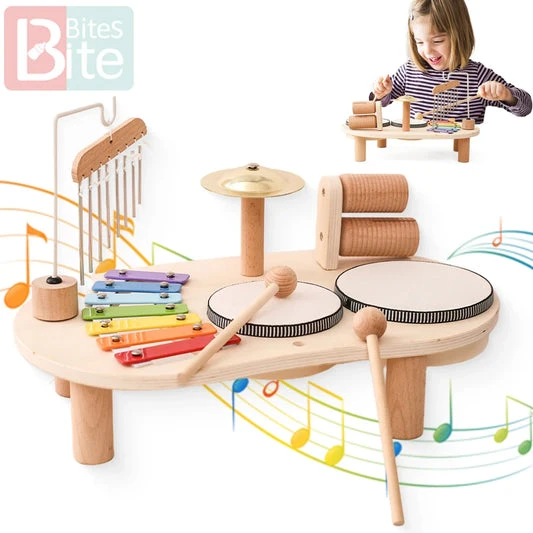
If you've ever watched your baby stop mid-crawl to bob their head to a catchy song or shake a rattle with intense concentration, you've witnessed something remarkable. Those seemingly simple moments of tapping, shaking, and listening aren't just cute—they're foundational. Yet, with so many options beeping and flashing on store shelves, it's easy to wonder which sounds genuinely benefit your little one and which are just noise.
In this guide, we'll explore how to choose musical toys for babies that truly nurture early development, support sensory growth, and create meaningful moments of connection—without overwhelming your child or your home.
Why Babies Are Hardwired for Rhythm
Before we talk about specific toys, it helps to understand what's happening inside that tiny head. Babies are born with a remarkable sensitivity to sound. Research in early childhood education consistently shows that musical experiences activate multiple areas of the brain simultaneously—auditory, motor, and emotional centers all light up when a baby hears or creates rhythm.
This isn't about raising a prodigy or forcing structured lessons. It's about recognizing that sound exploration is one of your baby's primary tools for making sense of the world. When they bang a spoon on a table or shake a bell, they're not just making noise—they're learning about cause and effect, pattern recognition, and their own ability to influence their environment. This foundational understanding supports everything from language acquisition to emotional regulation.
Step-by-Step: Choosing and Using Musical Toys Intentionally
Navigating the world of baby music-makers doesn't have to be complicated. Here's a practical framework to help you choose wisely and use those toys in ways that maximize learning and joy.
Step 1: Start with the Instrument, Not the Audience
The most valuable musical toys are those that make your baby the creator, not just a spectator. A simple wooden shaker, a small drum, or a set of bells on a wrist strap invites active participation. The sound responds directly to their movement, teaching them that their actions have consequences. On the other hand, toys that play pre-recorded music at the push of a button turn your baby into a passive listener. While not inherently bad, these should be the exception, not the rule, in your child's sound environment.
Step 2: Prioritize Quality of Sound Over Quantity
A toy that produces a gentle, clear, and pleasant tone is far more valuable than one that blares distorted electronic music. Babies have sensitive hearing, and harsh, tinny sounds can be overwhelming or even off-putting. Look for toys made from natural materials—wood, metal, fabric—that produce richer, more nuanced tones. A metal triangle, a wooden xylophone, or even a small, well-made tambourine introduces your baby to authentic soundscapes that support healthy sensory development.
Step 3: Follow Your Baby's Cues, Not the Instructions
Your baby is the best guide for how to use a musical toy. They might want to shake a maraca vigorously for five minutes, then spend the next five minutes simply mouthing it (which is also a valid form of exploration). Resist the urge to "teach" them the "right" way to use it. Instead, sit nearby, maybe mirror their actions with your own instrument, and let them lead. This back-and-forth is the foundation of early communication and social bonding.
A wonderful example of this principle in action is a simple set of wooden egg shakers. They're perfectly sized for tiny hands, produce a gentle sound, and invite endless experimentation with rhythm and movement. If you're looking for a starting point, this collection of thoughtfully designed instruments for infants offers a beautiful range of options that prioritize quality and child-led exploration.
Step 4: Integrate Sound into Daily Routines
Musical play doesn't have to be a separate "activity." Weave it into your day. Sing a simple song during diaper changes. Let your baby hold a small bell while you prepare their bottle. Create a gentle rhythm on their back during tummy time. This integration shows your baby that music and rhythm are part of everyday life, deepening their connection to you and the world around them—a core principle in many Montessori learning approaches.
Real-Life Scenario: The Rattle That Started a Conversation
Eight-month-old Maya is playing on a blanket with a simple wooden rattle. She picks it up, shakes it enthusiastically, and hears the soft clatter of beads. She looks toward her father, who is sitting nearby. He smiles, picks up his own (child-safe) shaker, and gives it a gentle shake. Maya's eyes light up. She shakes hers again, and he responds in kind. For the next few minutes, they engage in a "conversation" through sound—a turn-taking exchange that builds the neural pathways for language and social connection. This is the quiet magic of a well-chosen toy.
3 Actionable Tips You Can Try Today
- The "Mute" Button Test: Before buying a battery-operated musical toy, see if you can turn the sound off. If the toy still holds your baby's interest without the electronic sounds, it might be a worthwhile purchase. If not, it's probably relying on novelty, not genuine engagement.
- Start a Kitchen Band: Right now, grab a wooden spoon and a metal bowl. Let your baby explore the sounds they can make. You've just created an open-ended, free musical experience with items you already own.
- Sing With Intention: Pick one daily routine—like putting on socks—and sing a very simple, repetitive song about it. Your voice is your baby's favorite instrument, and this routine builds language and predictability.
The Symphony of Early Years
In the end, the goal isn't to fill your home with expensive instruments or to begin formal music lessons at six months. It's about recognizing that your baby is naturally wired to explore sound, and you are their first and best guide. By choosing simple, high-quality musical toys for babies and, more importantly, by joining them in the joyful act of listening and creating, you're laying a rich foundation for communication, cognitive growth, and a lifelong connection to the beauty of sound.























Sign in to leave a comment.