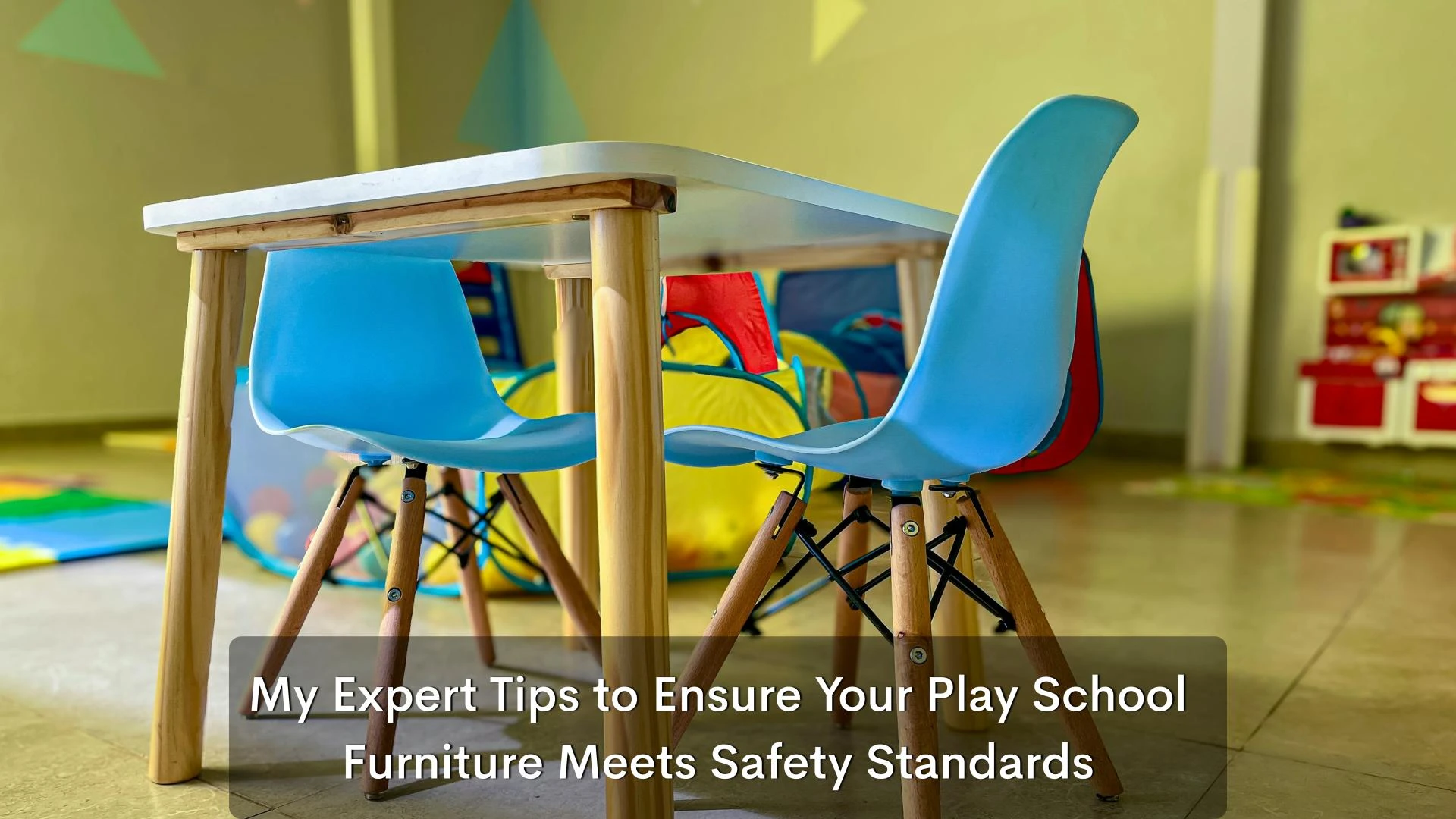

Choosing the right play school furniture does not just depend on how the school furniture looks. It mainly helps children to keep safe as well as play and learn comfortably. Many accidents in nurseries, kindergartens are caused by unsafe furniture. Being hit, breaking furniture can also cause serious injuries.
That’s why using furniture that follows safety standards is very important. It helps create a space where children can grow, play, and learn without getting hurt.
Understanding Safety Standards for Play School Furniture
What Are Safety Standards and Why Do They Matter
Safety standards are rules made to protect children. They make sure that play school furniture is safe, strong, and free from harmful materials.
When buying furniture, always look for these labels. They show the furniture has been tested and approved.
Common Dangers That Standards Help Avoid
These rules help protect children from:
- Sharp edges that can cause cuts
- Toxic materials like harmful paints or plastic
- Weak structures that can fall or break
The goal is to keep children safe in every way possible.
Who Checks Furniture Safety?
There are organizations like ASTM, EN, and BIS that check if furniture meets safety rules. Experts also suggest regular checks in schools to make sure everything stays safe over time.
Choosing the Right Materials for Safety
Use Non-Toxic and Child-Safe Materials
The materials used in play school furniture should be free from harmful chemicals. Look for:
- BPA-free plastics
- Low-VOC paints
- Formaldehyde-free wood
These materials reduce the risk of allergies or poisoning. It’s not just about safety—it also gives peace of mind to parents and teachers.
Pick Strong and Durable Furniture
Children jump, run, and climb on furniture. That’s why it must be strong. Metal frames are long-lasting but heavy. Plastic is light and easy to move, but it can break. Choose impact-resistant furniture that can handle daily use.
Go for Easy-to-Clean Surfaces
Good school furniture with smooth surfaces is easy to clean and does not have any negative impact on children's health, and daily cleaning of the furniture helps the furniture last longer.
Safe Design Features in Play School Furniture
Rounded Corners and Edges
Furniture with rounded edges is much safer than sharp-edged ones. Rounded designs reduce the chances of injuries. Experts say edges should have at least a 1.5-inch curve for safety.
Right Size and Shape for Kids
Play school furniture must match the child’s size. Chairs and tables should help kids sit properly and comfortably. If furniture is too high or too low, it can lead to discomfort or bad posture.
Stable and Strong Construction
Furniture should not tip over easily. Use items with wide bases or fix them to walls. Check often for loose screws or broken parts. A strong build prevents accidents.
Keeping Furniture Safe with Regular Care
Do Weekly Safety Checks
Look at every piece of furniture each week. Check for:
- Loose screws
- Cracks
- Sharp edges
- Broken parts
Fix or replace anything that looks unsafe. A simple checklist can help you remember what to check.
Clean the Furniture Properly
Use child-safe cleaners that won’t harm the material. Regular cleaning keeps both kids and furniture safe. Clean furniture also looks better and lasts longer.
Repair or Replace When Needed
If something is worn out, fix it quickly or replace it. Never wait for an accident to happen. Keeping furniture in good shape shows you care about the children's safety.
Train Staff and Inform Parents
Safety Awareness for Teachers and Staff
Train your staff to understand safety rules and how to check furniture. Give them checklists and hold regular meetings. Everyone should know what to look for.
Emergency Plans and First Aid
If an accident happens, everyone should know what to do. Keep first aid kits handy. Have contact numbers and reports ready. Fast action can reduce harm and show responsibility.
Conclusion
Safe play school furniture is the first step toward a happy and healthy learning space. Always choose furniture that meets safety standards, is made of non-toxic materials, and is built to last. Check it regularly, clean it often, and train your staff to keep it safe.
By doing all this, you create a place where children feel protected, parents feel confident, and learning becomes fun and safe.











Sign in to leave a comment.