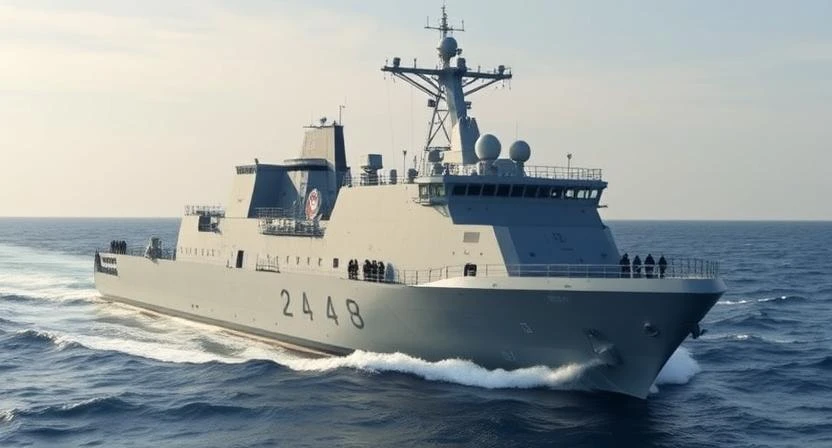
In the rapidly transforming global security environment, Naval Warfare Strategy has become the linchpin of maritime dominance and national defense. From ancient fleet battles to artificial intelligence-driven operations, the essence of naval warfare lies in controlling the seas — and, increasingly, the information that flows through them. Modern naval strategy blends traditional doctrines with technological innovation, alliance-building, and deterrence to shape a secure and stable maritime order.
1. The Foundation of Naval Warfare Strategy
Historically, naval warfare has been about control of sea lanes and projection of power. The 19th-century strategist Alfred Thayer Mahan famously declared that global power rests on “command of the sea.” His theories remain central to naval planning today, but with modern reinterpretations.
In contemporary terms, naval warfare strategy focuses not only on physical dominance but also on information superiority, logistics efficiency, and multi-domain coordination. The navy of the 21st century must fight, communicate, and adapt simultaneously.
2. The Strategic Objectives of Modern Navies
Every nation with a blue-water navy pursues three core objectives:
- Sea Control – ensuring free and secure navigation across global waters.
- Power Projection – demonstrating reach through fleets, aircraft carriers, and submarines.
- Deterrence and Stability – using naval presence to prevent conflict and reassure allies.
Modern naval warfare strategies combine these objectives with intelligence gathering, cyber defense, and rapid response capabilities — ensuring that maritime power remains both flexible and formidable.
3. Technological Transformation at Sea
Technology has revolutionized naval operations. From radar and sonar to autonomous drones and quantum navigation, innovation drives strategy.
Recent advancements include:
- Unmanned Surface and Underwater Vehicles (USVs/UUVs): Used for reconnaissance, mine countermeasures, and surveillance.
- AI-driven analytics: Assisting commanders with predictive modeling and real-time tactical insights.
- Directed-energy weapons: Offering precision defense against aerial and missile threats.
- Hypersonic missiles: Redefining strike range and deterrence posture.
A modern naval warfare strategy must integrate these systems into cohesive operational frameworks while ensuring human oversight and accountability.
4. The Rise of Network-Centric Warfare
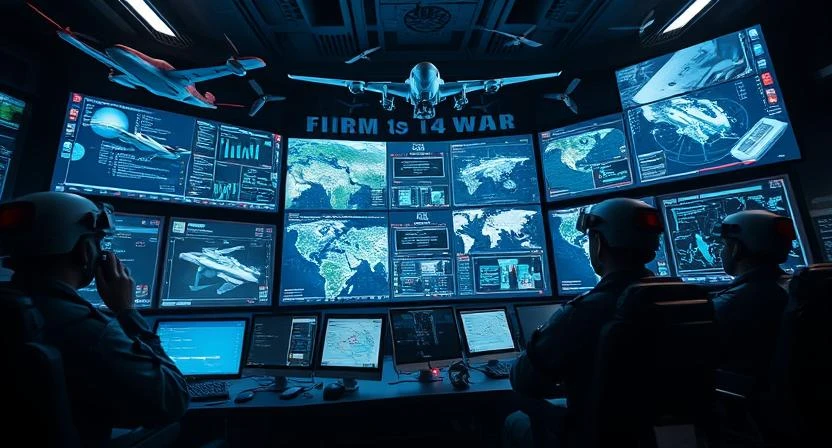
One of the most critical shifts in modern naval strategy is the move toward network-centric warfare (NCW). This concept transforms every ship, aircraft, and submarine into a node within a global information web.
In this model, data from satellites, sensors, and intelligence systems is fused into a shared operational picture, enabling commanders to act faster and more precisely.
The ultimate goal: information dominance — the ability to outthink and outmaneuver adversaries through superior data integration.
5. Regional Focus: The Indo-Pacific
No region better illustrates the strategic importance of naval power than the Indo-Pacific. Stretching from the Persian Gulf to the Western Pacific, it contains vital trade routes and choke points such as the Strait of Malacca and the South China Sea.
Modern naval strategies in this region focus on deterrence, freedom of navigation, and alliance coordination. Exercises like RIMPAC and partnerships under the QUAD alliance highlight how naval cooperation safeguards the maritime commons.
6. The Cyber and Space Dimensions of Naval Warfare
Naval operations are no longer confined to the seas. Cyber and space have emerged as new domains of conflict and deterrence.
- Cyber Warfare: Naval fleets depend on digital systems for communication, targeting, and logistics. A single cyber intrusion could disable an entire fleet’s coordination.
- Space Integration: Satellites now provide navigation, surveillance, and missile guidance — making space infrastructure an essential element of sea power.
Thus, an effective naval warfare strategy must secure not just ships, but the invisible networks that enable them.
7. The Importance of Logistics and Sustainment
Behind every powerful navy lies an efficient logistics system. Fleet readiness depends on a network of bases, replenishment ships, and maintenance hubs spread across strategic regions.
The U.S. Navy, for instance, relies on forward-deployed logistics units in the Pacific and Atlantic Oceans to sustain long-duration operations.
Naval logistics — often overlooked — determines how long a fleet can maintain dominance far from home waters.
8. Submarine Warfare and Undersea Dominance
Submarines remain the silent backbone of naval strategy. Their stealth and endurance make them the ultimate tools for deterrence and surveillance.
Nations are increasingly investing in nuclear-powered submarines (SSNs and SSBNs) that can remain submerged for months and launch precision strikes without detection.
Undersea warfare now includes not only traditional submarines but also autonomous underwater drones, creating a complex environment for both offense and defense.
9. Carrier Strike Groups and Power Projection
Aircraft carriers continue to symbolize maritime dominance. A single carrier strike group represents national power, capable of launching air operations, humanitarian missions, or deterrence patrols.
However, modern naval warfare strategy now emphasizes distributed lethality — spreading offensive capabilities across smaller, agile vessels rather than concentrating them in large, vulnerable targets. This shift ensures survivability in the age of precision missiles and hypersonic threats.
10. The Ethics and Human Dimension of Naval Warfare
Despite technological sophistication, naval strategy remains deeply human. Commanders must balance the use of force with ethical considerations, humanitarian laws, and civilian safety.
Kinetic warfare increasingly intertwines with non-lethal operations such as disaster relief, anti-piracy missions, and peacekeeping. The moral responsibility of naval power — to deter without provoking, to protect without dominating — lies at the heart of modern maritime doctrine.
11. Climate Change and the New Maritime Frontiers
Climate change has opened new naval frontiers, particularly in the Arctic. Melting ice is creating fresh trade routes and resource opportunities, but also new areas of strategic competition.
Naval strategies must now account for environmental conditions, sustainable operations, and eco-friendly technologies to reduce the military’s carbon footprint.
Green propulsion systems and renewable energy-based operations are becoming priorities in future fleet design.
12. The Future of Naval Strategy: Integration and Adaptation
The future of Naval Warfare Strategy will depend on adaptability. The next generation of fleets must be intelligent, interoperable, and resilient.
Key pillars of future naval strategy include:
- Real-time AI-assisted decision support.
- Unmanned fleet coordination.
- International maritime coalitions for crisis response.
- Strong cybersecurity frameworks.
- Training programs for hybrid warfare environments.
As technology reshapes the oceans, the essence of command — strategic foresight and disciplined execution — remains timeless.
Frequently Asked Questions (FAQ)
Q1: What is modern naval warfare strategy?
A1: It’s a comprehensive approach that integrates sea power, cyber defense, space capabilities, and technological innovation to ensure maritime security and dominance.
Q2: Why is the Indo-Pacific important for naval strategy?
A2: It’s the world’s busiest maritime trade corridor, and its control is vital for global economic and military stability.
Q3: How is AI changing naval warfare?
A3: AI enhances situational awareness, improves threat prediction, and assists in decision-making during complex maritime operations.
Q4: What is distributed lethality in naval strategy?
A4: It’s the concept of spreading offensive power across multiple smaller vessels to increase survivability and flexibility.
Q5: What is the future of naval warfare?
A5: The future lies in multi-domain integration, autonomous systems, ethical command, and environmental sustainability.

































Sign in to leave a comment.