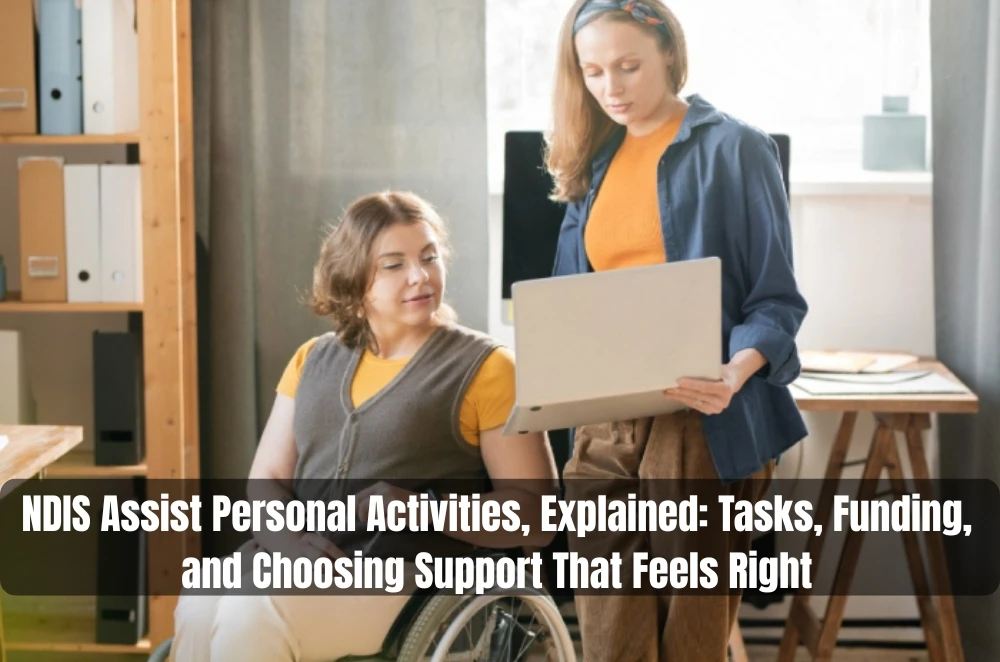

“Assist personal activities” can sound like a technical label, but in real life it’s about the routines that make a day run: getting washed, dressed, comfortable, fed, and able to move safely through your home and community. When those routines become difficult—because of disability, chronic illness, injury, or fluctuating capacity—support with personal activities can reduce stress, prevent health complications, and protect independence.
This is also one of the most intimate types of support in the NDIS. That’s why the best conversations about it aren’t only about what gets done, but how it’s done: privacy, consent, communication, and consistency matter as much as the checklist of tasks.
What “assist personal activities” usually includes
In NDIS terms, assistance with daily life can cover help or supervision with personal tasks during day-to-day life so a participant can live as independently as possible, and it can be provided in different environments, including at home.
In practice, support often includes a mix of:
- Personal hygiene and grooming: showering, bathing, toileting, oral care, hair care
- Dressing and daily routines: choosing clothes, getting dressed, managing morning/evening sequences
- Mobility and transfers: getting in/out of bed, moving safely with mobility aids, positioning support
- Eating and meal-related assistance: support with preparing simple meals or eating when needed
- Laundry tied to personal care: managing clothing and linens as part of maintaining hygiene
One Sydney provider page, for example, lists assistance such as bathing, toileting, dressing, grooming, oral hygiene, meal preparation, and transferring in and out of bed or mobility aids.
Support can be “hands-on” or “hands-off”—and that distinction matters
Personal activities support isn’t always physical help. Sometimes it’s prompting, cueing, or supervision, especially where memory, executive function, fatigue, or safety risks are involved. Getting that balance right can preserve skills rather than replace them.
A useful question is: What does the person want to keep doing themselves, and what parts are genuinely unsafe or unrealistic right now? The plan can then focus on enabling participation, not taking over.
Dignity, consent, and privacy aren’t “extras”
Because personal care involves bodies, bathrooms, bedrooms, and vulnerability, the “quality” of support shows up in small moments:
- Asking before assisting, every time (even when routines are familiar)
- Explaining what’s happening next in a clear, respectful way
- Covering up appropriately and maintaining privacy
- Supporting choice (including how and when things happen, within what’s feasible)
- Keeping communication consistent across support workers
The NDIS Code of Conduct sets expectations that workers act with respect for individual rights and self-determination, respect privacy, and deliver supports safely and competently.
How the NDIS decides whether personal activities support is funded
NDIS funding decisions sit under the idea of “reasonable and necessary” supports. The NDIS explains that it funds a range of supports and services, and uses criteria to decide what qualifies as reasonable and necessary for a participant’s plan.
In the home-and-living context, the NDIS describes assistance with daily life as a category in the Core Supports budget for assistance or supervision of personal tasks during day-to-day life to enable independence.
What helps in planning conversations:
- Be specific about the tasks (e.g., shower transfers on days with dizziness; meal prep when fatigue peaks)
- Describe the impact without support (falls risk, skin integrity, nutrition, missed medication, social isolation)
- Link support to goals (maintaining health, getting to work/study, staying in the community, building skills)
- Include evidence when needed (OT/GP/allied health letters can clarify functional impact)
The NDIS also notes that home and living supports can include assistance with personal care tasks like showering and dressing where a participant can’t undertake these due to disability.
Choosing a provider: what to look for (beyond the brochure)
In a city the size of Sydney, choice is a good thing—but it can also be overwhelming. A practical way to compare options is to focus on how a provider handles the realities of personal care.
1) Consistency and matching
Rotating workers can be stressful, especially for personal care. Ask how matching works, and whether they aim for continuity. Some providers explicitly describe matching participants with consistent support workers and reviewing plans over time.
2) Cultural safety and personal preferences
Personal care can intersect with culture, faith, gender, and trauma history. If these factors matter for you (or the person you support), it’s reasonable to ask about:
- Same-gender support worker options
- Cultural and language considerations
- Trauma-informed approaches
- How boundaries and preferences are documented and respected
One Sydney-based service page states it can provide culturally aware and trauma-informed care and accommodate same-gender support workers on request.
3) Worker screening and safeguarding
Worker screening is one concrete safety measure. The NDIS Quality and Safeguards Commission explains that state/territory worker screening units assess whether a worker poses a risk, and workers can be cleared or excluded for certain roles.
For participants, the Commission notes that choosing workers with an NDIS worker screening clearance can improve safety and peace of mind.
4) Communication and escalation
Ask what happens if something isn’t working: missed shifts, personality mismatch, concerns about dignity or safety. A clear escalation pathway is a sign of maturity, not bureaucracy.
Setting up support that actually works day-to-day
Even when funding and rosters are in place, “assist personal activities” succeeds or fails in the details. A few practical steps can make the support feel more natural:
Start with a routine map, not a wish list
Write down a typical day (or a “good day” vs “bad day”), then identify:
- High-risk moments (wet floors, transfers, fatigue spikes)
- Tasks that cause pain or distress
- Tasks that are possible with prompting versus hands-on help
- What “done well” looks like (privacy, preferred products, timing, pacing)
Use clear language for boundaries and consent
It can help to document phrases like:
- “Offer help first; don’t step in without asking.”
- “I prefer to wash my face myself; please set up towels and run the shower.”
- “If I say stop, pause immediately and check in.”
Plan for review
Needs change—sometimes slowly, sometimes overnight (after hospital, illness, or a decline in function). Providers often describe ongoing reviews as part of service delivery, which is worth prioritising.
A Sydney example of how the support is described
For readers who like to see how services are framed in the real world, here’s one example: a Sydney-based provider outlines assist personal activities as support with routines such as showering, dressing, grooming, oral hygiene, meal preparation, transfers, and help delivered in home or community settings, with an emphasis on privacy and autonomy.
If you want to compare that description to your own needs (or use it as a checklist for questions to ask), see this overview of assist personal activities support.
Key Takeaways
- “Assist personal activities” is about daily self-care routines—often a mix of hands-on help, prompting, and supervision.
- Quality matters most in dignity, consent, privacy, and consistency—not just task completion.
- NDIS funding decisions are tied to “reasonable and necessary” criteria and how support links to functional impact and goals.
- When comparing providers, prioritise matching/continuity, cultural safety, worker screening, and clear escalation pathways.
- A routine map (good day/bad day), written preferences, and planned reviews can make support feel safer and more sustainable.




























Sign in to leave a comment.