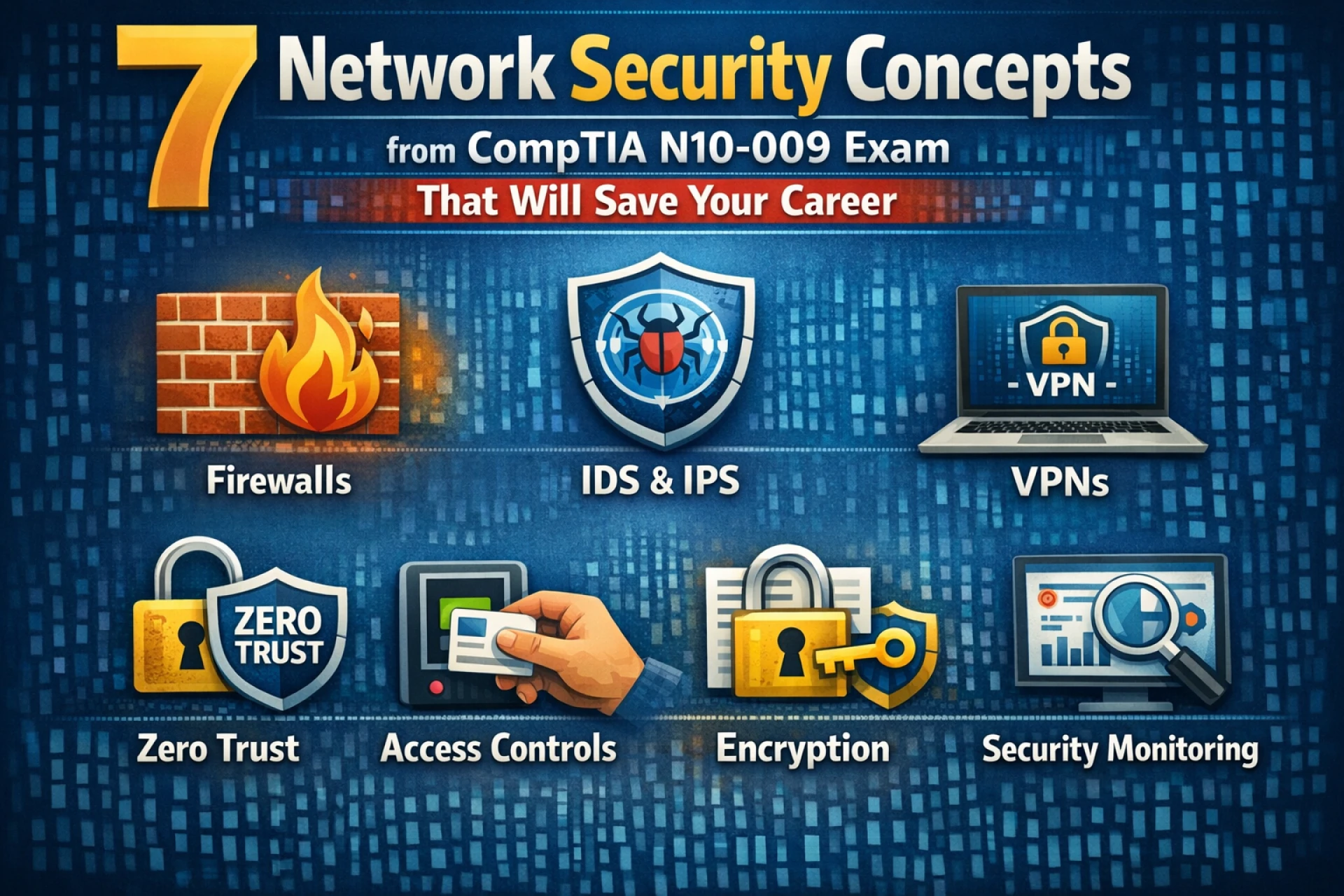

In today’s fast-moving IT world, understanding the types of network security is no longer optional. Whether you're preparing for the CompTIA N10-009 exam or aiming to build a strong cybersecurity career, mastering the right concepts can set you apart from the crowd.
Let’s break down the most important network security concepts that can truly save your career and help you succeed in the exam.
1. Network Access Control (NAC)
Network Access Control ensures that only authorized users and devices can access a network. It acts as your first line of defense.
With NAC, organizations can:
- Verify device compliance
- Block unauthorized access
- Enforce security policies automatically
For exam success, understand how NAC integrates with authentication protocols and endpoint security tools.
2. Firewalls and Their Types
Firewalls are essential in controlling incoming and outgoing traffic based on predefined rules.
Common firewall types include:
- Packet-filtering firewalls
- Stateful inspection firewalls
- Next-generation firewalls (NGFW)
Knowing how different firewall types work is crucial when studying types of network security, as this is one of the most tested areas in the N10-009 exam.
3. Intrusion Detection and Prevention Systems (IDS/IPS)
IDS and IPS systems monitor network traffic for suspicious activity.
- IDS detects and alerts
- IPS actively blocks threats
These tools are vital in identifying attacks before they cause damage. For exam preparation, focus on signature-based vs anomaly-based detection methods.
4. Virtual Private Networks (VPNs)
VPNs secure communication over public networks by encrypting data.
Key benefits:
- Data privacy
- Secure remote access
- Protection against eavesdropping
Understanding VPN protocols like IPsec and SSL is essential when learning different types of network security.
5. Secure Network Design
A well-designed network reduces vulnerabilities significantly.
Important elements include:
- Network segmentation
- DMZ (Demilitarized Zone)
- Zero Trust architecture
This concept teaches you how to structure networks in a way that minimizes risk and limits attack surfaces.
At this stage of your preparation, it becomes important to Practice real exam topics using reliable platforms like ITExamsTopics. This helps you understand how these concepts are tested and improves your confidence for the actual exam.
6. Wireless Security
Wireless networks are convenient but often vulnerable if not secured properly.
Key practices:
- Use WPA3 encryption
- Disable SSID broadcasting
- Implement MAC filtering
Wireless security is a critical part of modern types of network security, especially as organizations rely heavily on Wi-Fi.
7. Security Protocols and Encryption
Encryption protects data both in transit and at rest.
Important protocols include:
- HTTPS
- TLS/SSL
- SSH
You should understand how these protocols secure communication and prevent unauthorized access.
How to Prepare Effectively for N10-009
To truly master these concepts, you need more than just theory. Practice and consistency are the keys to success. Make sure to review the official exam objectives directly from CompTIA to stay aligned with the latest syllabus. Using trusted resources alongside official guidelines will help you cover all domains efficiently and avoid missing critical topics.
Final Thoughts
The CompTIA N10-009 exam is not just another certification. It is a career upgrade. By mastering these concepts, you are not only preparing to pass but also building skills that companies actively look for.
Focus on understanding the types of network security, apply them in real scenarios, and use trusted resources to test your knowledge.
To go even further, platforms like ITExamsTopics help you explore All CompTIA certifications in one place, making it easier to plan your learning path, practice effectively, and build confidence for your future exams.























Sign in to leave a comment.