

Ducts and pipes that carry hot gas, flue gas or air are always moving. They expand when heated, contract when cooled, and shake with fans and rotating equipment. If that movement has nowhere to go, it ends up as stress on flanges, fans, boilers and supports.
Non-metallic expansion joints absorb that movement. This guide explains how they work, the main types, where they are used, and what to check before you choose one.
What Is a Non-Metallic Expansion Joint?
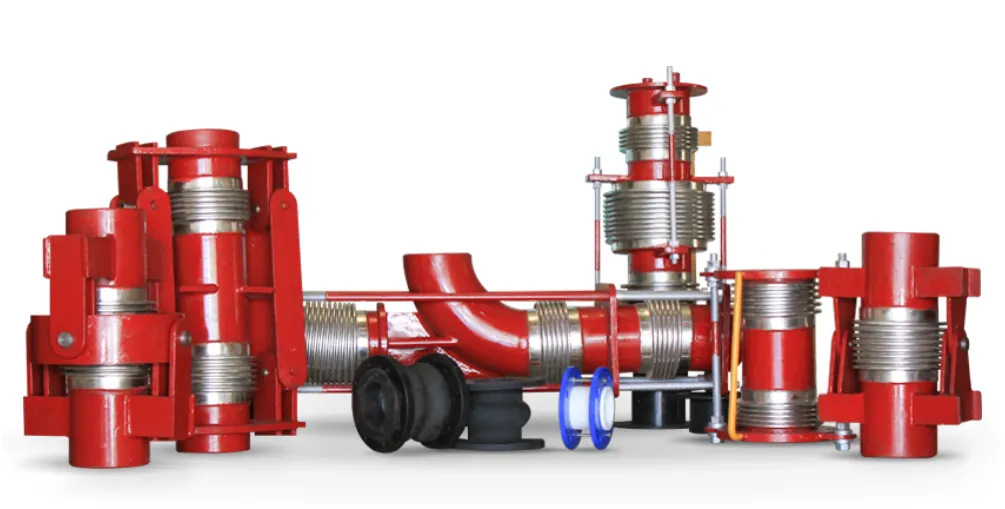
A non-metallic expansion joint is a flexible connector installed between two sections of duct, or between a duct and equipment. Instead of a metal bellows, its flexible element is made of layered fabrics, elastomers, fluoropolymers and insulation materials, usually held in a metal frame or flange.
Because the flexible element is a fabric, these joints are also called fabric expansion joints. They are widely used in low-pressure, high-temperature gas and air systems.
What Do They Do?
A properly selected joint takes on several jobs at once:
- Absorbs thermal expansion and contraction in the duct run.
- Compensates for misalignment during installation and operation.
- Isolates vibration and noise from fans, blowers and turbines so it does not travel through the ductwork.
- Reduces loads on nozzles, flanges and supports, protecting expensive equipment.
- Seals the gas stream against leakage while staying flexible.
Advantages Over Metal Expansion Joints
Non-metallic joints are often chosen because they offer:
- Multi-directional movement. One joint can handle axial, lateral and angular movement together.
- Low reaction force. The flexible element pushes back very little on connected equipment.
- Light weight and compact size. Installation and support are simpler.
- Good vibration and noise damping.
- Wide material choice. Layers can be combined for temperature and chemical resistance.
- Easier replacement. The flexible belt can often be changed without replacing the whole frame.
Typical Construction
A fabric expansion joint is a layered assembly. Exact design depends on the application, but the main parts are:
- Gas-side layer. This faces the process gas and resists temperature, abrasion and chemicals. PTFE and silicone-coated fabrics are common here.
- Reinforcing fabric. Glass fibre or other high-strength fabric carries the pressure and mechanical load.
- Insulation layer. Ceramic or mineral fibre insulation lowers the temperature reaching the outer layers.
- Outer cover. This protects against weather, moisture and mechanical damage.
- Frame and flanges. Metal frames, baffles and flow liners hold the belt in place and protect it from direct gas flow.
Common Types
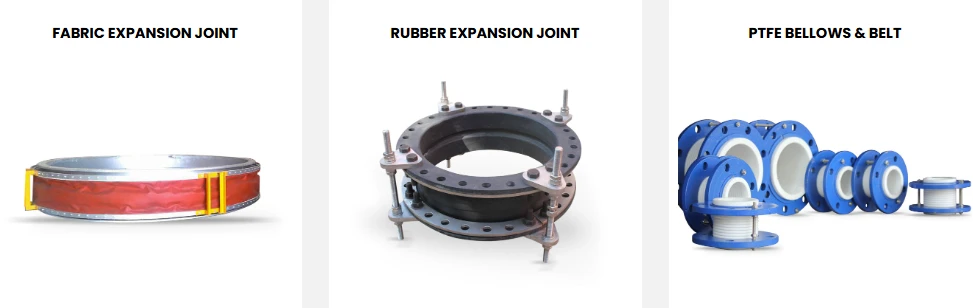
- Fabric expansion joints: Multi-layer designs for hot flue gas and air ducts.
- Rubber expansion joints: Elastomer-based joints for pumps, pipelines and moderate temperatures.
- PTFE expansion joints: Chosen where aggressive chemicals or corrosive condensate are present.
- Belt-type joints with frames: Used in large rectangular ducts at fans, boilers and stacks.
Where They Are Used
Non-metallic expansion joints are found in:
- Power plants (boiler outlets, ID and FD fans, ductwork, chimneys)
- Cement plants and kiln gas systems
- Steel plants and furnaces
- Chemical and fertilizer facilities
- Waste-to-energy and biomass plants
- Oil and gas, LNG and pharmaceutical facilities
- Ship building, locomotives and other transport applications
How to Select the Right Joint
Give your supplier as much of the following as you can:
- Operating and design temperature. Include peaks and upset conditions.
- Gas composition. Acid dew point, moisture, abrasives and chemicals decide the gas-side material.
- Pressure or vacuum. Fabric joints suit low-pressure service, so confirm the actual duty.
- Movement. State axial, lateral and angular movement, plus vibration frequency if known.
- Duct size and shape. Round and rectangular ducts need different frames and corner details.
- Installation conditions. Outdoor exposure, insulation requirements and access for maintenance all matter.
- Service life expectation. Material and layer choices affect replacement intervals.
Installation and Maintenance Tips
- Install the joint within the movement limits it was designed for, without pre-stretching it.
- Make sure flow liners point the right way, with the gas flowing over the overlapping edge.
- Keep insulation dry and intact.
- Inspect regularly for hardened or cracked fabric, loose fasteners, deposits and signs of leakage.
- Replace the belt on a planned schedule rather than waiting for failure.
Choosing an Experienced Manufacturer
A joint's performance depends on engineering detail: material layers, stitching, frame design and sealing. Flexatherm has manufactured expansion joints and related products since 1992 for power, steel, cement, chemical and other industries. To see the available constructions and discuss your duty conditions, visit our page on non-metallic expansion joints.
Non-metallic expansion joints let ducts move, flex and vibrate without damaging the equipment around them. Matching materials and construction to your temperature, gas and movement requirements gives you a longer service life, lower maintenance and a safer, quieter system.























Sign in to leave a comment.