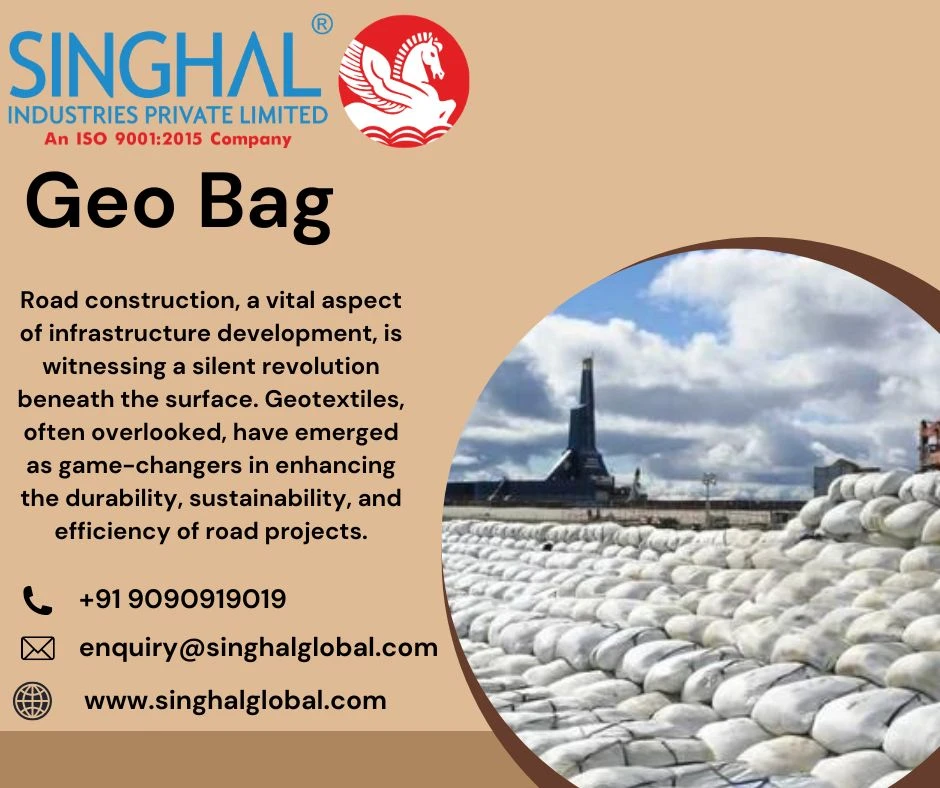

Soil erosion is a significant concern worldwide, threatening agricultural lands, infrastructure, and the environment. In the quest for sustainable solutions, non-woven geo bags have emerged as a promising alternative to traditional methods. This article delves into the advantages of non-woven geo bags, their applications in various industries, and the role of Singhal Industries as a leading manufacturer in India.
Introduction to Non-Woven Geo Bags
Non-woven geo bags are synthetic polymer-based bags designed to withstand harsh environmental conditions while providing erosion control and stabilization. These bags are commonly filled with sand, soil, or aggregates and deployed in diverse settings to mitigate erosion and support construction projects.
Composition and Manufacturing Process
Manufactured from polypropylene or polyester fibers, non-woven geo bags boast excellent tensile strength and UV resistance. The manufacturing process involves blending these fibers, followed by needle-punching or heat bonding to create a robust fabric structure.
Advantages of Non-Woven Geo Bags
Unlike traditional methods such as concrete retaining walls or riprap, non-woven geo bags offer a more environmentally friendly solution. They allow for natural vegetation growth, promoting ecosystem restoration while preventing soil erosion.
Cost-Effectiveness
Non-woven geo bags are cost-effective alternatives to conventional materials like concrete or steel. Their lightweight nature reduces transportation costs, and their easy installation minimizes labor expenses, making them an economically viable choice for various projects.
Durability and Strength
Despite their lightweight construction, non-woven geo bags exhibit remarkable durability and strength. They can withstand high loads and resist punctures, ensuring long-term stability and performance even in challenging environments.
Applications in Construction Projects
Non-woven geo bags find extensive applications in construction projects, including:
Slope Stabilization: Preventing soil erosion on steep slopes and embankments.
Embankment Protection: Providing erosion control along riverbanks and coastal areas.
Retaining Walls: Constructing cost-effective and sustainable retaining structures.
Comparative Analysis with Traditional Methods
Compared to traditional methods like sandbags, non-woven geo bags offer several advantages. They provide superior erosion control, longer lifespan, and easier installation, making them the preferred choice for many engineers and contractors.
Geo Bag Price in India
The Geo Bags Price in India varies depending on factors such as size, material quality, and market demand. However, they generally offer excellent value for money compared to alternative erosion control solutions.
Case Studies and Success Stories
Numerous case studies showcase the effectiveness of non-woven geo bags in real-world applications. From highway embankments to shoreline protection projects, these bags have consistently delivered superior erosion control and cost savings.
Future Prospects and Innovations
As the demand for sustainable construction materials grows, the future looks promising for non-woven geo bags. Ongoing research and development initiatives aim to enhance their performance and explore innovative applications in diverse industries.
Singhal Industries: Leading Sand Bag Manufacturer
Singhal Industries stands at the forefront of Sand Bag manufacturer in India, offering a wide range of high-quality products tailored to meet the needs of various projects. With a commitment to innovation and customer satisfaction, Singhal Industries continues to redefine the standards of excellence in the industry.
Conclusion
Non-Woven Geo Bags represent a sustainable and cost-effective solution for soil erosion control and construction projects. With their environmental benefits, durability, and versatility, these bags are reshaping the landscape of modern engineering practices. As we strive towards a greener future, non-woven geo bags stand out as a beacon of innovation and sustainability.
FAQs
What are non-woven geo bags used for?
Non-woven geo bags are primarily used for soil erosion control, slope stabilization, and construction projects requiring retaining structures.
How long do non-woven geo bags last?
The lifespan of non-woven geo bags varies depending on factors such as environmental conditions and installation quality. However, they typically last for several years, providing long-term erosion control.
Can non-woven geo bags withstand harsh weather conditions?
Yes, non-woven geo bags are designed to withstand a wide range of environmental conditions, including extreme temperatures, UV exposure, and heavy rainfall.
Are non-woven geo bags recyclable?
While non-woven geo bags are not inherently recyclable due to their synthetic composition, efforts are underway to explore recycling and reuse options for end-of-life bags.
How can I purchase non-woven geo bags from Singhal Industries?
You can contact Singhal Industries directly through their website or authorized distributors to inquire about purchasing non-woven geo bags for your project needs.










Sign in to leave a comment.