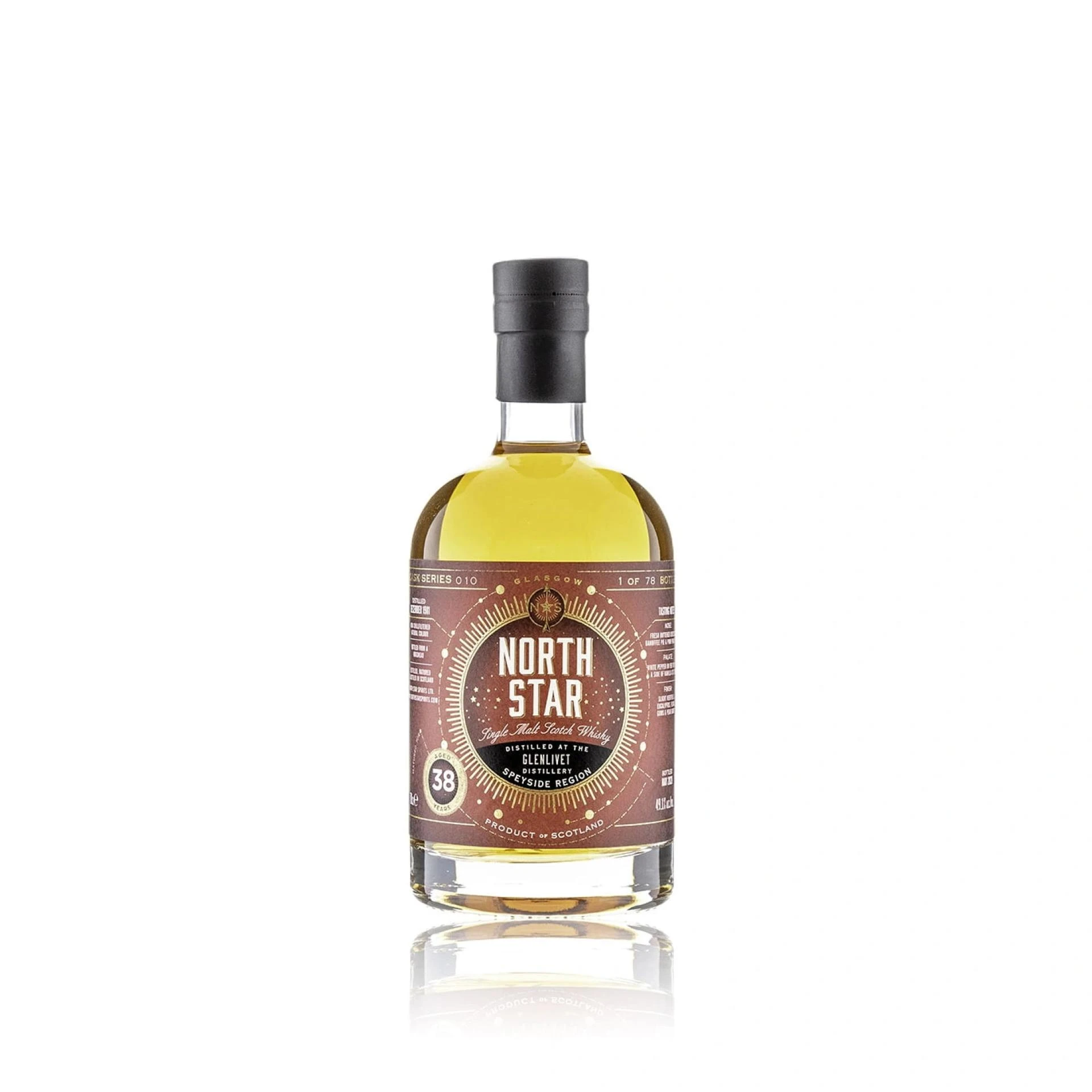

There are whiskies that impress, whiskies that inspire, and then there are those that linger in memory long after the last drop. The North Star Glenlivet 38 Year Old 1981 belongs firmly to the latter. Bottled with exceptional care and aged to near perfection, this expression captures the essence of craftsmanship, patience, and time. But ask any two whisky lovers what it tastes like, and you’ll get two completely different answers.
One might describe it as smooth, honeyed, and floral, while another insists it’s smoky, spicy, and deep with oak. So, why does the it taste different to everyone? Is it purely personal perception, or is there something deeper happening between chemistry and psychology? Let’s explore the fascinating science and soul behind why this rare single malt reveals itself differently to each drinker.
The Magic of the North Star Glenlivet 38 Year Old 1981
Before diving into taste perception, it helps to appreciate what makes this whisky so extraordinary. Distilled in 1981 at the iconic Glenlivet Distillery and bottled by North Star Spirits, this 38-year-old single malt is the product of nearly four decades of maturation. Over that time, the whisky has evolved within the cask, developing complex layers of aroma, texture, and flavor.
At first sip, you’re struck by elegant notes of vanilla, orchard fruit, and polished oak. A few seconds later, spice, honeycomb, and hints of dried apricot might emerge. Then there’s the finish, long, refined, with subtle traces of nutmeg, heather, and sherry sweetness. It’s a sensory symphony, delicate yet commanding, and no two sips ever feel the same.
That’s the true marvel of this whisky, it evolves not only in the glass but in the mind of the person tasting it.
The Science of Taste: Why We Perceive Flavors Differently
To understand why everyone experiences a whisky differently, we first need to look at the science of taste and smell.
1. Taste Bud Variations
Humans don’t all have the same number of taste buds. Some people are super tasters, they have up to 10,000 taste buds, while others have fewer. Super tasters often find strong whiskies more intense, sometimes even overwhelming, while others may perceive the same dram as smooth or subtle.
When tasting the North Star Glenlivet 38 Year Old 1981, super tasters might focus on its sharper spice or oak tannins, while others pick up on the sweeter vanilla and fruit undertones.
2. Olfactory Power
Flavor isn’t just about the tongue, it’s mostly about the nose. Up to 80% of what we perceive as taste actually comes from aroma. Our sense of smell can detect over 10,000 scents, and whisky is full of volatile compounds released as it warms in the glass.
That’s why one person might detect the floral aroma of heather or honeysuckle in this whisky, while another smells old leather or rich oak. Each person’s olfactory system interprets those complex aromatic molecules differently.
3. Temperature and Environment
The temperature of the whisky, and even the room, can dramatically alter perception. A slightly warmer pour of it opens up more fruity and woody notes, while a cooler dram highlights dryness and spice.
Even lighting and background scents (like wood smoke, perfume, or coffee) can shift how we perceive the whisky.
The Psychology of Taste: Memory, Mood, and Emotion
Whisky is not just chemistry, it’s emotion. Each tasting is shaped by memory, mood, and personal context.
1. Memory and Association
Our brains link certain aromas and flavors with memories. A hint of toffee might remind one drinker of homemade desserts, while the same note recalls a campfire for another. So, this whisky can evoke warmth, nostalgia, or comfort, but differently for everyone.
2. Expectation and Presentation
The label, age statement, and story behind a whisky influence how we taste it. Knowing that this Glenlivet spent 38 years maturing might prime you to notice “aged” characteristics, wood polish, sherry richness, depth, even if you wouldn’t have identified them blind.
This psychological phenomenon, known as expectation bias, subtly alters perception. In the case of such a rare bottle, the mind almost wants to find complexity, and it usually does.
3. Mood and Setting
Taste is never static. A dram enjoyed by the fire after a long day feels different from one shared at a lively gathering. Our emotional state colors our sensory experience. This masterpiece has the kind of depth that interacts beautifully with mood, comforting on a quiet evening, intriguing in conversation, and mesmerizing in solitude.
The Craft Behind the Complexity
Of course, not all whiskies invite such a wide range of interpretations. This variant is particularly expressive because of how it was made and matured.
1. Exceptional Age and Maturation
Nearly four decades in oak transform whisky in remarkable ways. The spirit absorbs compounds from the wood, vanillin, tannins, lignin, which contribute flavors of caramel, spice, and toasted oak. Over time, oxygen also interacts with the spirit, mellowing harsher notes and deepening complexity.
But no two casks age exactly the same. Variations in wood grain, humidity, and temperature give each cask a unique “personality.” That individuality is why this whisky feels alive, it offers a slightly different experience to every drinker.
2. North Star’s Independent Bottling Expertise
North Star Spirits, renowned for selecting rare and exceptional casks, brings a distinctive approach to bottling. Their emphasis on natural character, no chill filtration, and no artificial coloring, preserves every nuance of the whisky’s original texture and flavor.
That authenticity ensures this bottle reflects the true soul of the Glenlivet spirit, unaltered, unmasked, and utterly captivating.
3. Balance and Depth
Despite its age, the whisky remains vibrant. This is not a tired old malt but one that’s gracefully evolved. The balance between mature oak and bright fruit notes creates a layered experience that keeps unfolding, one reason different drinkers notice different aspects with each sip.
How to Explore the North Star Glenlivet 38 Year Old 1981
If you’re lucky enough to encounter this remarkable bottling, take your time. Here’s how to unlock its full potential:
- Pour a Small Dram – Let it breathe for a few minutes before your first sip.
- Observe the Color – The deep amber hue speaks to long years in oak.
- Nose Gently – Inhale lightly to identify initial aromas; then swirl and note the evolving scents.
- Sip Slowly – Take small sips, hold them briefly on your tongue, and note how the flavor shifts.
- Add a Drop of Water – A little water can open up subtle notes that might otherwise remain hidden.
- Reflect – Notice what memories or sensations arise. Your experience is uniquely yours.
The Final Word
In the end, the reason the North Star Glenlivet 38 Year Old 1981 tastes different to everyone is a blend of science, emotion, and artistry. Our taste buds, our memories, and even our expectations converge to shape how we perceive this extraordinary whisky. It’s a reminder that whisky isn’t just a drink, it’s an experience. It reflects not only the years it spent in the cask but also the person savoring it. And that’s the beauty of it: every pour tells a slightly different story.
So, when you raise a glass of it, remember, you’re not just tasting a rare whisky. You’re tasting your own version of it.



























Sign in to leave a comment.