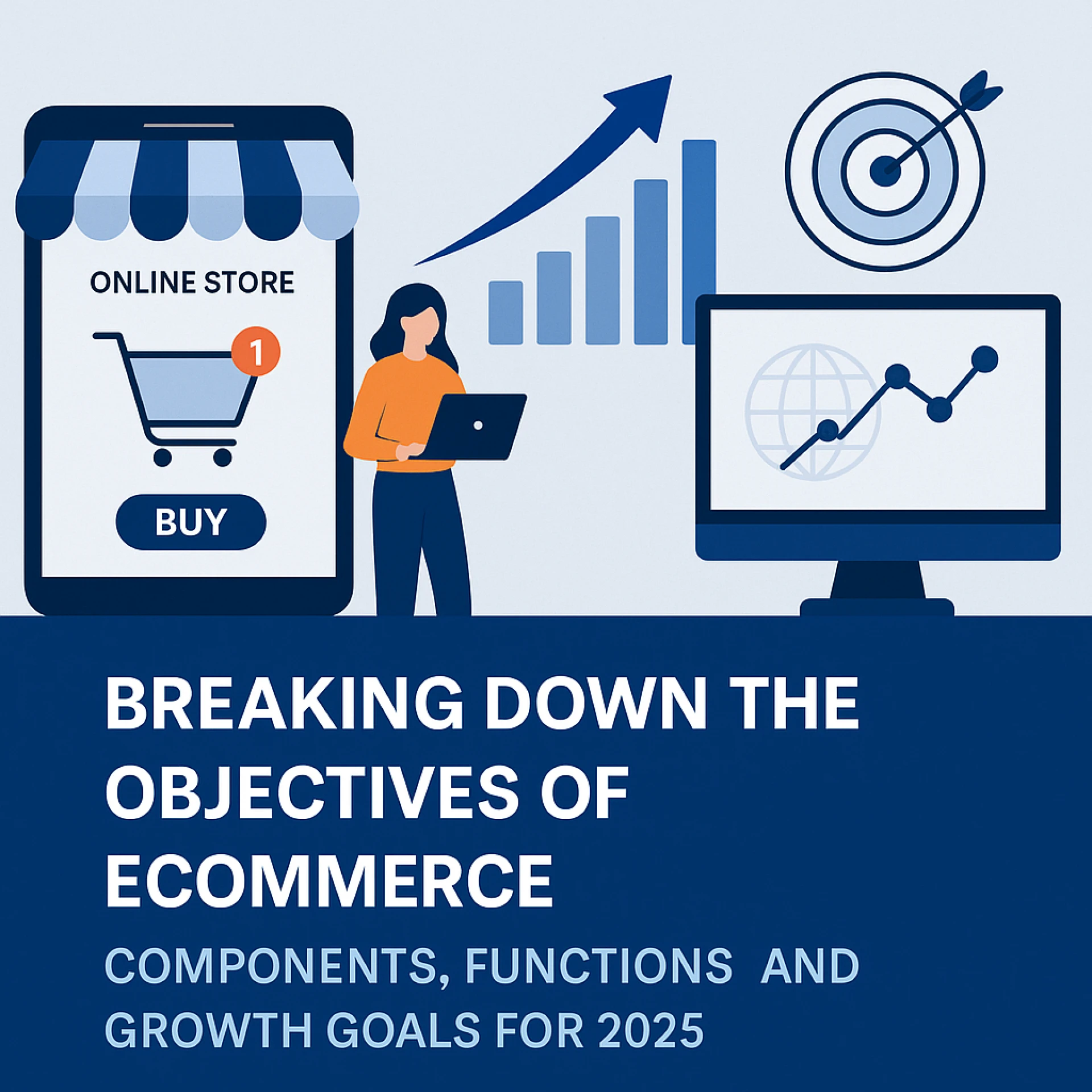


As the digital economy continues to evolve, ecommerce has emerged as a transformative force redefining how businesses operate, reach customers, and generate revenue. In 2025, the ecommerce landscape is expected to surpass $8 trillion in global sales, with innovation, personalization, and seamless user experiences becoming the standard. To stay competitive, businesses must understand the objectives of ecommerce, its critical components, core functions, and strategic growth goals that define success in the modern digital era.
This comprehensive guide explores the full ecommerce ecosystem in 2025, outlining everything you need to know to align your business goals with the future of online commerce.
Understanding the Objectives of Ecommerce in 2025
Ecommerce has grown beyond a simple transaction channel. In 2025, it serves as a central platform for brand engagement, data-driven marketing, and global outreach. Let’s explore the key objectives of ecommerce that businesses are targeting in this decade.
1. Delivering Seamless Customer Convenience
Consumers demand simplicity and speed. One of the primary ecommerce goals is to create a frictionless shopping experience, accessible 24/7 from any device. Whether through intuitive interfaces, fast-loading mobile pages, or one-click checkouts, ecommerce is all about convenience.
2. Expanding Global Market Reach
Ecommerce empowers businesses to break geographical barriers. By offering international shipping, multilingual support, and local payment methods, businesses can scale globally with minimal infrastructure investment.
3. Reducing Operational Costs
Digital storefronts eliminate the overhead of traditional brick-and-mortar stores. With automation in inventory, logistics, and customer service, ecommerce operations become leaner and more cost-effective.
4. Leveraging Data for Business Intelligence
Every customer interaction on an ecommerce platform generates valuable data. Ecommerce allows businesses to collect and analyze this data for deeper insights into behavior, preferences, and sales trends.
5. Enhancing Personalization
Using AI and machine learning, ecommerce platforms can offer personalized product recommendations, pricing, and marketing content—boosting customer satisfaction and loyalty.
6. Facilitating Scalability
Ecommerce supports exponential growth by allowing businesses to expand product lines, launch in new markets, and support high-volume transactions without a proportional increase in costs.
Critical Components of Ecommerce in 2025
To achieve these objectives, ecommerce operations must be built on robust components. These elements work together to create a cohesive, efficient, and customer-friendly ecosystem.
1. Ecommerce Platform
The ecommerce platform is the foundation. In 2025, platforms like Shopify, BigCommerce, Magento, and custom-built solutions offer headless architecture, AI features, and flexible APIs to integrate with any tool or service.
Key Features to Look for:
- Mobile-first design
- Cloud hosting for scalability
- Customizable checkout flows
- Third-party app ecosystem
- Multichannel selling
2. Product Catalog Management
A well-organized product catalog with high-quality images, detailed descriptions, and dynamic pricing is essential. PIM (Product Information Management) systems ensure consistency across all platforms and channels.
3. Inventory Management Systems (IMS)
Real-time inventory tracking prevents overselling and understocking. Modern IMS tools integrate with suppliers, warehouses, and logistics providers to optimize stock levels automatically.
4. Payment Gateways
Ecommerce in 2025 supports diverse payment methods, including:
- Credit/debit cards
- Digital wallets (Apple Pay, Google Pay)
- Buy Now, Pay Later (BNPL)
- Cryptocurrency
- Local payment options (Alipay, Paytm)
5. Order Fulfillment and Shipping Solutions
Automation and AI-driven logistics enable fast, accurate delivery. Integration with fulfillment partners like FedEx, UPS, and local couriers ensures seamless handling of shipping, tracking, and returns.
6. CRM and Customer Support Tools
CRM (Customer Relationship Management) systems manage interactions and support personalized marketing. Chatbots, AI-driven live chat, and ticketing systems ensure responsive customer service.
7. Digital Marketing Integrations
From email marketing to influencer outreach, ecommerce platforms now include built-in tools and plugins to run ads, segment audiences, and track performance across all digital channels.
8. Security Infrastructure
Data protection and privacy are non-negotiable. Ecommerce sites must support SSL encryption, PCI compliance, two-factor authentication, and regular vulnerability scans.
9. Analytics and BI Tools
Dashboards and reports powered by platforms like Google Analytics 4, Hotjar, and proprietary AI tools allow businesses to track KPIs, optimize performance, and forecast trends.
Functions of Ecommerce in the Modern Business Model
Each ecommerce component fulfills a specific role within the larger digital business framework. These functions of ecommerce work collectively to deliver value, scale operations, and generate growth.
1. Facilitating Online Transactions
Secure processing of payments and orders is the core function of ecommerce. This includes everything from cart management and checkout to digital invoicing and payment reconciliation.
2. Promoting Products and Brands
Ecommerce acts as a powerful marketing engine. Platforms offer tools for launching product campaigns, managing social media, creating landing pages, and running retargeting ads.
3. Delivering a Personalized Shopping Experience
Ecommerce platforms use behavioral data to offer real-time suggestions, personalized offers, and tailored homepages that reflect each customer’s preferences.
4. Managing Supply Chain Operations
Automated integrations with suppliers and logistics systems ensure smooth operations from product sourcing to final delivery.
5. Customer Service and Feedback Loops
Modern ecommerce platforms use AI chatbots, help centers, and ticketing systems to address inquiries and issues instantly, increasing satisfaction and retention.
6. Collecting and Analyzing Data
Data is the new currency. Ecommerce functions include tracking user journeys, recording conversion paths, and analyzing bounce rates to improve site performance.
7. Enabling Multichannel and Cross-Platform Sales
Modern ecommerce is omnichannel. Customers can shop through websites, apps, marketplaces like Amazon, or social media platforms, all with a unified experience.
Growth Goals for Ecommerce Businesses in 2025
Setting the right growth goals helps ecommerce brands stay focused and adaptive. Here are the most impactful growth strategies being implemented in 2025.
1. Achieve Omnichannel Integration
One of the top growth goals for ecommerce in 2025 is omnichannel presence. This means unifying in-store, mobile, desktop, and social shopping into one seamless experience.
2. Scale Through Automation
From customer emails to stock updates and ad campaigns, automating repetitive tasks helps businesses scale efficiently and reduce operational errors.
3. Maximize Mobile Sales
With over 70% of ecommerce traffic coming from smartphones, optimizing mobile UX, using PWAs, and integrating mobile payment systems are key growth priorities.
4. Adopt Sustainable Practices
Sustainability isn’t just a buzzword—it’s a business driver. Brands are setting goals around carbon-neutral shipping, biodegradable packaging, and ethical sourcing to attract eco-conscious shoppers.
5. Boost Customer Lifetime Value (CLV)
Beyond first purchases, businesses focus on repeat sales, loyalty programs, subscriptions, and upsell strategies to increase CLV and lower acquisition costs.
6. Expand Internationally
Cross-border ecommerce is a massive growth area. Setting goals around launching in new countries, translating content, and supporting local currencies boosts expansion.
7. Use Predictive Analytics and AI
AI helps forecast demand, suggest product bundles, and dynamically price products. These insights guide smarter decisions that fuel growth.
8. Shorten Delivery Timeframes
Next-day or same-day shipping is becoming the norm. Many ecommerce businesses now use micro-warehousing and regional hubs to offer lightning-fast fulfillment.
Ecommerce and Business Growth: The Bigger Picture
Ecommerce isn’t just a sales channel—it’s a strategic growth enabler. Here’s how ecommerce supports broader business expansion goals:
1. Rapid Market Entry
Launching a product online is faster and cheaper than setting up physical stores. Ecommerce accelerates go-to-market strategies.
2. Brand Building and Differentiation
Content marketing, UX design, and personalized offers allow ecommerce brands to build unique identities that resonate with niche audiences.
3. Data-Driven Decision Making
Ecommerce platforms feed real-time data into business intelligence systems, empowering leaders to make evidence-based decisions on marketing, pricing, and inventory.
4. Customer-Centric Innovation
Direct access to feedback, reviews, and customer behavior helps companies innovate faster, create better products, and improve overall satisfaction.
5. Long-Term Revenue Streams
Subscription services, digital goods, online courses, and downloadable products help ecommerce companies create recurring and passive income streams.
Trends Shaping Ecommerce in 2025
To stay ahead, businesses must also understand the emerging trends shaping the future of ecommerce.
1. Voice Commerce
With smart speakers and voice assistants, shopping through voice commands is on the rise. Optimizing product listings for voice search is a smart move.
2. Augmented and Virtual Reality
AR and VR allow customers to try products virtually before buying—especially valuable in fashion, furniture, and cosmetics.
3. Social Commerce
Instagram, TikTok, Facebook, and Pinterest now offer native shopping features, turning content into conversion channels.
4. AI-Powered Customer Journeys
AI bots handle support, guide customers through buying decisions, and offer smart search, leading to faster conversions.
5. Blockchain and Decentralized Commerce
Blockchain technology ensures transaction transparency and protects intellectual property, while decentralized marketplaces challenge traditional ecommerce platforms.
Challenges Ecommerce Businesses Face in 2025
Despite all the opportunities, ecommerce businesses also face significant challenges:
1. Rising Customer Expectations
Speed, personalization, and seamlessness are expected by default. Brands must continuously upgrade their tech and UX.
2. Data Privacy and Compliance
With stricter data laws like GDPR, CCPA, and new global regulations, staying compliant is crucial.
3. Cybersecurity Threats
Online businesses must protect against hacking, phishing, data breaches, and ransomware attacks.
4. Fierce Competition
As more brands go digital, standing out in saturated markets requires innovation, storytelling, and superior customer service.
5. Supply Chain Disruptions
From geopolitical issues to climate change, external events can disrupt global supply chains, causing delays and losses.
Conclusion: Aligning with the Objectives of Ecommerce in 2025
The ecommerce landscape in 2025 offers unparalleled opportunities for businesses that are ready to innovate, personalize, and scale. Understanding the objectives of ecommerce, from improving customer experience to reducing costs and expanding reach, is key to thriving in this dynamic environment.
By focusing on essential components like ecommerce platforms, inventory systems, CRM, and digital marketing, businesses can build solid infrastructure. Meanwhile, aligning with critical functions such as seamless transactions, personalization, and data analytics ensures efficient operations. Setting ambitious growth goals around mobile optimization, automation, and global expansion prepares your brand for long-term success.
As ecommerce continues to evolve, agility, customer-centricity, and strategic innovation will remain the pillars of success. Whether you're launching your first online store or scaling a multi-million-dollar ecommerce empire, 2025 is the year to go all in.




























Sign in to leave a comment.