
Documents that require use in a foreign country should be authenticated to ensure that they are genuine. Embassy attestation and apostille certification are two typical procedures that are utilized towards this end. In case you intend to work in Oman, it is necessary to know the difference between these processes to make sure that your paperwork is not rejected due to the delays.
Oman Embassy Attestation is a procedure of authenticating the documents by a chain of government officials and the last step being the embassy of Oman. This process will ensure that the document is authentic and legal in Oman.
Oman Embassy Attestation procedure is normally applicable to personal, educational and commercial documents, which will be utilized in the employment, tertiary education, applications of family visa or business undertakings in Oman.
The general procedures involved in the process include:
- Notary Attestation -Primary check made by a notary.
- State Authentication - Checking with the appropriate state department in which the document is issued.
- National Level Attestation- Authentication by Ministry of External Affairs (India).
- Embassy Attestation - Last check by the embassy of Oman in India.
After these steps are done, the document shall be legally valid to be used in Oman.
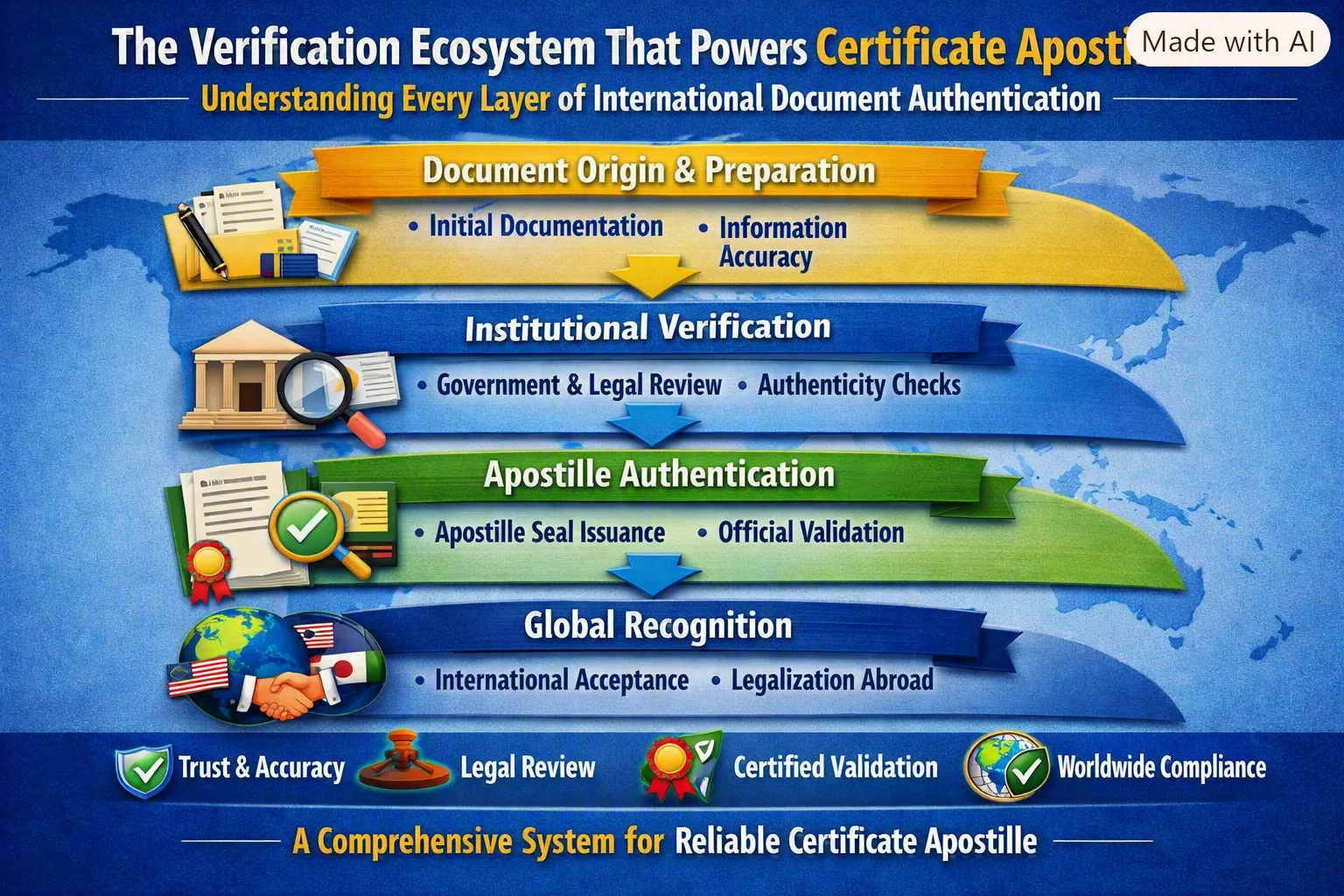
Apostille certification is an authentication of documents that is applied between nations that are signatories to the Hague Apostille Convention. The national authority is required to issue a single apostille stamp on the document which is sufficient to verify the authenticity of the document.
Majority of the states in India do not issue apostille certification but it is issued by the Ministry of External Affairs in India. The apostille stamp will enable the document to be recognized in every country that is a party to Hague Convention. But only member states of the convention can have their apostille certifications.
Even though the apostille certification is common to most other nations, Oman is not a signatory to the Hague Apostille Convention. Owing to this reason, the documents to be used in Oman will have to undergo the entire procedure of Oman Embassy Attestation as opposed to the apostille certification.
This implies that the document should be verified by various authorities to ultimately get the ultimate seal of the Oman embassy. Such differences should be studied when writing documents to be used internationally.
Oman Embassy Attestation is commonly necessary on:
- Employment visas
- Admissions in higher education.
- Family visa or residency applications.
- Business or commercial operations.
- Legal documentation abroad
Authorities in Oman might fail to accept foreign documents without the required Oman Embassy Attestation. Oman Embassy Attestation and apostille certification are the two methods of verifying international purposes of documents though they are applicable to various countries.
Documents that are to be used in Oman are also required to pass through the Oman embassy attestation procedure since Oman is not a signatory to the Hague Apostille Convention. This understanding will allow the applicants to serve in the right way of verification and will guarantee them that their documents will be taken as valid without any hassles.






























Sign in to leave a comment.