Availability: Playing widely in theaters across the US and internationally. Streaming is expected to arrive by mid- to late December. Fans who love checking upcoming releases on platforms like Flixtor are already keeping an eye out for it.
The Revolution Will Not Be Televised
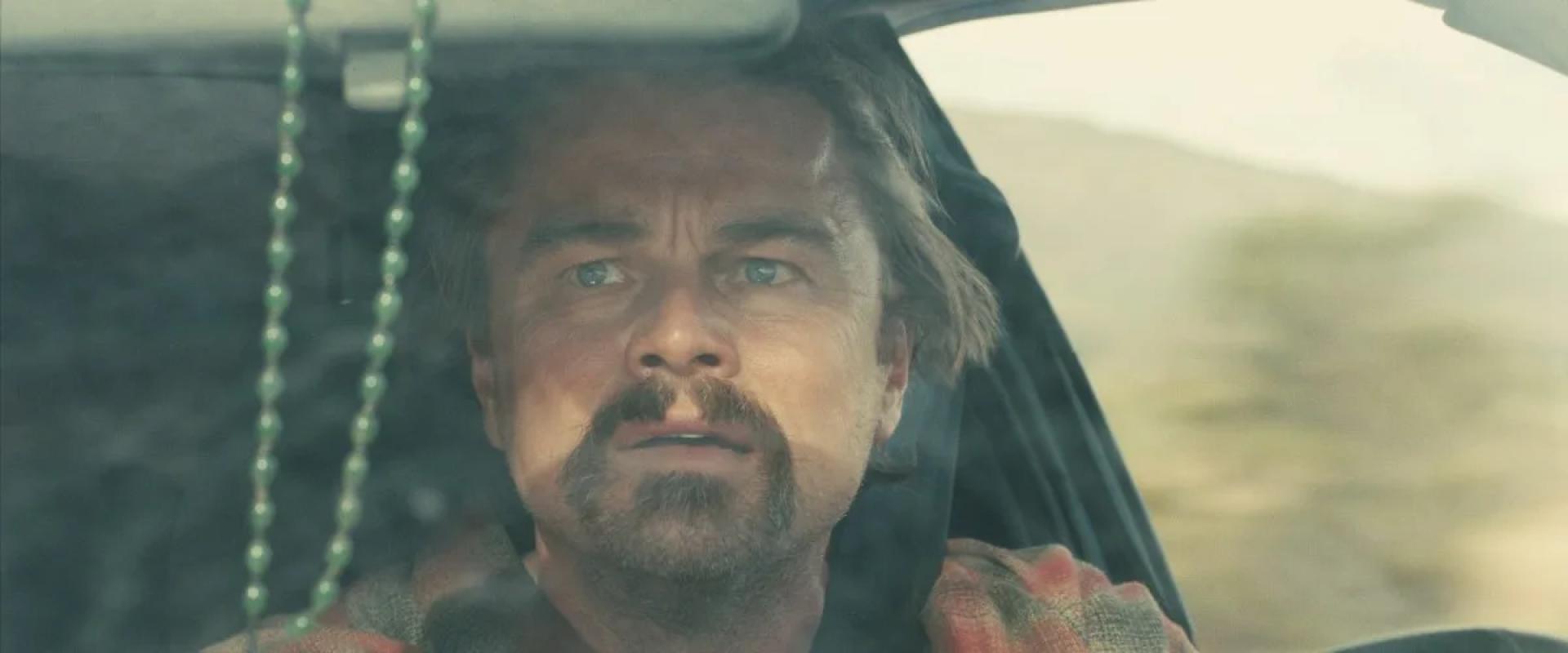
After sixteen years hiding off the grid and drifting through life, former revolutionary Bob finds himself—and his missing daughter—targeted once again by the same government he thought had forgotten him. Bob, an alias he’s been using for years, is constantly on edge throughout this intense 2-hour-and-40-minute film. Against a backdrop of fleeing immigrants, militarized government action, and rising political tension, Leonardo DiCaprio delivers a performance that is both touching and darkly funny. Watching him sprint around in a Scotch-plaid bathrobe while trying to save his daughter—and himself—adds a strange but compelling charm to the chaos.
Sixteen years earlier, Bob and his fellow revolutionary Perfidia (powerfully portrayed by Teyana Taylor) were fearless partners, lovers, and members of the radical group French 75. Their missions included freeing immigrants from detention centers—Bob, then known as “Ghetto Pat,” handled the explosives, while Perfidia faced armed officers head-on. But when deep post-partum depression hit her after giving birth, she fled, choosing her cause over motherhood, leaving Pat to raise their daughter alone. Another striking thread involves Perfidia’s intense attraction to her captor, Commanding Officer Steven J. Lockjaw (Sean Penn), adding layers of conflict and desire.
All the main characters—Bob, Perfidia, Lockjaw—live double lives. Bob is both an ex-revolutionary and an exhausted dad. Perfidia is torn between radical duty and personal desire. Lockjaw is a white nationalist who can’t stay away from the very people he claims to oppose. Characters with this kind of messy ambivalence feel human. Those without it—the rigid, single-minded groups like the white nationalist Christmas Adventurers Club—are clearly painted as the villains.
One character who stands apart is the calm and centered martial arts sensei, played by Benicio del Toro. He’s the grounding force Bob desperately needs—always reminding him, “Ocean waves, Bob, ocean waves.” His underground network of tunnels and contacts helps immigrants escape danger, turning him into a quiet hero.
In the center of the film lies an unforgettable sequence: a moonlit rooftop chase guided by three graceful skateboarders. Their movement is almost poetic as they help the stumbling, doped-up Bob reach safety. The contrast is visually stunning and unexpectedly funny.
The action doesn’t stop there. Car chases, foot chases, and chaotic escapes fill the movie—a nonstop rush that mirrors today’s political climate, just as the original novel reflected the turbulence of the 1980s. The cinematography shines brightest in a four-car ballet across the American Southwest, a beautifully choreographed scene of speed and tension.
Jonny Greenwood’s score keeps the film’s heart pounding. Songs like “Soldier Boy” and “The Revolution Will Not Be Televised” stay in your head long after the credits roll.
Humor also plays a major role. Bob’s attempts to contact his old revolutionary hotline are hilarious. He can’t remember the password, his burner phone constantly dies, and his paranoia makes every call sound like an accidental group therapy session. It’s sharp, human, and surprisingly relatable.
At over 150 minutes, “One Battle After Another” may feel long, but the tension barely dips. DiCaprio shines in this chaotic, emotional role, fully embracing the broken, weed-addled former revolutionary who still wants to do right.
The performances—from Taylor, del Toro, Penn, and Chase Infiniti as the daughter—are strong all around. Even if Penn’s Lockjaw feels exaggerated at times, it fits the film’s surreal, satirical world.
This film is deeply political from start to finish, but unlike real news, it’s impossible to look away. It asks big questions about loyalty, ideology, personal sacrifice, and survival.
She says: A political film through and through—but gripping enough that you won’t dare avert your eyes.
He says: You’ll laugh. You’ll hurt. And you’ll walk away thinking about the state of your country.
Whether you watch it in theaters now or wait for its streaming release on platforms people often check through services like Flixtor, this is a film that will spark conversations long after it ends.









Sign in to leave a comment.