
If your schedule doesn't allow for an extended stay, fret not; even a day in Jaipur can offer a glimpse into its rich history and vibrant culture. Though a single day may not suffice to fully explore this magnificent city, it's enough to immerse yourself in its wonders.
Jaipur, often referred to as the "Pink City," boasts numerous historic palaces, formidable forts, and bustling marketplaces that are sure to leave you awe-struck. Brace yourself for an immersive day as we guide you through the essential sights of this enchanting city.
Full Day Jaipur Itinerary
Jaipur, with its profound history and diverse culture, caters to a variety of interests. If time is of the essence, here's a suggested itinerary for a full day Jaipur tour. Feel free to tailor it to your preferences and budget.
For history enthusiasts, allocating more time to explore the Amber Fort and City Palace might be ideal. On the other hand, if shopping is your passion, consider extending your visit to the Bazaar—a traditional market where you can acquire souvenirs, jewelry, and textiles.
Now, let's delve into the highlights of a one-day sightseeing adventure in Jaipur.
City Palace, Jaipur
Step into an elegant and historical realm by exploring the renowned City Palace in Jaipur. Conceived during the visionary period of Maharaja Sawai Jai Singh between 1729 and 1732, this architectural marvel breathes life into the city's royal history.
Though the palace underwent several modifications over the years, it retained a robust outer wall attributed to Jai Singh II. Some of these alterations occurred in the twentieth century, illustrating the palace's ability to evolve while preserving its historical essence.
Encompassing a staggering one-seventh of Jaipur's walled city, the City Palace is more than a mere architectural showcase—it was once the seat of power, where the Maharajas of Jaipur held residence.
A testament to exquisite design, the palace has been meticulously planned with numerous courtyards, buildings, and gardens that eloquently narrate the tale of royal life. Jaipur's architectural tapestry seamlessly weaves together the principles of Shilpa Shastra with the elegance of Rajput, Mughal, and European styles.
Crafted from radiant red and pink sandstone, the palace features three majestic gates: Tripolia Gate, Udai Pol, and Virendra Pol. Each step within reveals inner courtyards, lush gardens, and grand edifices, creating an awe-inspiring spectacle.
The City Palace transcends the ordinary; it is a vibrant canvas of architecture, visual artistry, and creativity, embodying the very spirit of Jaipur.
The Hawa Mahal, Jaipur
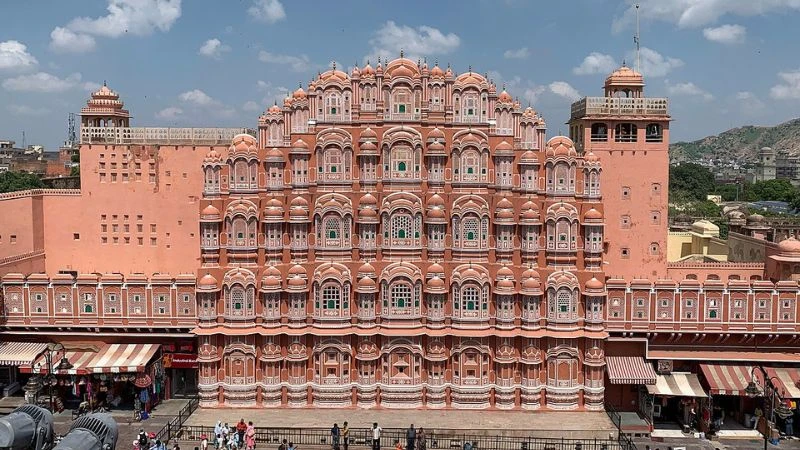
Nestled at the intersection of Badi Chaupad and a bustling marketplace in Jaipur, the Hawa Mahal is a remarkable structure that pays homage to the grandeur of Rajputana. Serving as the emblem of Jaipur and an iconic symbol globally, this architectural jewel demands a private cab to navigate the intricate city maze and lead you to its splendor, crafted by Maharaja Sawai Pratap Singh in 1799.
But why the name "Hawa Mahal"? For this palace, the name holds everything. Its ingenious design, with numerous small windows, allows refreshing breezes to permeate, acting as natural air conditioning amidst the heat. The unique red and pink sandstone facade lends a majestic aura to the building.
Beyond its exterior, the palace unfolds over five levels, each adorned with luxuriously decorated rooms. Resembling a pyramid, the structure boasts delicate windows that resemble a royal diadem's array of glittering gems.
Step inside, and an elegant fountain sets the tone of opulence. Notably, the absence of stairs is replaced by ramps to access upper floors. From the top, a rewarding panorama reveals the City Palace, Jantar Mantar, and the vibrant SirehDeori Bazaar.
Within the palace grounds lies a small museum showcasing artifacts and exquisite miniature paintings. For those with shopping desires, the vicinity around Hawa Mahal offers a chance to take a piece of Jaipur home with you.
Tip for Travelers:
Visit the Hawa Mahal for a moment. Feel the breeze, take in the scenery, and lose yourself in the peaceful atmosphere. It involves experiencing as well as seeing.
Jantar Mantar, Jaipur
As our one-day exploration of Jaipur unfolds, the Jantar Mantar beckons with its ancient secrets and celestial beauty. Standing tall, it is hailed as the world's largest stone observatory, a testament to the grandeur of a bygone era.
Within its walls lie nineteen exceptional instruments crafted from stone and brass. These instruments, not mere decorative items, are a testament to the brilliance of Raja Sawai Jai Singh, who commissioned the construction of this observation tower between 1727 and 1733. The Jantar Mantar, a marvel that took an incredible five years to build, serves as a profound indicator of humanity's enduring fascination with the universe.
Remarkably, the precision of these instruments allows keen observers to track celestial bodies with the naked eye. They stand as silent witnesses to the knowledge and skill of an era captivated by the mysteries of space and time.
Operating on three separate celestial coordinates, these tools precisely track celestial movements, modeled after the Ptolemaic astronomy of ancient Egypt. And among them stands the grand prize—the world's largest sundial, proudly unmoved by the passing years. It transcends being just a tool; it is a symbol of the indomitable spirit of innovation and scientific inquiry.
The Jantar Mantar stands as an architectural masterpiece, surpassing its celestial counterparts in northern India, not only in scientific wonders but also in its enduring legacy.
Highlights for Visitors:
As the evening descends, the Jal Mahal undergoes a magical transformation. Bathed in a soft, golden light, the palace and its reflection against the dusk sky create a mesmerizing scene. Photographers and couples alike are captivated by this ethereal view, making it a must-see treasure in Jaipur, even if it's a little off the beaten path.
Amber Fort, Jaipur:
Perched atop the Aravali Hills, the impressive Amber Fort offers a panoramic view of the serene Maotha Lake. Guarding Jaipur with imposing walls and a regal aura, this fort is a testament to the splendor of Mewari history. Constructed in the 16th century by Maharaja Man Singh, it receives over 5,000 visitors daily. The fort's pink and yellow schist construction memorializes the opulence of its era. Don't miss the daily light and sound show that breathes life into tales of valor, love, and intrigue.
Tip for Travelers:
The daily show at Amber Fort is a captivating journey through history, weaving tales of valor, love, and intrigue.
Sunset at Surya Mandir:
Situated on a hill, the serene Surya Mandir offers a panoramic view of Jaipur. Part of the Galta Ji temple complex, it's a testament to devotion and artistic brilliance. Originally built in the 18th century, it served as Maharaja Sawai Jai Singh II's private sanctuary. As the sun sets, the temple, perched 200 meters above Jaipur, provides breathtaking panoramic views, creating an unparalleled sight.
Traveler’s Tip:
Capture the Surya Mandir against the backdrop of the burning sky during sunset for a captivating and memorable sight.
Important Notice for Our Esteemed Guests on the 1 Day Jaipur Tour Package:
Itinerary Adherence: Please follow the Jaipur one-day tour program attached to this letter. No deviations are allowed.
Customization: This Jaipur tour package is non-negotiable. If you have other plans, create your own schedule and inquire about a special package from our cab service providers.
Time Management: Stick to the itinerary's time slots. The driver and service provider are not responsible for missed attractions due to delays.
Closure of Attractions: If a specific attraction is closed on the day of your tour, it won't be included in the day’s list of sightings.
Thank you for your understanding and cooperation. Stick to the set rules for an enjoyable and unforgettable tour in Jaipur!

























Sign in to leave a comment.