

Online proctored exams offer flexibility, but they can also bring a different set of challenges. Candidates need to prepare for the subject itself while also making sure their computer, internet connection, testing environment, and identification meet the examination requirements.
The pressure can become even greater when an exam date is approaching and there is still a lot of material to review. A clear preparation plan can make the process easier to manage. Instead of trying to solve everything at the last minute, candidates can focus on understanding the exam, practicing consistently, and preparing their testing setup in advance.
Why Online Proctored Exams Can Be Challenging
Online exams require candidates to manage both academic preparation and technical requirements. Even someone who understands the subject well may feel uncomfortable with a new testing platform or unfamiliar proctoring process.
Some common challenges include:
- Managing a large amount of study material
- Understanding the exam format
- Staying focused at home
- Managing time during a timed assessment
- Meeting technical requirements
- Preparing the testing environment
- Completing identity or system checks
- Handling unexpected technical problems
Understanding these challenges early makes it easier to build a preparation plan around them.
Understand the Exam Before You Start Preparing
Before opening your study materials, find out what the examination actually requires.
Review the information provided by your school, certification organization, or testing provider. Pay attention to the exam duration, question format, permitted materials, identification requirements, system requirements, and rules for the testing environment.
This first step can prevent unnecessary confusion later.
It is also helpful to understand how the proctoring process works. If a system check or practice session is available, complete it before the scheduled exam rather than waiting until the last moment.
Create a Consistent Study Routine
A consistent routine is easier to maintain than a last-minute study schedule.
Begin by dividing the syllabus into smaller sections. Decide which subjects need the most attention and assign realistic study sessions to them. Include time for practice and revision instead of spending every session reading new material.
A simple daily routine could include:
- Reviewing one major topic
- Making short study notes
- Practicing questions
- Checking incorrect answers
- Revising difficult concepts
- Taking regular breaks
The purpose is not to study for as many hours as possible. It is to create a routine that allows you to make steady progress without becoming overwhelmed.
Set Up a Dedicated Study Space
Your surroundings can affect concentration, particularly when you are preparing for an online assessment.
Choose a quiet and comfortable area where interruptions are unlikely. Keep your study materials organized and remove unnecessary distractions from your workspace.
When possible, use the same area for practice sessions that you expect to use during the actual exam. This can help you become comfortable with the environment.
A dedicated study space can also make it easier to separate study time from other daily activities.
Become Familiar With the Proctoring System
Technical uncertainty is one of the easiest sources of avoidable exam stress.
If the testing provider offers a system check, use it before exam day. Check your computer, browser, webcam, microphone, and internet connection according to the provider's instructions.
Make sure you understand any required software or browser settings as well.
A basic technical checklist can include:
- Computer meets the stated requirements
- Internet connection is stable
- Webcam works correctly
- Microphone works correctly
- Required browser or software is installed
- Operating system is updated if required
- Identification is available
- Testing area meets the provider's rules
Completing these checks early leaves more time to resolve problems if something does not work correctly.
Practice With Realistic Conditions
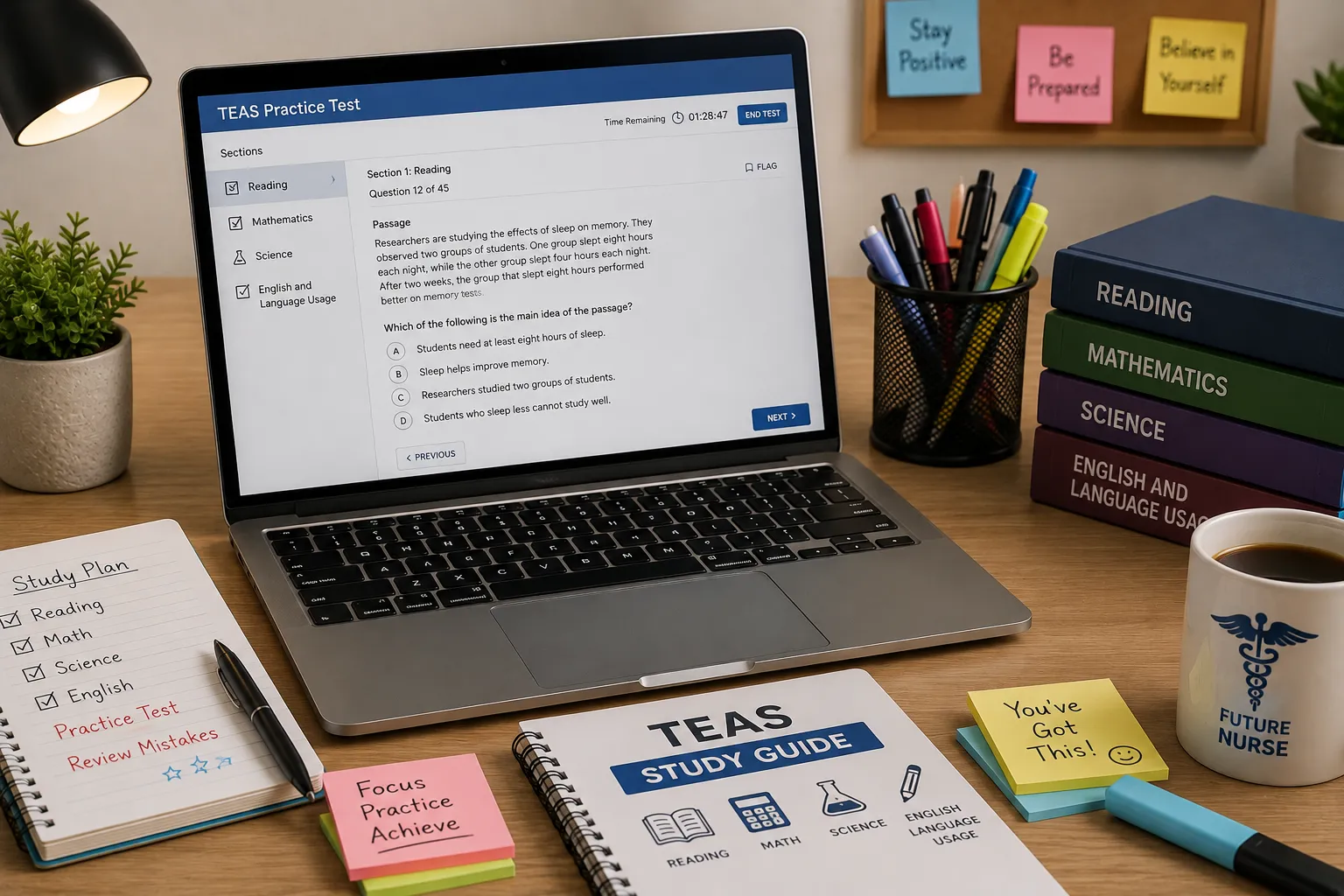
Practice tests are more useful when they resemble the actual examination.
Set a timer, reduce distractions, and work through questions without constantly checking your notes. This helps you understand how well you perform under time pressure.
After finishing a practice session, don't focus only on your score. Review the questions you missed and determine why you made each mistake.
Was the topic unfamiliar? Did you misread the question? Did you spend too much time on another section?
Understanding the reason behind a mistake can be more useful than simply memorizing the correct answer.
Improve Your Time Management
Running out of time can turn a manageable examination into a stressful experience.
During practice, pay attention to how long you spend on individual questions. If the examination rules allow you to return to previous questions, avoid spending too much time on one difficult problem.
Develop a general pacing strategy before the exam. You don't need to predict exactly how long every question will take, but you should know when it is time to move forward.
Focus on Your Weak Areas
Not every topic deserves the same amount of study time.
After completing practice questions, identify the areas where you consistently make mistakes. Spend additional time reviewing those subjects instead of repeatedly studying topics you already understand.
You can create a simple list:
Strong areas:
Topics you can answer confidently.
Developing areas:
Topics where you occasionally make mistakes.
Weak areas:
Topics that require additional study and practice.
This makes revision more focused and prevents your preparation from becoming repetitive.
When Candidates Consider Additional Exam Support
Sometimes preparation becomes difficult because of limited time, unfamiliar subjects, or other responsibilities. In those situations, candidates may explore different forms of assistance.
Some may consider take my online proctored exam for me services when they feel unable to manage an upcoming assessment. Before using any service that involves another person participating in an examination, candidates should carefully review the rules of the relevant school, employer, certification provider, or testing organization.
An examination may require the registered candidate to complete the assessment personally. Unauthorized participation can therefore create academic, professional, or certification-related consequences.
For candidates who need additional help, tutoring, study guidance, practice materials, and explanations of difficult subjects can provide support without replacing the candidate's own participation in the examination.
Choose Preparation Support Carefully
Additional guidance can be useful when self-study is not enough.
Look for resources that explain difficult subjects clearly and provide relevant practice opportunities. Preparation material should also match the current examination objectives rather than relying on outdated information.
Depending on your needs, useful support may include:
- Subject-specific tutoring
- Practice examinations
- Technical study guides
- Online courses
- Study communities
- Hands-on exercises
- Revision resources
Candidates considering take my online proctored exam for me options should also check whether the assistance being offered is permitted under the examination provider's rules.
Proctored Exams Hero can be considered when exploring information and resources related to online proctored exams. Before using any third-party service, it is important to understand what type of assistance is allowed and what responsibilities remain with the candidate.
Avoid Last-Minute Cramming
Trying to learn an entire syllabus immediately before an exam can increase pressure rather than improve preparation.
The final days should be used mainly for revision, practice, and addressing remaining knowledge gaps. Avoid adding large amounts of new material unless there is a specific topic that you have not yet covered.
A lighter final-day routine can include:
- Reviewing key concepts
- Checking important notes
- Completing a short practice session
- Revisiting common mistakes
- Confirming exam requirements
- Preparing your testing area
This leaves you better prepared without creating unnecessary mental fatigue.
Prepare Everything the Night Before
A small amount of planning can prevent several last-minute problems.
Before going to bed, confirm the examination time and make sure your equipment is ready. Keep your identification and any permitted materials accessible.
Also check your testing environment. Make sure the room meets the examination requirements and that unnecessary devices or materials are removed if the provider prohibits them.
Having these details ready means you don't have to solve them immediately before the exam begins.
Take Care of Yourself
Exam preparation should not mean studying continuously without breaks.
Sleep, food, hydration, and short breaks all matter when preparing for a demanding assessment. Studying late into the night may leave you tired when concentration is most important.
Try to maintain a regular schedule during the final days. A rested candidate can approach revision and the examination more comfortably than someone who has exhausted themselves through last-minute preparation.
Common Mistakes to Avoid
Several preparation habits can make an online proctored exam more stressful than necessary.
Ignoring Technical Requirements
Waiting until exam day to test your equipment leaves little time to solve problems.
Studying Without a Plan
Moving randomly between topics can make it difficult to know whether you are actually making progress.
Avoiding Practice Tests
Reading material without testing your knowledge can leave weaknesses undiscovered.
Spending Too Much Time on One Topic
A difficult subject may require attention, but spending all your preparation time on one area can leave other topics unfinished.
Leaving Everything Until the Final Day
Last-minute preparation can create unnecessary pressure and reduce the time available for meaningful revision.
Final Checklist Before Your Online Proctored Exam
Use this checklist before the examination:
Study
- Review the main exam objectives
- Revisit weak areas
- Complete practice questions
- Review common mistakes
Technology
- Test your computer
- Check the internet connection
- Test the webcam
- Test the microphone
- Complete any required system check
Testing Environment
- Choose a quiet location
- Follow the provider's workspace requirements
- Remove unauthorized materials
- Keep required identification ready
Personal Preparation
- Get adequate sleep
- Take regular breaks
- Eat appropriately before the exam
- Allow enough time for check-in
- Avoid unnecessary distractions
Also Read :- How Students Handle Online TEAS Test Requirements Successfully
Final Thoughts
Preparing for an online proctored exam involves more than studying the subject. Candidates also need to understand the examination process, prepare their technology, manage their time, and create an appropriate testing environment.
Starting early makes these tasks easier. A consistent study routine, realistic practice sessions, technical checks, and focused revision can reduce many of the problems associated with last-minute preparation.
When additional support is needed, choose resources that help you understand the material and prepare effectively. Most importantly, review the examination provider's rules before using any third-party assistance so you know what is permitted during your assessment.























Sign in to leave a comment.