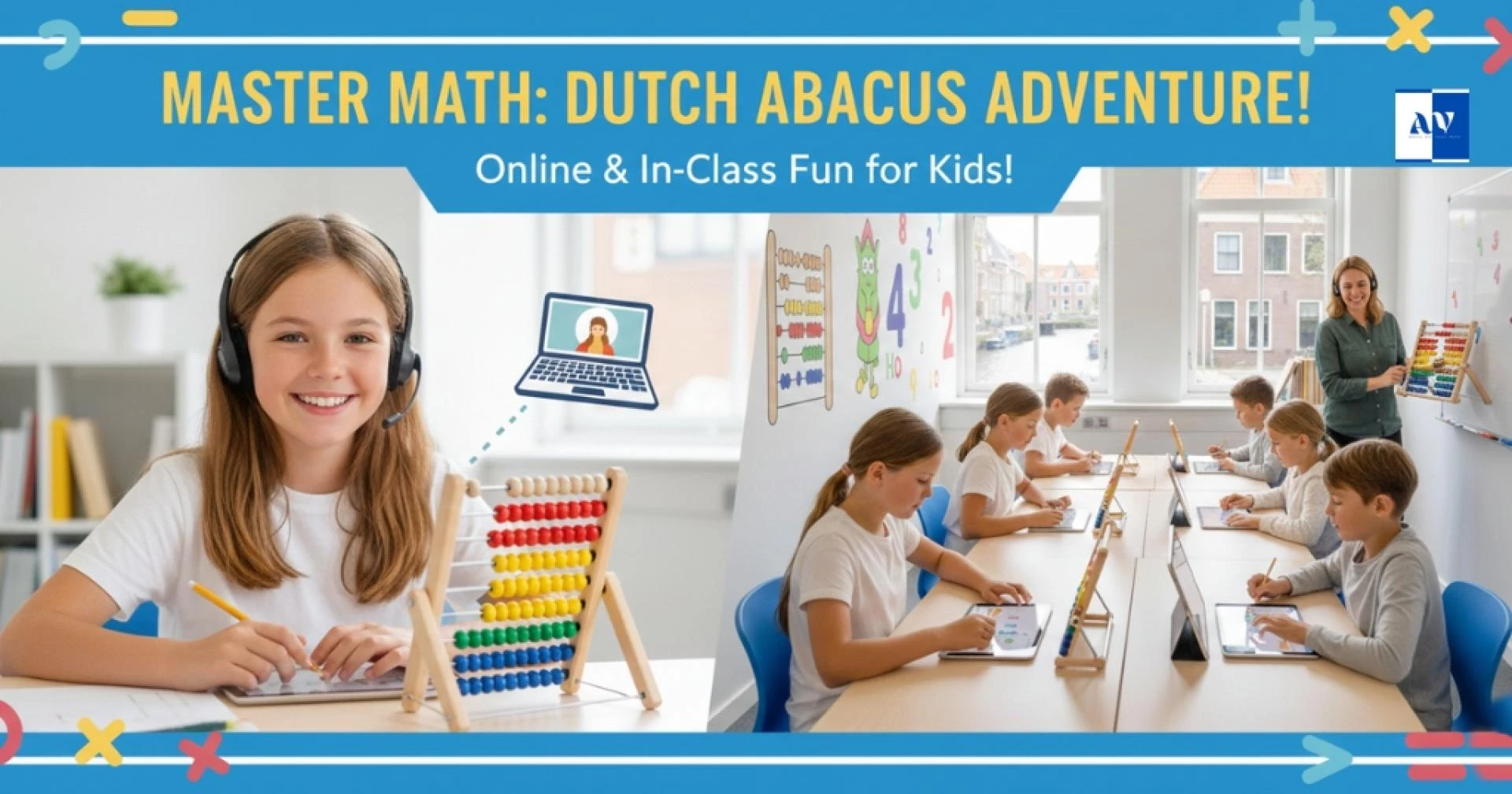

Across the Netherlands, parents are actively searching for learning options that support their children’s early number skills in a structured and engaging way. Abacus education has steadily gained attention because it focuses on mental calculation, attention span, and number clarity through hands-on practice. When families look for the best abacus institute near me in the Netherlands, one of the first questions that comes up is whether online or classroom learning is the right choice.
This blog explains how different abacus learning formats work, how course structures vary, what parents should know about fees, and how to choose an institute that suits their child’s needs and daily routine.
Understanding Abacus Education Today
Abacus learning classes are based on a traditional calculation tool that uses beads and rods. Children learn arithmetic by physically moving beads using finger techniques. Over time, they are trained to visualise the abacus mentally and perform calculations without the physical frame.
This learning method relies on repetition, observation, listening, and visualisation. It is commonly introduced to children between the ages of five and fourteen. In the Netherlands, abacus programs are usually offered as an additional learning activity alongside school education rather than as a replacement for it.
Classroom Abacus Classes in the Netherlands
Classroom-based abacus classes follow a face-to-face learning format. Children attend sessions at a nearby institute where a trained instructor teaches them in small groups.
Class structure and schedule
Most classroom programs run one or two days per week. Each session generally lasts between one hour and ninety minutes. Lessons begin with revision, then move to new concepts, supervised practice, and short exercises.
Teacher interaction
In-person sessions allow instructors to observe finger movement, posture, and attention levels closely. Corrections are given immediately, which helps children stay aligned with the learning method.
Peer environment
Children learn alongside classmates of a similar age or level. This shared environment often encourages participation and consistency, especially for younger learners.
Routine and discipline
Regular travel to a learning centre creates a fixed routine. Some children respond well to this structure, as it separates learning time from home activities.
Limitations of Classroom Learning
While classroom learning offers personal interaction, it also presents practical challenges. Travel time can be difficult for working parents, especially in larger cities such as Amsterdam or Rotterdam. Fixed schedules may clash with school timings or other activities. Families living in smaller towns may also find fewer nearby institutions.
Missed classes are more challenging to make up unless the institute offers additional revision sessions.
Online Abacus Classes and How They Work
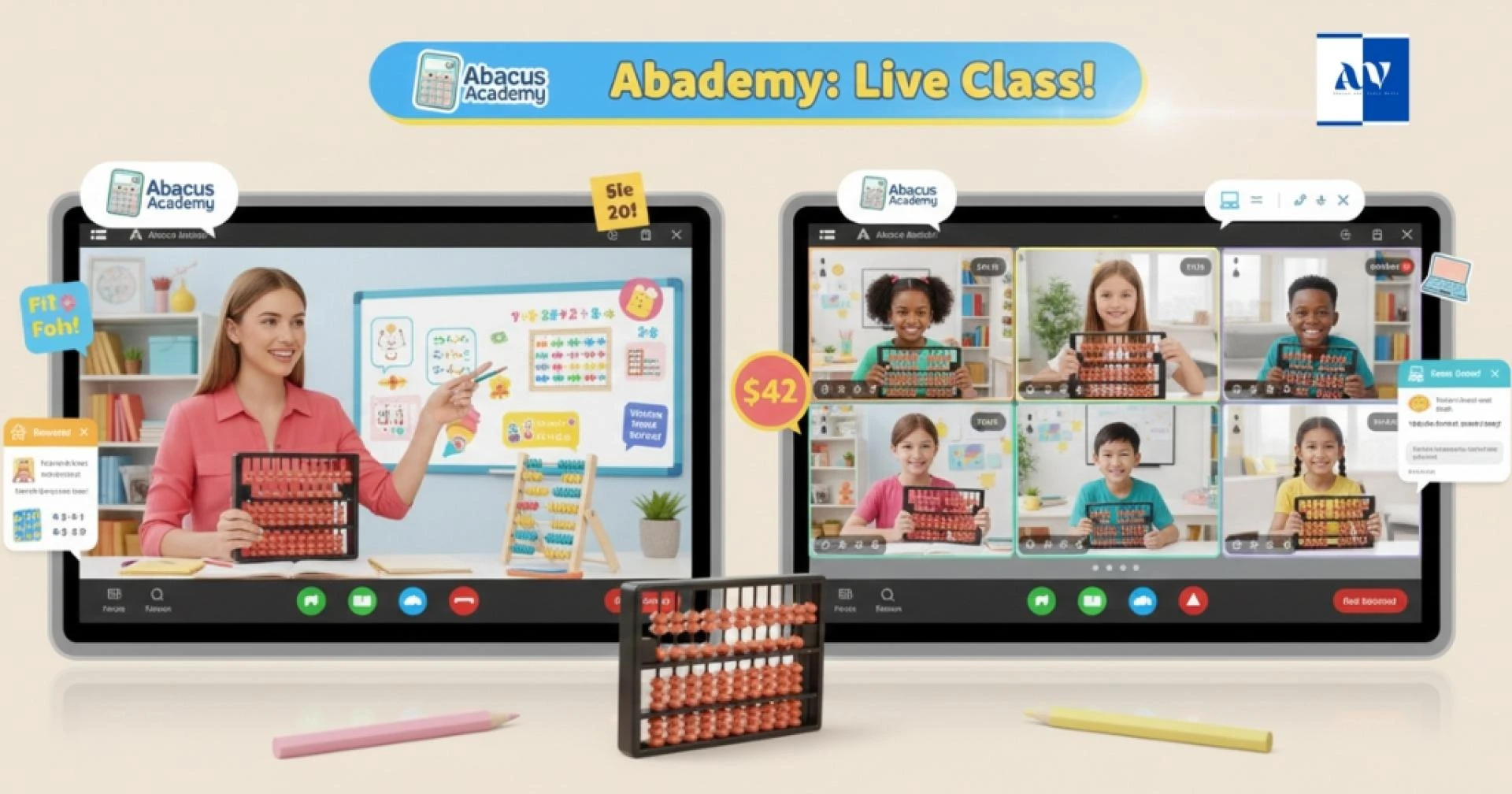
Online abacus programs are conducted through live video platforms. Children attend classes from home using a laptop or tablet, while instructors teach in real time.
Live teaching format
Most quality programs focus on live sessions rather than recorded videos. Children can ask questions, respond to oral calculations, and practice during the class.
Digital learning tools
Teachers use virtual boards, screen demonstrations, and visual aids to clearly explain concepts. Worksheets and practice materials are shared digitally.
Flexible scheduling
Online programs often offer multiple time slots, which is helpful for families managing school, homework, and other activities.
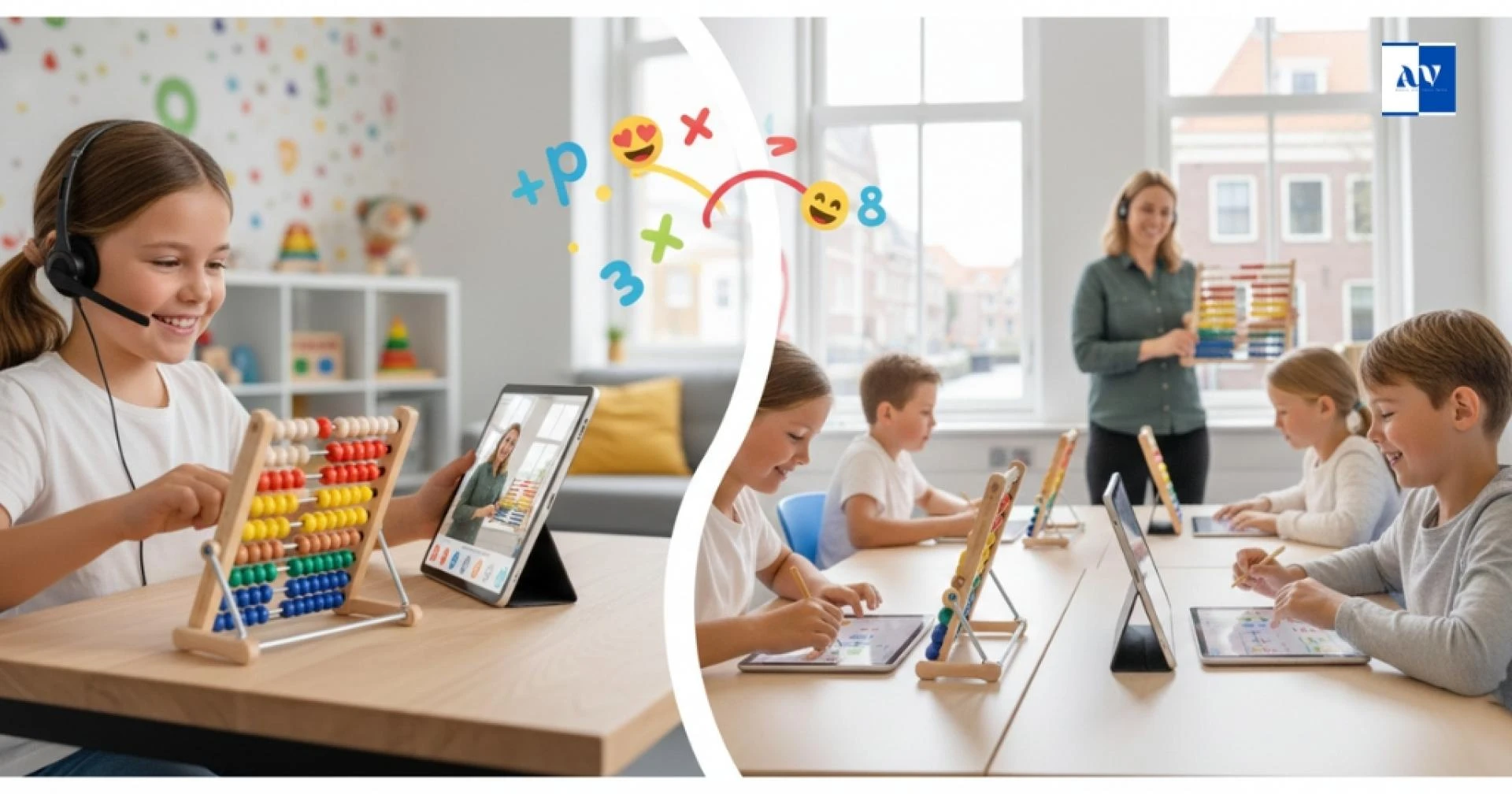
Understanding Online Abacus Classes Fees
One common reason parents explore online learning is the flexibility it offers with costs. Online abacus classes fees are often structured as monthly or level-based packages. Since there are no travel or physical classroom costs, fees may be more accessible for some families.
However, pricing can vary based on class duration, instructor experience, and batch size. Parents should always review what is included in the fee, such as study materials, assessments, and revision sessions.
Classroom Fees and Cost Considerations
Abacus training fees for classroom programs usually include instructor charges, physical materials, and institute maintenance costs. In some cases, parents may need to purchase the abacus tool separately.
While classroom learning may cost more in certain areas, many parents feel the face-to-face interaction justifies the expense. The key is transparency. A good institute clearly explains its fee structure, with no hidden charges.
Course Content Across Both Formats
Whether online or classroom-based, a reliable abacus institute follows a structured learning path. Most programs begin with an Abacus foundation course that introduces children to the tool, finger movements, and basic calculations.
As students progress, they move through higher levels that focus on speed calculation, visualisation, and mental arithmetic. Regular assessments help track progress and ensure children are ready to move forward.
Parents should ask for curriculum details before enrolling, regardless of the learning format.
Learning Experience and Child Engagement
The learning experience depends more on teaching quality than on format.
Classroom learning works well for children who need close supervision and physical presence. Younger children often respond positively to direct interaction.
Online learning suits children who are comfortable with digital platforms and can focus from home. For families living outside major cities, online learning offers access to experienced instructors without relocation.
In both formats, consistency and regular practice play a central role in learning progress.
Role of Parents in Online and Classroom Learning
Parental involvement varies slightly depending on the format.
In classroom learning, parents focus on ensuring regular attendance and practice at home.

In online learning, parents may need to help younger children with device setup, class attendance, and maintaining focus during sessions.

In both cases, encouragement and a positive learning environment support steady progress.
What Parents in the Netherlands Should Look For
When searching for the best abacus institute in the Netherlands near them, parents should consider the following points:
- Instructor experience and teaching style
- Clear course structure and learning levels
- Small group sizes for individual attention
- Transparent fee details
- Availability of demo or trial classes
Reputed institutes often share progress updates and communicate openly with parents.
Some families explore trusted platforms such as abacusandvedicmaths when looking for structured, child-friendly abacus programs that suit both online and classroom settings.
Addressing Common Parent Questions
Many parents ask whether learning outcomes differ between online and classroom formats. When taught correctly, both formats follow the same curriculum and learning stages. Results depend largely on regular attendance, practice routines, and the quality of the instructor.
Another common question relates to the Benefits of abacus classes for children. Parents often notice changes in attention span, number handling, and classroom participation over time. These changes develop gradually through steady practice rather than instant results.
Choosing the Right Format for Your Child
There is no single correct choice between online and classroom abacus classes. The right option depends on your child’s age, learning style, daily schedule, and location.
Families with access to nearby institutes and fixed schedules may prefer classroom learning. Those seeking flexibility or living in areas with fewer learning centres may find online classes more suitable.
Some parents even begin with classroom learning and later transition to online sessions as children grow older and more independent.
Final Thoughts
Abacus education continues to support children across the Netherlands by offering structured number learning in a focused environment. Understanding the differences between online and classroom formats helps parents make informed choices when searching for the right institute.
By reviewing course structure, fee transparency, and teaching quality, families can select an abacus program that fits smoothly into their routine. Whether online or in person, consistent practice and supportive teaching create a positive learning experience for children taking their first steps into abacus education.





























Sign in to leave a comment.