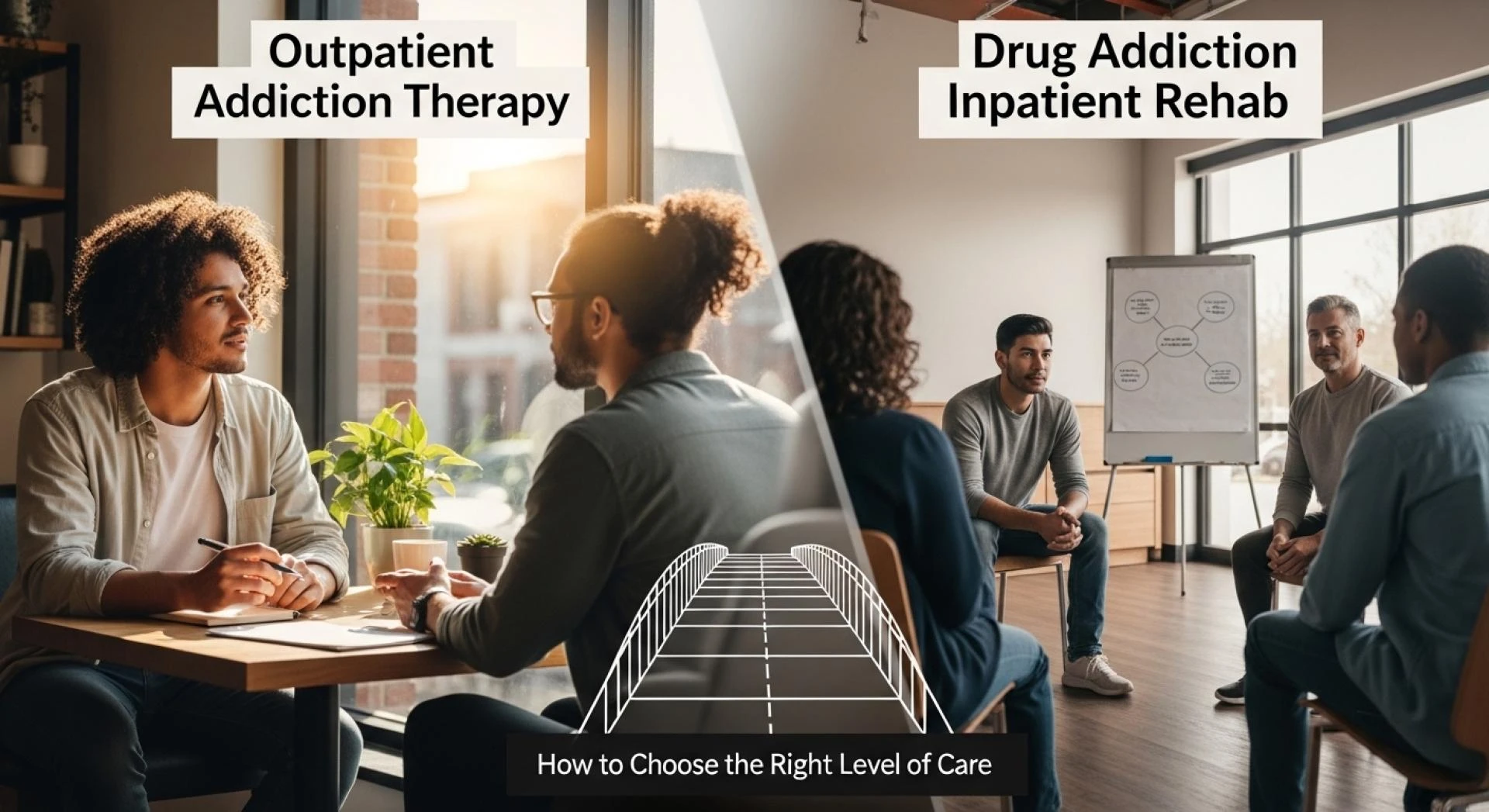
When someone in Atlanta decides to confront a substance use disorder, that decision alone takes considerable courage. But the journey does not end at the recognition that help is needed; it continues with a question that many people find genuinely difficult to answer: What kind of treatment is right for me? The landscape of addiction recovery has evolved significantly over the past two decades, and today's behavioral health system offers a meaningful continuum of care, from structured outpatient addiction therapy Atlanta programs to intensive drug addiction inpatient rehab settings. Understanding the difference between these options and knowing which one aligns with your clinical needs, personal circumstances, and recovery goals can be the deciding factor in building a recovery that lasts.
This article breaks down both pathways honestly and thoroughly, so that individuals and families across the Atlanta metro area can make informed, confident decisions about the care that gives them the best possible chance at long-term sobriety and emotional wellness.
Understanding the Addiction Recovery Continuum
Addiction treatment is not a single event it is a process that unfolds over time, often through multiple levels of care that shift as a person stabilizes, grows in their recovery skills, and addresses the underlying factors driving their substance use. The American Society of Addiction Medicine (ASAM) describes this as a continuum of care, ranging from medically managed inpatient services at the most intensive end to standard outpatient therapy at the least restrictive level.
In Atlanta and surrounding communities including Peachtree Corners, Alpharetta, Roswell, Marietta, Duluth, and Sandy Springs, individuals struggling with alcohol use disorder, opioid dependence, stimulant addiction, and other substance use disorders have access to the full spectrum of this continuum through specialized behavioral health providers. The right starting point within that continuum depends on the severity of the addiction, the presence of co-occurring mental health conditions, the person's home environment, and their prior treatment history.
What Is Drug Addiction Inpatient Rehab and Who Needs It?
Drug addiction inpatient rehab also referred to as residential treatment involves living at a treatment facility for a defined period while receiving around-the-clock clinical support, structured programming, and medical oversight. This level of care is appropriate for individuals whose addiction is severe, who have a history of relapse following outpatient treatment, who are managing acute psychiatric instability alongside their substance use, or who do not have a safe and supportive home environment to return to each day.
Inpatient rehab provides something that outpatient settings cannot fully replicate: complete immersion in a therapeutic environment, removed from the triggers, relationships, and stressors that have historically fueled addictive behavior. For individuals in the acute phase of addiction particularly those who have attempted outpatient treatment previously without sustained success this residential structure can be the foundation that makes genuine recovery possible.
Medical Detox as the Gateway to Inpatient Care
For many individuals entering drug addiction inpatient rehab, the first clinical step is medically supervised detoxification. Withdrawal from substances such as alcohol, benzodiazepines, and opioids can produce dangerous and, in some cases, life-threatening physical symptoms. A structured detox program ensures that this process occurs under qualified medical supervision, managing symptoms safely and preparing the individual physiologically and psychologically for the therapeutic work of inpatient treatment. Attempting to detox without clinical oversight is not only uncomfortable, it can be genuinely dangerous and dramatically increases the likelihood of relapse before treatment has truly begun.
What to Expect Inside an Inpatient Program
A high-quality inpatient program provides a highly structured daily schedule that typically includes individual therapy, group counseling sessions, psychiatric evaluation and medication management, psychoeducation about addiction and recovery, and holistic or experiential programming. The residential environment also allows clinical staff to monitor mental health symptoms closely a critical advantage for the significant percentage of individuals in addiction treatment who are also managing co-occurring disorders such as depression, anxiety, PTSD, or bipolar disorder.
Outpatient Addiction Therapy: Structured Care Without Leaving Your Life Behind
For a large and growing segment of individuals seeking addiction recovery in Atlanta, outpatient addiction therapy provides an equally effective and far more practical alternative to inpatient care. Outpatient programs allow individuals to receive intensive, evidence-based clinical treatment while continuing to live at home, maintain employment, and remain connected to family and community. This model is particularly well-suited to individuals with mild to moderate substance use disorders, those who have completed a higher level of care and are transitioning toward independence, and those with strong social support systems and stable home environments.
Critically, the clinical quality of outpatient addiction therapy in Atlanta is not a compromise it is simply a different delivery model. The same evidence-based therapies, psychiatric services, and recovery support tools available in inpatient settings are delivered through well-designed outpatient programs, tailored to the individual's clinical profile and recovery goals.
Partial Hospitalization: The Most Intensive Outpatient Option
At the most structured end of the outpatient spectrum sits the Partial Hospitalization Program (PHP). A PHP involves multiple hours of clinical programming each day, often five to six hours, five days per week, providing near-inpatient levels of support while allowing the individual to return home each evening. PHP is frequently used as a step-down from inpatient rehab, ensuring that individuals do not fall through the gap between intensive residential care and the comparatively lighter structure of standard outpatient therapy.
Intensive Outpatient Programs: Flexibility Without Sacrificing Depth
The Intensive Outpatient Program (IOP) is one of the most widely used and clinically effective levels of outpatient addiction care available. Typically meeting three to five days per week for three hours per session, IOP delivers a robust schedule of individual therapy, group sessions, family counseling, and psychoeducation all designed around the individual's work, parenting, or school schedule. For Atlanta-area residents who cannot step away from their daily responsibilities but genuinely need more than once-weekly therapy, IOP strikes an effective and sustainable balance.
Standard Outpatient: Long-Term Recovery Maintenance
A standard outpatient program, typically one to three sessions per week, serves as the long-term recovery maintenance phase for individuals who have stabilized through higher levels of care. This ongoing support helps individuals continue building the coping skills, relapse prevention strategies, and emotional regulation tools that sustain sobriety through the inevitable challenges of daily life. Many individuals in Atlanta's recovery community remain connected to standard outpatient therapy for a year or more following acute treatment, and the research strongly supports this extended engagement model.
Evidence-Based Therapies Driving Recovery Outcomes
Whether delivered in an inpatient rehab or an outpatient addiction therapy setting in Atlanta, the therapeutic approaches that produce the most durable recovery outcomes are those grounded in evidence, meaning they have been rigorously tested and demonstrated to be effective across diverse populations. Understanding which therapies are available at a given program is an important part of evaluating the quality of care.
Cognitive-behavioral therapy (CBT) is the most extensively researched psychological treatment for substance use disorders. By helping individuals identify the thoughts, emotional states, and situational triggers that lead to drug or alcohol use, CBT equips people with concrete skills for interrupting the addiction cycle before it escalates to use. These skills are transferable and lasting one of the primary reasons CBT remains the clinical backbone of most high-quality addiction treatment programs.
Dialectical Behavior Therapy (DBT) is particularly valuable for individuals whose substance use is entangled with intense emotional dysregulation, impulsivity, or a history of self-harm. DBT's structured skill modules covering mindfulness, distress tolerance, emotional regulation, and interpersonal effectiveness give individuals in recovery a comprehensive toolkit for navigating the emotional terrain of early sobriety without turning to substances.
For individuals whose addiction is rooted in unresolved trauma, an extremely common clinical picture, EMDR therapy has demonstrated significant efficacy. By facilitating the brain's natural processing of traumatic memories, EMDR reduces the emotional charge attached to past experiences, diminishing their power to trigger cravings and compulsive substance use. When integrated into a comprehensive addiction treatment plan, EMDR addresses a root cause that many conventional programs overlook entirely.
Dual Diagnosis: When Mental Health and Addiction Intersect
A critical consideration in choosing between outpatient addiction therapy and drug addiction inpatient rehab in Atlanta is whether a co-occurring mental health disorder is present. Research consistently shows that the majority of individuals in addiction treatment are managing at least one concurrent psychiatric condition, most commonly depression, anxiety, PTSD, or bipolar disorder. Treating the addiction without addressing the underlying mental health condition leaves a powerful driver of substance use fully intact, dramatically increasing the risk of relapse.
High-quality addiction treatment programs in Atlanta offer integrated dual diagnosis treatment that addresses both conditions simultaneously within a unified clinical plan. Whether a person enters care through an inpatient or outpatient pathway, dual diagnosis programming ensures that psychiatric symptoms receive the same clinical attention as the substance use itself, producing more comprehensive and durable recovery outcomes.
Finding Addiction Treatment
For residents across the Atlanta metro area, including Peachtree Corners, Alpharetta, Duluth, Lawrenceville, Johns Creek, Norcross, Marietta, Roswell, Sandy Springs, and Suwanee, Health offers a comprehensive continuum of addiction and mental health treatment designed around the individual, not the other way around. Their clinical team provides the full range of care, from medically supervised detox and inpatient programming to partial hospitalization, intensive outpatient, and standard outpatient addiction therapy.
Atlas Behavioral Health's approach to addiction treatment is rooted in individualized assessment, evidence-based therapies, dual diagnosis expertise, and a genuine commitment to treating each person with dignity and clinical rigor. Their team also offers medication-assisted treatment (MAT) for individuals managing opioid or alcohol use disorder, as well as specialized services including experiential therapies and LGBTQ+-affirming care reflecting a deep understanding that lasting recovery requires meeting people exactly where they are.
The admissions process begins with insurance verification, making it easier for individuals and families to understand their coverage before committing to a program. Taking that first step, reaching out for an assessment, sets the entire recovery process in motion.
The Right Treatment Is the One That Fits Your Life and Your Needs
There is no universally correct answer to the question of whether outpatient addiction therapy or inpatient drug addiction rehab is the better choice for a given individual in Atlanta. The answer depends on clinical severity, personal circumstances, available support systems, and prior treatment history. What matters most is that the level of care selected is genuinely matched to the person's needs and that it is delivered by a qualified, compassionate clinical team using evidence-based methods.
Recovery from addiction is one of the most demanding journeys a person can undertake and also one of the most profoundly rewarding. With the right clinical support, the right level of care, and a willingness to engage fully in the therapeutic process, lasting sobriety and a rebuilt life are not just possible. For thousands of people across Atlanta and its surrounding communities, they are already underway.




























Sign in to leave a comment.