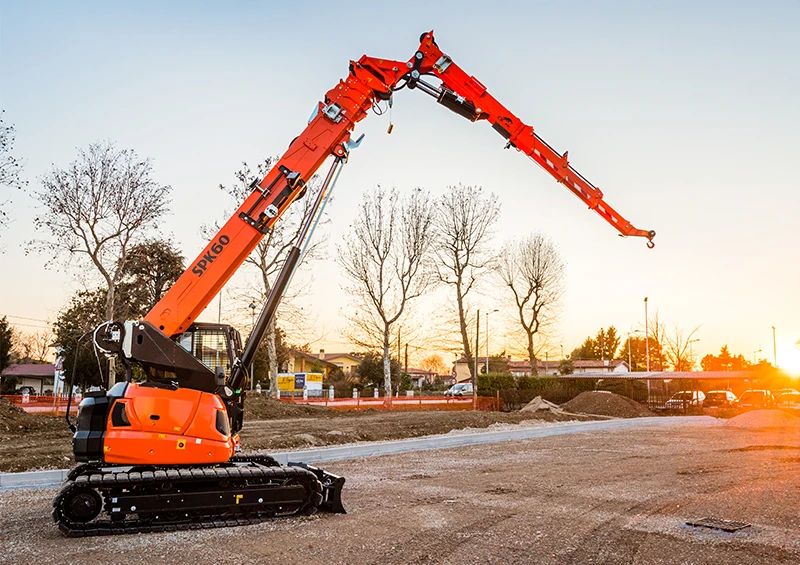

The construction business has traditionally been among the least digitalized and computerized around the globe, but they are gradually evolving.
A study published recently says that by 2025, the construction sector will employ over 7,000 robots.
Tractica projects that in the upcoming years there will be a US$226 million sales market for building automation.
Robots that assist with manual labor.
Robots aren't meant to completely substitute manual labor; rather, they're meant to supplement and increase performance, increase safety, and reduce errors.
Airborne drones and artificial intelligence (AI) applications are now being used by construction firms in addition to robots.
Why Use Robots on Site?
With so many countries dealing with skilled labor shortages, having robots available to do the work is extremely well received. Even in places like Houston heavy machinery operators are in shortage, so robots help cover the skill gap.
In addition to covering skill gaps, robots boost efficiency by working faster and more accurately than humans.
Robots can undertake hazardous work, which tackles safety concerns, as well as time-consuming activities that were historically performed only infrequently due to the unaffordable cost of human labor.
A Construction Robot
A robot is a system that can be automated to perform complicated duties and function semi-autonomously without the involvement of a human worker.
Drones that can be operated remotely, as well as exoskeletons that assist staff in lifting heavy loads, are not considered robots.
Robots Working On-Site
Here are a few of the functions that robots might shortly be performing on a worksite around you.
1. Wall construction as well as other repetitive jobs
At the moment, one of the most popular forms of robot used on worksites is the mobile robotic arm. It can be customized to do a variety of routine and labor-intensive tasks, including:
Moving materialsLaying bricksConstructing masonry wallsErecting steel reinforcement structuresTying rebarDemolitionDrilling3D printing structures.2. Resources and Equipment Carriers
Self-driving rovers are robots with high-quality camera lenses and light imaging, as well as tracking and ranging sensors, that enable them to move everywhere on their own.
They have the ability to recognize and steer clear of hazards, helping them to follow personnel carrying resources and equipment.
3. Surveillance, Surveying, and Inspections
Building site assessments can also be performed by smart robotic rovers and drones, which can compare progress to concept models and initiatives.
Based on the sensors employed, they will inspect a worksite and collect a variety of data.
The data gathered can be used to spot possible mistakes and issues early on.
4. Excavation and Grading
Self-driving vehicles and plants are also capable of transporting heavy materials and loads, as well as performing complex tasks such as excavation and grading.
Bulldozers and excavators that operate autonomously do not need a driver's car. These robots will work around the clock, increasing productivity and lowering costs. Among the usual excavation, grading, and RV equipment for sale you can find a few places with autonomous equipment as well.










Sign in to leave a comment.