
Oxycodone is a widely prescribed opioid medication used to manage moderate to severe pain. This guide brings together the essential information patients need — what oxycodone is used for, the full range of strengths available, and what to understand about how it's prescribed.
What Oxycodone Is Used For
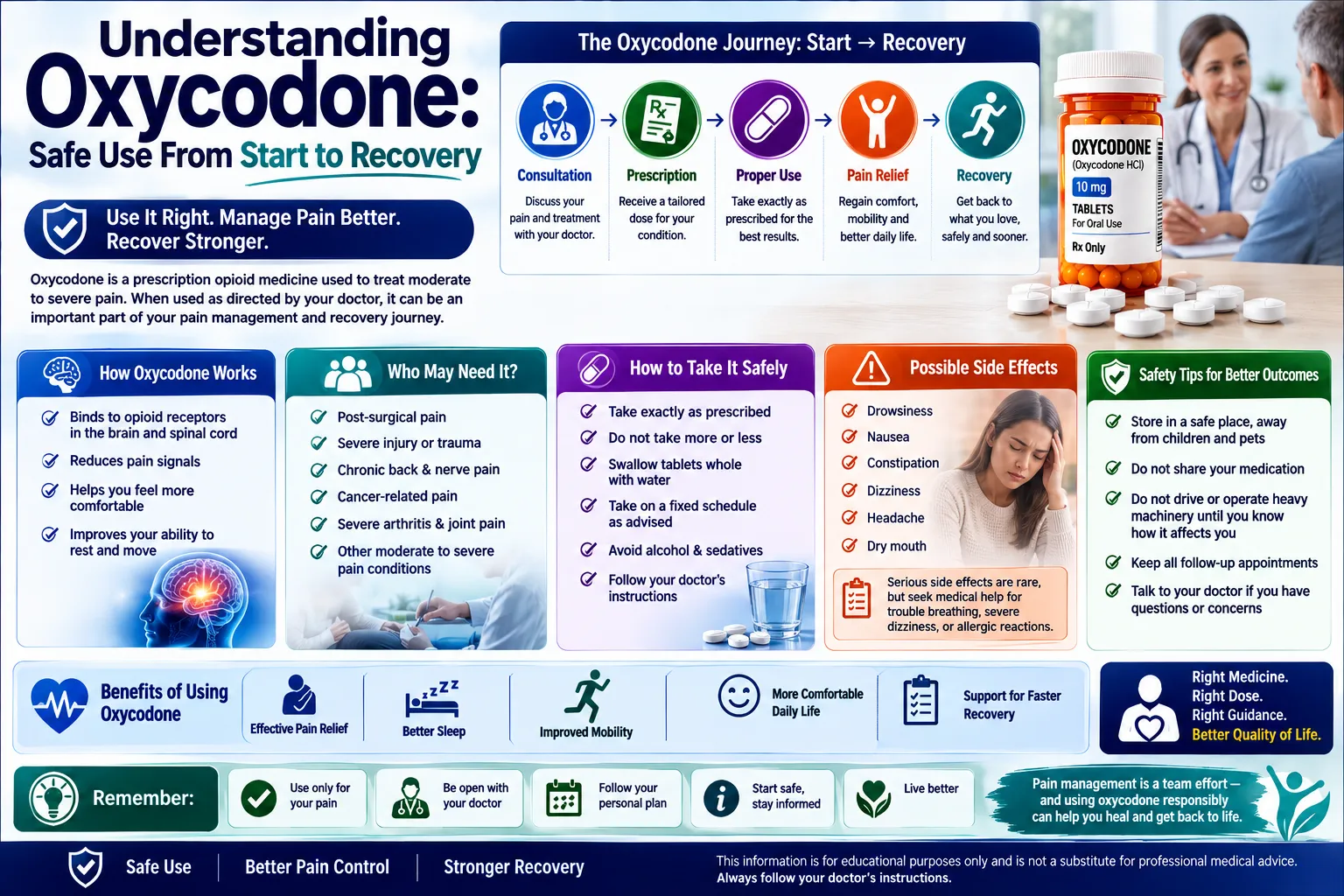
Oxycodone is prescribed when pain hasn't responded adequately to non-opioid treatments. Common uses include:
- Post-surgical pain, following procedures ranging from minor outpatient surgery to more significant operations
- Injury-related pain, such as fractures, sprains, or other traumatic injuries
- Cancer-related pain, often managed through a combination of extended-release and immediate-release formulations
- Chronic pain conditions, including severe arthritis or long-term musculoskeletal pain, when other approaches have proven insufficient
- Dental procedures, particularly more invasive extractions or oral surgery
Across these uses, oxycodone works by binding to mu-opioid receptors in the brain and spinal cord, blocking pain signal transmission and altering the perception of pain.
The Full Range of Oxycodone Strengths
Oxycodone is manufactured across a broad strength spectrum to accommodate different levels of pain severity, split between two main formulation categories.
Immediate-release strengths typically include 5mg, 10mg, 15mg, 20mg, and 30mg tablets, each dosed as needed every four to six hours based on a doctor's specific instructions. Lower strengths like 5mg and 10mg are the most commonly prescribed, generally serving as starting points or moderate-pain doses, while 20mg and 30mg are reserved for more significant pain or established opioid tolerance.
Extended-release strengths span a separate range, commonly including 10mg, 15mg, 20mg, 30mg, 40mg, 60mg, and 80mg tablets, each designed to release medication gradually over approximately 12 hours. These strengths are reserved almost exclusively for opioid-tolerant patients managing chronic, ongoing pain rather than short-term or acute conditions.
How Strength Selection Works
Choosing the appropriate oxycodone strength involves a careful, individualized process rather than a one-size-fits-all approach. Doctors typically start opioid-naive patients at the lowest effective immediate-release dose, monitoring response before considering any increase through a gradual process called titration. Factors influencing strength selection include pain severity, prior opioid exposure, body weight, age, liver and kidney function, and any other medications currently being taken. This individualized approach means two patients with seemingly similar pain conditions might receive quite different strengths based on their specific circumstances.
Understanding What Goes Into an Oxycodone Prescription
Every oxycodone prescription includes several specific components determined by your doctor:
- Strength, matched to your assessed pain severity and tolerance
- Formulation, immediate-release or extended-release, based on whether your pain requires as-needed or continuous coverage
- Dosing frequency, typically every four to six hours for immediate-release or every 12 hours for extended-release
- Maximum daily amount, establishing a clear upper limit for safe use
- Quantity or days' supply, matched to your expected treatment duration
The Prescribing Process
Before writing an oxycodone prescription, doctors typically conduct a thorough evaluation of your pain, medical history, and any prior opioid use. This evaluation is paired with a check of your state's prescription drug monitoring program (PDMP), a database that tracks controlled substance prescriptions to help identify potential safety concerns. Once finalized, most states now require the prescription to be transmitted electronically and securely to your chosen pharmacy, reflecting current regulatory standards for controlled substances.
Generic vs. Brand-Name Prescription Options
Most oxycodone prescriptions are filled with generic medication, manufactured by companies including Mallinckrodt, Teva, KVK-Tech, Rhodes Pharmaceuticals, and Amneal Pharmaceuticals. These generics are FDA-approved as bioequivalent to brand-name products, delivering the same active ingredient at a comparable rate, typically at a significantly lower cost. Unless your doctor specifically writes "dispense as written" for a brand-name product, most pharmacies will automatically fill your prescription with whichever generic version they currently stock.
Why Oxycodone Prescriptions Work Differently Than Most Medications
Because oxycodone is classified as a Schedule II controlled substance, its prescriptions follow rules that differ meaningfully from most other medications:
- No automatic refills are permitted under federal law; a new prescription is required for each new supply
- State-specific quantity limits may apply, particularly for initial prescriptions addressing acute pain
- PDMP checks are required in most states before prescribing or renewing a prescription
- DEA-mandated production quotas limit the total amount of oxycodone that can be legally manufactured each year, which can occasionally affect availability
How Formulation Affects Your Prescription
Understanding whether your prescription calls for immediate-release or extended-release oxycodone significantly shapes how you'll take the medication. Immediate-release tablets provide relief within 10 to 30 minutes, lasting four to six hours, making them well-suited for acute or breakthrough pain. Extended-release tablets release medication gradually over approximately 12 hours and must always be swallowed whole — never crushed, split, or chewed — since altering the tablet destroys its controlled-release mechanism and can cause the full dose to enter the bloodstream at once.
Combination Product Prescriptions
Some prescriptions call for oxycodone combined with acetaminophen rather than standalone oxycodone. These combination products are labeled with two numbers reflecting each ingredient's strength, and are generally reserved for shorter-term, moderate pain management, since the acetaminophen component limits how much can safely be taken within a 24-hour period.
Insurance and Cost Considerations Across Strengths
Insurance formulary treatment varies by strength and formulation. Generic immediate-release oxycodone at lower strengths is typically placed on a preferred, lower-cost tier, while extended-release formulations or higher strengths often require prior authorization, meaning your doctor must document medical necessity before the prescription is covered at a preferred rate.
A Strength and Formulation Quick Reference
| Category | Common Strengths | Typical Use |
|---|---|---|
| Immediate-release | 5mg–30mg | Acute or breakthrough pain |
| Extended-release | 10mg–80mg | Continuous, chronic pain management |
| Combination products | Varies by product | Shorter-term, moderate pain |
How Doctors Adjust Strength Over the Course of Treatment
Strength selection isn't necessarily a one-time decision made at the outset of treatment. As treatment progresses, doctors regularly reassess whether the current strength continues to appropriately manage a patient's pain, adjusting through gradual titration if relief proves inadequate or if signs of developing tolerance emerge. This ongoing reassessment process typically happens at scheduled follow-up appointments, where a doctor reviews how consistently the current dose has been working and determines whether an adjustment — up, down, or a formulation change entirely — makes sense based on the patient's evolving clinical picture.
Special Considerations for Different Patient Populations
Certain patient groups require particular consideration when it comes to both strength selection and prescription structure. Older adults often need lower starting strengths due to increased sensitivity to opioid effects and age-related changes in metabolism. Patients with liver or kidney impairment may process oxycodone differently, since these organs play a central role in metabolizing and eliminating the medication, sometimes requiring adjusted dosing intervals regardless of the specific strength prescribed. Patients on multiple other medications require particularly careful prescription planning to avoid dangerous interactions, making complete medication disclosure to the prescribing doctor essential regardless of which strength is ultimately selected.
How Prescription Information Changes for Longer-Term Treatment
For patients managing chronic pain over an extended period, prescription information takes on additional layers compared to a short-term acute pain scenario. Longer-term treatment plans typically involve more structured follow-up scheduling, periodic PDMP reviews built into the ongoing relationship between doctor and pharmacy, and often a transition consideration toward extended-release formulations if immediate-release dosing alone isn't providing adequate, consistent coverage throughout the day. Understanding that prescription information and structure can evolve meaningfully over a longer treatment course — rather than remaining static from the first prescription onward — helps set realistic expectations for patients beginning what may become an extended treatment relationship.
Understanding Regional Variation in Prescription Requirements
Beyond the federal framework governing oxycodone as a Schedule II controlled substance, individual states layer on their own specific requirements that can affect prescription information and structure. Some states cap initial prescription quantities for acute pain at a specific number of days' supply, require particular documentation for certain strengths, or mandate specific electronic prescribing platforms for controlled substances. Patients who relocate, travel, or switch healthcare providers across state lines should be aware that prescription requirements and typical practices can differ meaningfully depending on location, even though the underlying medication and its federal classification remain consistent nationwide.
Questions to Ask About Your Oxycodone Prescription
- Why was this specific strength and formulation chosen for my pain?
- Will I receive generic or brand-name medication?
- How does the refill process work for this type of prescription?
- What would prompt a change in strength or formulation going forward?
Final Thoughts
Oxycodone's wide range of uses and strengths reflects its role as a flexible, individualized tool for managing moderate to severe pain across many different clinical situations. Understanding how strength selection works, what goes into a prescription, and how the prescribing process differs from other medications helps patients engage more confidently with their treatment. As always, questions specific to your individual prescription should be directed to your prescribing doctor or pharmacist.
Related Links:
https://orderoxycodone15mggreenpillsonline.weebly.com/
https://orderoxycodone15mgtabletsatadiscountedrate.weebly.com/



























Sign in to leave a comment.