WHAT IS PACKAGE TESTING?
Package testing or packaging testing involves the test and measurement of a characteristic or property involved with packaging. This includes packaging materials and components, packaging shape, shipping containers, and unit loads, as well as the associated processes and environments.
Packaging testing evaluates packaging suitability for product cushioning or support materials. Put the packaged product through a series of experiments to determine whether the packaging material will protect the product from damage. Package testing can be performed on the individual boxes or entire shipping containers to measure unit loads and movement during shipping.
Packaging Tests Equipment CME offers
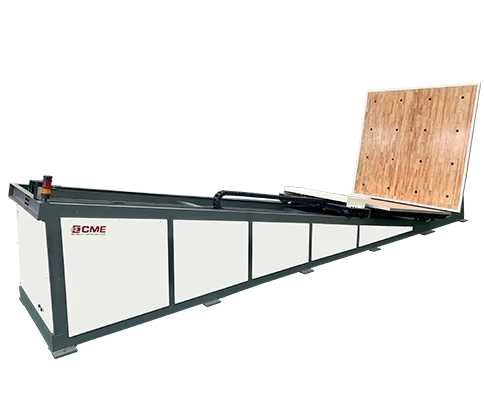
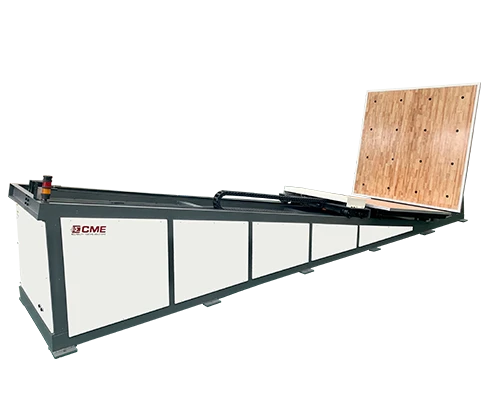
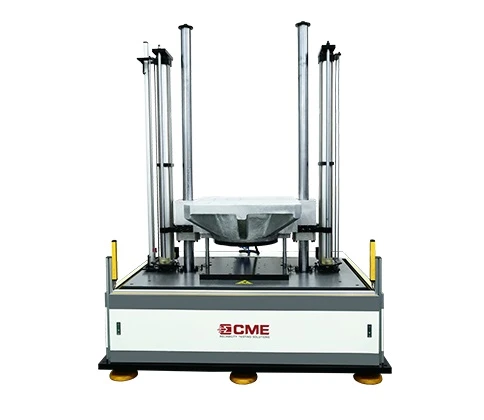
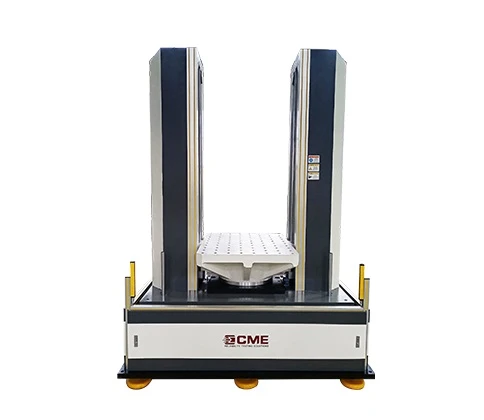
CME offers a wide range of packaging test, including vibration testing (for both random & fixed displacement vibrations), drop testing, compression testing, incline impact testing, horizontal impact testing, as well as clamping force testing. On this page we highlight the following packaging testing instruments:
WHY DO PACKAGE TESTING?
Package testing is an important way to ensure products are safely shipped from the warehouse to the
01
Validate suitability of the packaging
02
Improve current less packaging
03
Avoid over-packaging and saving cost
04
Reproducing the potential damages in actual shipments
05
Improve the brand image
WHAT STANDARDS REQUIRE PACKAGING TESTING?
Various industries & applications require different standards. ISTA is one of the most important industry developer of testing protocols and design standards that define how packages should perform to ensure protection of their contents during the ever changing risks of the global distribution environment. CME package testing equipment categories following standards:
ASTM
- Shock: ASTM D4003ASTM D5487
- Vibration:ASTM D4728
- Drop: ASTM D5276
- Transportation:ASTM D999
- Incline Impact:ASTM D880ASTM D5277
- Compression:ASTM D642
Clamping Force:ASTM D6055
ISO
- Shock: ISO 2244
-Vibration: ISO 13355ISO 8318
- Drop: ISO 2248
- Transportation:ISO2247
- Incline Impact: ISO 2248ISO 2244
- Compression: ISO 2874ISO 2872ISO 13820
ISTA1Series
ISTA 2 Series
ISTA 3 Series
What is the procedure of ASTM D880?
ASTM D880-92(2021) Standard Test Method for Impact Testing for Shipping Containers and Systems. This test method covers two procedures for conducting impact tests on loaded containers or shipping units (pallet loads), as follows: 1.1.1 Procedure A, to test the ability of a container or shipping unit to withstand impacts, and 1.1.2 Procedure B, to test the ability of a container or shipping unit or interior packing, or both, to provide protection to the contents when subjected to impacts. These test methods are intended to determine the ability of a package or product to withstand laboratory-simulated horizontal impact forces. ASTM D880 identifies the results of impacts on a shipping container. As an ISTA and ISO 17025 certified lab, we realize the importance of impact testing. Meeting the ASTM D880 requirements can be difficult. We understand the challenges and guide companies through the process. ASTM D880 integrity transportation testing can be applied to a number of containers. These include but are not limited to flexible packages, pouches bags, barrels, boxes, crates, drums, kegs, pails, and sacks. The standard also allows for the testing of pallet loads and palletized units. Heavily loaded units can be tested to this standard.
How do I refer to ISTA standards for the compression test?
Packaged Products Weighing ≤ 150 lbs(68kg): ISTA 2A,1C
Packaged Products Weighing >150 lbs.: ISTA 2B
Unitized Loads (Palletized): ISTA 3E
How to calculate the max. compression force referring to ISTA 2B?
When using weights and a load spreader uses extreme care to prevent injury. Familiarity with the following formulas is required.
What's the difference between ASTM & ISTA standards?
Cost: ISTA is a lower cost
Test time: ISTA requires less test time
Testing Equipment: Older equipment can perform the tests by ISTA, Equipment costs less than with ASTM
Procedure: ISTA has more specific procedures
CME mechanical test equipment covers wide range of testing, including shock test, vibration test, constant acceleration test, drop test, incline impact test, compression test, whatever type of international standards you need to test for your products, we have the corresponding mechanical test equipment to carry out the testing.
We can also offer kinds of shock testing machine for sale, anything you need, please leave us a message.






















Sign in to leave a comment.