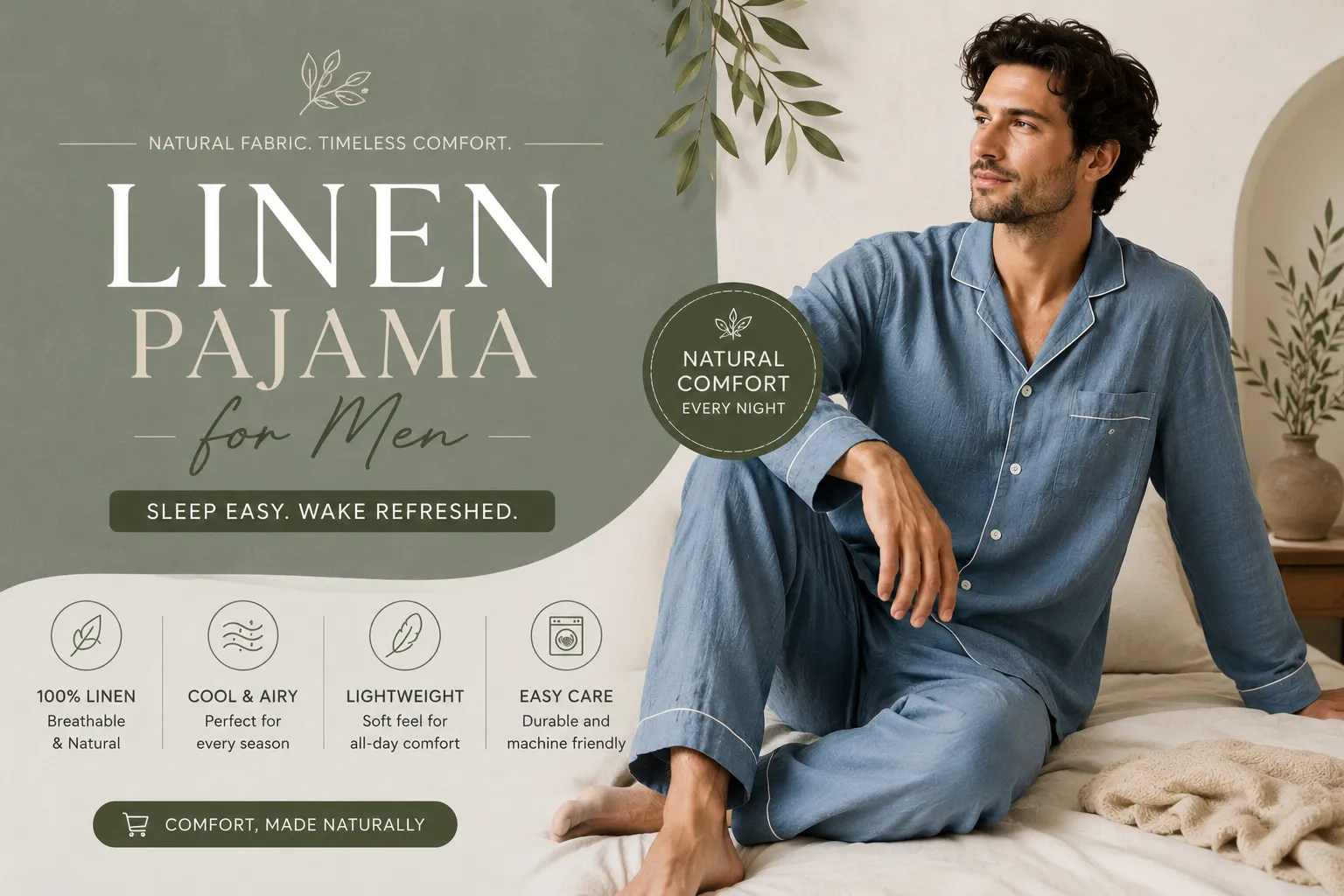

Choosing the right fabric matters more than the print or the price tag when you're buying men's pajama sets. The fabric decides how well you sleep, how long the pair lasts, and whether it suits your local weather. This guide compares cotton, linen, and blended fabrics head-to-head so you can pick the right pajama for men based on facts, not guesswork.
What Fabric Is Best for Pajama for Men? (Quick Answer)
For most men, 100% cotton is the safest all-round choice for men's pajama fabric because it's breathable, soft, and easy to maintain. Linen is better if you live in a hot, humid climate and want maximum airflow, while a cotton-linen blend balances softness with breathability and works well across seasons. There's no single "best" fabric — the right one depends on your climate, skin sensitivity, and how much upkeep you're willing to do.
Cotton Pajama for Men: Pros, Cons & Who It Suits
Cotton remains the most widely bought fabric for men's pajama sets, and for good reason.
Pros:
- Soft against the skin and gentle for people with sensitive skin or mild allergies
- Highly breathable, so it absorbs sweat instead of trapping heat
- Easy to wash, dry, and iron compared to delicate fabrics
- Widely available in various weights — poplin, flannel, jersey — for different seasons
Cons:
- Wrinkles easily unless treated or blended
- Heavier cotton weaves (like flannel) can feel warm in summer
- Lower-quality cotton pills or thins out after repeated washing
Who it suits: Men who want a low-maintenance, year-round option, especially in moderate climates or air-conditioned bedrooms.
Linen Pajama for Men: Pros, Cons & Who It Suits
A linen pajama for men is increasingly popular in warmer regions because linen fibers are naturally more porous than cotton, allowing faster heat and moisture release.
Pros:
- Exceptional breathability, ideal for hot and humid nights
- Naturally moisture-wicking, so it feels drier against the skin
- Gets softer with every wash
- Lightweight, making it comfortable for summer sleepwear
Cons:
- Wrinkles more than cotton and needs occasional ironing
- Generally priced higher than standard cotton pajamas
- Coarser texture initially, which some find less soft than cotton until broken in
Who it suits: Men in tropical or coastal climates, or anyone who sleeps hot and prioritizes airflow over a perfectly smooth finish.
Cotton-Linen Blend Pajamas: Best of Both Worlds?
A cotton-linen blend combines cotton's softness with linen's breathability. Manufacturers typically mix the fibers in ratios like 55% cotton–45% linen to reduce linen's stiffness while keeping its cooling property. This blend also wrinkles less than pure linen and drapes better than pure cotton in humid weather, making it a practical middle-ground pick for men who want comfort without heavy fabric care.
Cotton vs Linen vs Blend: Comparison Table
| Feature | Cotton | Linen | Cotton-Linen Blend |
| Breathability | Good | Excellent | Very Good |
| Softness (initial) | High | Moderate | High |
| Wrinkle Resistance | Moderate | Low | Moderate |
| Best Season | All-round | Summer/Humid | Spring–Summer |
| Durability | High | High | High |
| Maintenance | Easy | Needs ironing | Moderate |
| Typical Price Range | Budget–Mid | Mid–Premium | Mid |
Which Pajama Fabric Is Best for Summer?
For summer, linen or a cotton-linen blend performs best because both allow faster air circulation and moisture evaporation, keeping body temperature lower through the night. Lightweight cotton weaves like cotton poplin or cotton voile are the next best option if linen isn't available in your size or budget.
Which Pajama Fabric Is Best for Winter?
For winter, heavier cotton fabrics such as brushed cotton or cotton flannel trap body heat better and feel warmer against the skin. Linen is not ideal for cold weather since its lightweight, airy structure doesn't retain heat.
How to Choose the Right Men's Pajama Fabric
Use this checklist before buying:
- Check your climate — hot/humid favors linen or blends; cold favors heavier cotton.
- Consider skin sensitivity — pure cotton is generally the gentlest option for sensitive skin.
- Factor in maintenance time — cotton needs less ironing than linen.
- Match the fit — a breathable fabric works best with a relaxed, non-restrictive cut for uninterrupted sleep.
- Look at fabric weight (GSM) — lower GSM (100–150) suits summer; higher GSM (180+) suits winter.
- Buy from brands transparent about fabric composition — labels should clearly state the cotton or linen percentage, which is a fair practice many sleepwear brands, including Fabmade, follow when listing men's pajama fabric details on product pages.
Cotton vs Linen Pajamas: Which Lasts Longer?
Both fibers are naturally strong and long-lasting when cared for properly. Cotton tends to soften and thin slightly with heavy use over years, while linen actually gains strength and softness with washing, often outlasting cotton in terms of structural durability — though its surface may look more textured over time. In short, linen typically has a longer functional lifespan, but cotton keeps its original look and feel for longer.
How Should You Care for Cotton and Linen Pajamas?
- Wash in cool or lukewarm water to prevent shrinkage
- Avoid high heat while drying; air-dry linen when possible
- Iron cotton on medium heat and linen on a slightly lower setting while still damp for easier wrinkle removal
- Store folded rather than on hangers to avoid stretching lightweight fabrics
- Wash separately from rough fabrics (like denim) to prevent pilling
Cotton cultivation and fiber-quality standards in India, one of the largest cotton producers globally, are documented by the Ministry of Textiles, Government of India, which is a useful reference for understanding fiber grading and quality benchmarks used across the industry.
People Also Ask: Pajama for Men Fabric
Is cotton or linen better for men's pajamas? Cotton is better for softness and low maintenance; linen is better for breathability in hot climates. Neither is universally "better" — it depends on your sleeping environment.
Can linen pajamas be worn all year?
Linen pajamas work best in warm to moderate weather. In colder months, they may feel too light, so pairing with a heavier layer or switching to cotton flannel is more comfortable.
Do cotton pajamas shrink after washing?
Yes, cotton can shrink slightly, especially in the first few washes, if washed in hot water. Cool-water washing and air-drying minimize shrinkage.
Is linen pajama for men good for sensitive skin?
Linen is hypoallergenic and generally safe for sensitive skin, though its slightly textured feel may take a few washes to soften compared to cotton.
What GSM is ideal for men's pajama fabric?
A GSM (grams per square meter) of 120–160 works well for summer pajamas, while 180 GSM and above suits colder months.
How do I know if a men's pajama fabric is genuine cotton or linen?
Check the product label for fiber composition percentages, feel for natural fiber texture rather than a synthetic sheen, and note that pure natural fabrics wrinkle more easily than synthetic blends — a helpful, low-cost purity check.
Final Thoughts
There's no one-size-fits-all answer for men's pajama fabric — cotton offers comfort and convenience, linen offers superior breathability, and blends offer a practical middle ground. Matching the fabric to your climate, skin type, and care routine will do more for your sleep quality than any print or design choice. Whether you lean toward a classic cotton set or a linen pajama for men built for warmer nights, checking the fabric composition label before buying — a practice reflected in how brands like Fabmade list their men's pajama fabric details — is the simplest way to make sure you're getting what you're paying for.























Sign in to leave a comment.