

Paramedics handle some of the most complex situations in prehospital care. They deliver advanced treatments, interpret heart rhythms, manage airways, and make fast decisions with limited information. If you are considering this path, it helps to know exactly what the training involves before you commit. This article answers the questions most future students ask.
What Does a Paramedic Do?
A paramedic is an advanced-level emergency care provider. On a call, paramedics assess the patient, start intravenous lines, give medications, monitor cardiac rhythms, manage serious breathing problems, and lead the care team until the patient reaches the hospital. They also coordinate with physicians and emergency department staff.
Compared with a basic EMT, a paramedic works with a wider set of tools and a deeper understanding of anatomy, physiology, and pharmacology.
How Paramedic Training Is Different
Training at this level is longer and more intensive than basic EMS education. You will study:
- Advanced anatomy and physiology
- Pharmacology and medication administration
- Cardiology and electrocardiogram interpretation
- Advanced airway management
- Trauma and critical care
- Pediatric and obstetric emergencies
- Clinical rotations and a field internship
Expect real academic effort. Many students find the pharmacology and cardiology sections the most challenging, and also the most rewarding.
Entry Requirements to Expect
Most schools expect you to hold EMT certification before you start, and some ask for a period of field experience as well. You will usually need a high school diploma or equivalent, a clean background check, immunisation records, and a basic physical fitness level. Ask each school for its full list so you can prepare in advance.
Comparing Your Options
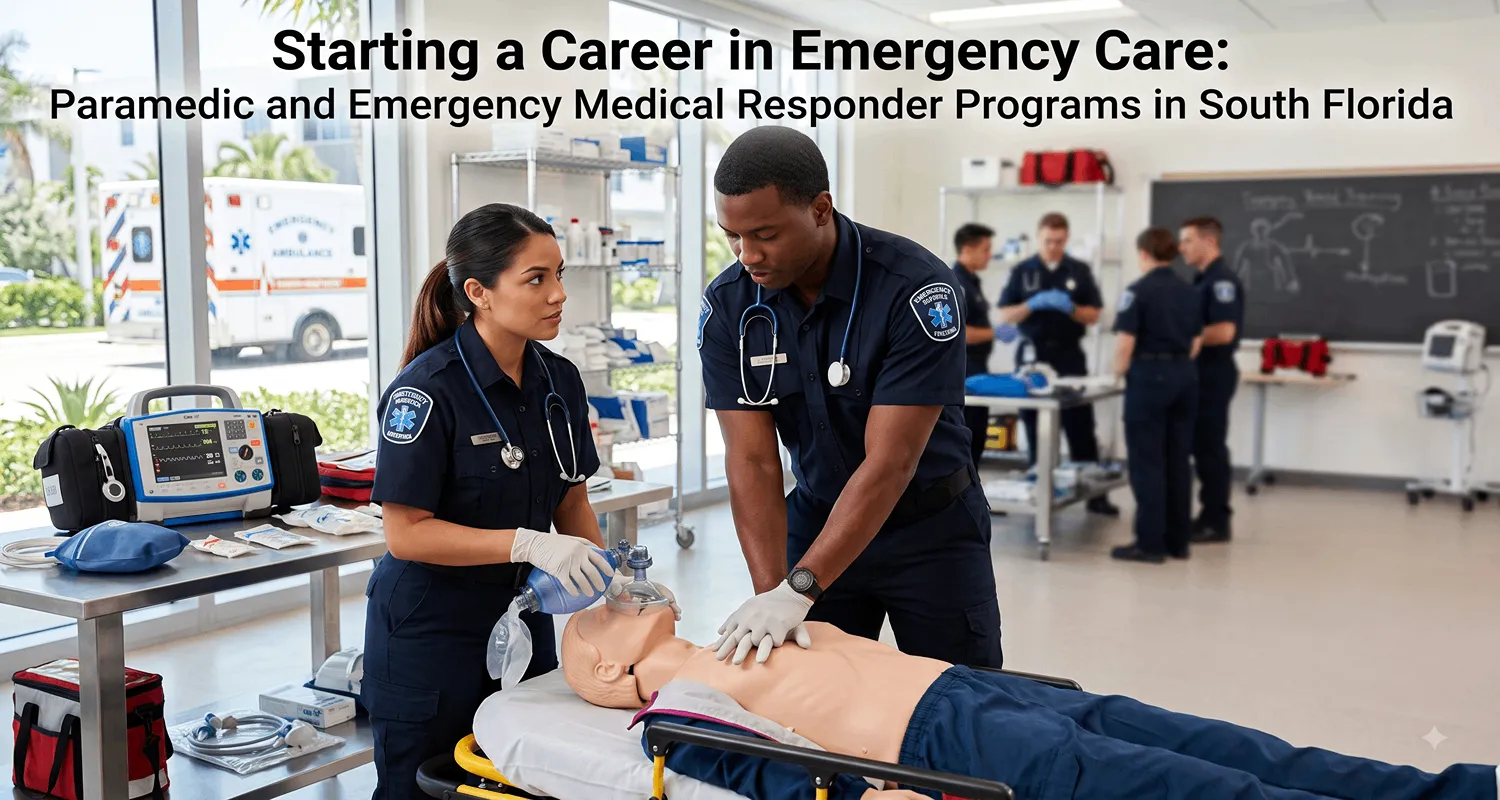
Quality varies, so compare carefully. When you browse different paramedic programs, focus on these points:
- Approval: Confirm the program is approved and meets the standards required for certification.
- Hands-on time: Look for generous lab practice with realistic equipment.
- Clinical placements: Ask how hospital and ambulance rotations are arranged.
- Support: Check for tutoring, exam preparation, and instructor access.
- Outcomes: Ask about completion and certification exam results.
Location matters too. Students who live in the region often prefer a paramedic training program near Florida because they can attend classes without relocating and maintain their local clinical contacts.
What Clinical Rotations Look Like
Clinical and field internship hours are where theory becomes practice. In the hospital, you may rotate through the emergency department, intensive care, and labour and delivery areas. On the ambulance, you work alongside an experienced preceptor who guides you through real calls. Treat every shift as an interview, because your preceptors and supervisors often become your best references later.
Balancing Study with Real Life
Paramedic courses demand time. Plan around lectures, labs, clinical shifts, and study hours. If you work, speak with your employer about flexibility. Set up a weekly routine, protect your sleep, and find a study group you trust. Students who manage their time early usually find the later stages calmer.
The Skills That Matter Beyond the Textbook
Technical knowledge is only part of the job. The best paramedics also show:
- Composure: staying steady when everyone else is stressed
- Communication: explaining care clearly to patients and colleagues
- Teamwork: working smoothly with fire crews, police, and hospital staff
- Resilience: coping with difficult calls and long shifts
You can build these qualities during training by volunteering for scenario leadership roles and seeking honest feedback.
Career Opportunities
Paramedics work with ambulance services, fire departments, hospitals, industrial sites, event medical teams, and flight or critical care transport teams. With experience, some move into supervision, education, or administration, while others continue to higher qualifications in healthcare.
Is It the Right Choice for You?
Ask yourself a few honest questions. Do you enjoy science and problem solving? Can you stay calm in crisis? Are you ready for a demanding schedule and a serious study load? If your answers lean toward yes, this career could be a strong match.
Final Thoughts
Becoming a paramedic is a significant commitment, but it opens the door to a purposeful career at the center of emergency care. Research your options, speak with working paramedics if you can, and choose a school that supports you from the first lecture through certification.
FAQs
1. Do I need to be an EMT before becoming a paramedic?
In most cases, yes. EMT certification is a common prerequisite for entering paramedic training.
2. How long does paramedic training take?
It is considerably longer than EMT training. The exact length depends on the program, so confirm it with each school.
3. What is the main difference between an EMT and a paramedic?
Paramedics perform advanced procedures such as IV therapy, medication administration, and cardiac monitoring.
4. Can I work while studying?
Some students do, but the schedule is demanding. Plan carefully and talk to your instructors early.






















Sign in to leave a comment.