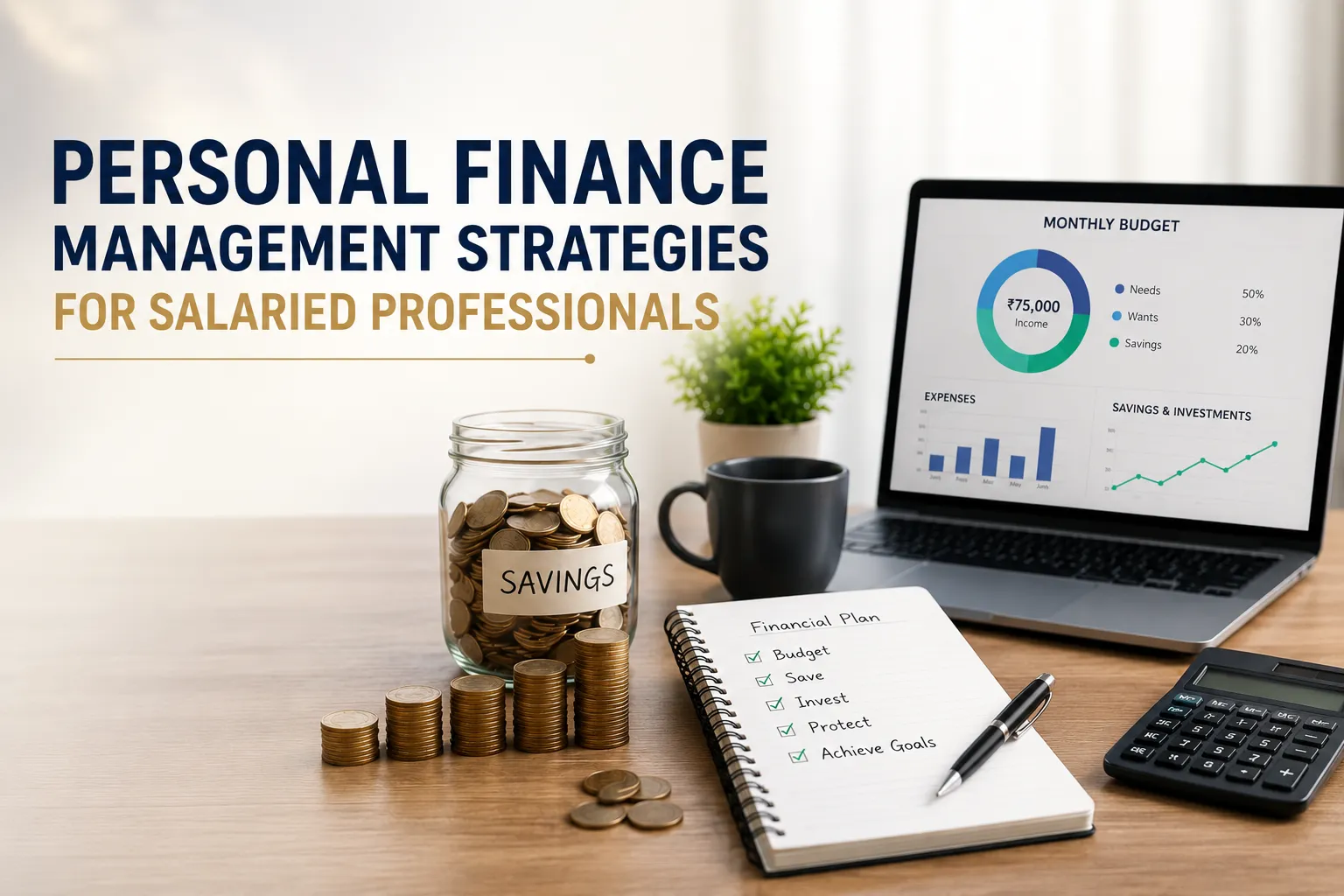

For most salaried professionals, earning a stable income feels like financial security. Yet many people find themselves wondering where their money goes at the end of every month. Between household expenses, EMIs, lifestyle spending, and future responsibilities, managing finances can become challenging without a proper plan.
This is where effective Personal Finance Management becomes important. Good financial management is not about earning more money; it is about making smarter decisions with the money you already earn. A well-planned financial strategy can help salaried professionals achieve long-term goals, handle emergencies, and build financial confidence without constantly worrying about money.
Financial Success Starts with Understanding Your Cash Flow
Many people focus only on income while ignoring spending habits. However, successful Personal Finance Management begins with understanding exactly how money enters and leaves your account each month.
A simple review of monthly expenses often reveals unnecessary spending on subscriptions, impulse purchases, dining, or entertainment. Identifying these patterns helps create a realistic financial plan.
The goal is not to stop enjoying life. Instead, it is about ensuring that spending aligns with your long-term priorities.
Create a Budget That Works for Real Life
One common mistake professionals make is creating budgets that are too strict. These plans usually fail because they are difficult to follow.
A practical budget should cover:
- Essential expenses
- Savings goals
- Emergency funds
- Lifestyle spending
- Investment contributions
The best financial plans are flexible enough to accommodate real-life situations while still supporting long-term financial growth.
Many professionals seek guidance from a Personal Finance Advisor to build a budgeting strategy that matches their income, responsibilities, and future goals.
Build an Emergency Fund Before Chasing Investments
One of the most important yet overlooked aspects of Personal Finance Management is creating an emergency fund.
Unexpected situations can arise at any time:
- Medical emergencies
- Job loss
- Family responsibilities
- Urgent repairs
- Economic uncertainty
Without an emergency fund, people often rely on loans or credit cards, which can create additional financial pressure.
A strong emergency reserve provides peace of mind and acts as a safety net during difficult periods.
Avoid Lifestyle Inflation
As salaries increase, many professionals automatically increase their spending. Larger homes, luxury gadgets, expensive vacations, and higher monthly expenses can quickly consume additional income.
This habit is known as lifestyle inflation.
Instead of spending every salary increment, consider allocating a portion toward:
- Investments
- Retirement planning
- Emergency savings
- Wealth creation
This simple approach can significantly improve long-term financial outcomes.
Set Clear Financial Goals
Financial planning becomes easier when goals are clearly defined.
Examples include:
- Buying a home
- Funding children's education
- Building retirement wealth
- Creating passive income
- Achieving financial independence
Without goals, saving money often feels meaningless. Clear objectives provide direction and motivation.
Professional Financial Solutions Services often focus on aligning investments and savings strategies with specific life goals rather than generic financial advice.
Invest Consistently Instead of Timing the Market
Many salaried professionals delay investing because they are waiting for the "perfect" time.
In reality, consistency matters more than timing.
Small investments made regularly can grow significantly through the power of compounding. Whether through mutual funds, retirement accounts, or diversified portfolios, disciplined investing often delivers better results than constantly trying to predict market movements.
This is where Financial Management Solutions can help investors build structured investment habits that support long-term wealth creation.
Diversification Reduces Financial Risk
Putting all your money into a single investment option can increase financial risk.
A balanced portfolio may include:
- Equity investments
- Fixed-income instruments
- Retirement funds
- Emergency savings
- Alternative assets
Diversification helps protect wealth during market fluctuations and supports more stable long-term growth.
Many investors work with a Portfolio Management Company to create diversified investment strategies that match their risk tolerance and financial objectives.
Insurance Is a Financial Necessity
Many salaried professionals invest aggressively but overlook insurance planning.
Health insurance and life insurance are not investment products; they are financial protection tools.
Without adequate coverage, a single unexpected event can disrupt years of savings and investment efforts.
A comprehensive financial plan should always include protection alongside wealth creation.
This is one area where experienced Financial Solutions Advisor professionals often emphasize risk management before investment expansion.
Technology Makes Financial Management Easier
Today, managing finances is easier than ever. Mobile applications, budgeting tools, expense trackers, and investment platforms allow professionals to monitor their finances in real time.
Technology helps individuals:
- Track spending habits
- Monitor investments
- Set savings goals
- Automate contributions
- Improve financial discipline
These tools make Personal Finance Management more accessible and practical for busy professionals.
Seek Professional Guidance When Needed
Financial decisions become more complex as income and responsibilities grow.
Many professionals face challenges involving:
- Tax planning
- Investment allocation
- Retirement strategies
- Wealth preservation
- Goal-based planning
In such situations, working with a trusted Financial Service Provider can help simplify decision-making and improve long-term financial outcomes.
Experienced advisors often provide customized Financial Problems Solutions based on an individual's unique financial situation rather than offering one-size-fits-all recommendations.
The Value of a 360-Degree Financial Approach
Successful financial planning requires more than investment advice. It involves budgeting, risk management, wealth creation, tax planning, retirement preparation, and goal setting.
A 360 Financial Advisor approach focuses on every aspect of a person's financial life rather than addressing only individual concerns.
This comprehensive strategy helps create stronger financial foundations and better long-term stability.
How Capital Edge Supports Better Financial Planning
Professional guidance can make a significant difference in achieving financial goals. Capital Edge offers structured financial planning support designed to help individuals make informed financial decisions. Through personalized strategies and expert insights, the company helps clients build stronger financial foundations for the future.
Final Thoughts
Good Personal Finance Management is not about restricting your lifestyle or constantly worrying about money. It is about creating a system that allows you to enjoy the present while preparing for the future.
By building an emergency fund, controlling unnecessary expenses, investing consistently, diversifying assets, and seeking the right guidance when needed, salaried professionals can create long-term financial security and confidence.
As financial responsibilities continue to grow, partnering with experts such as Capital Edge can help individuals develop practical strategies that align with their personal and professional goals. Financial success is rarely achieved overnight, but with discipline and proper planning, it becomes much more attainable.























Sign in to leave a comment.