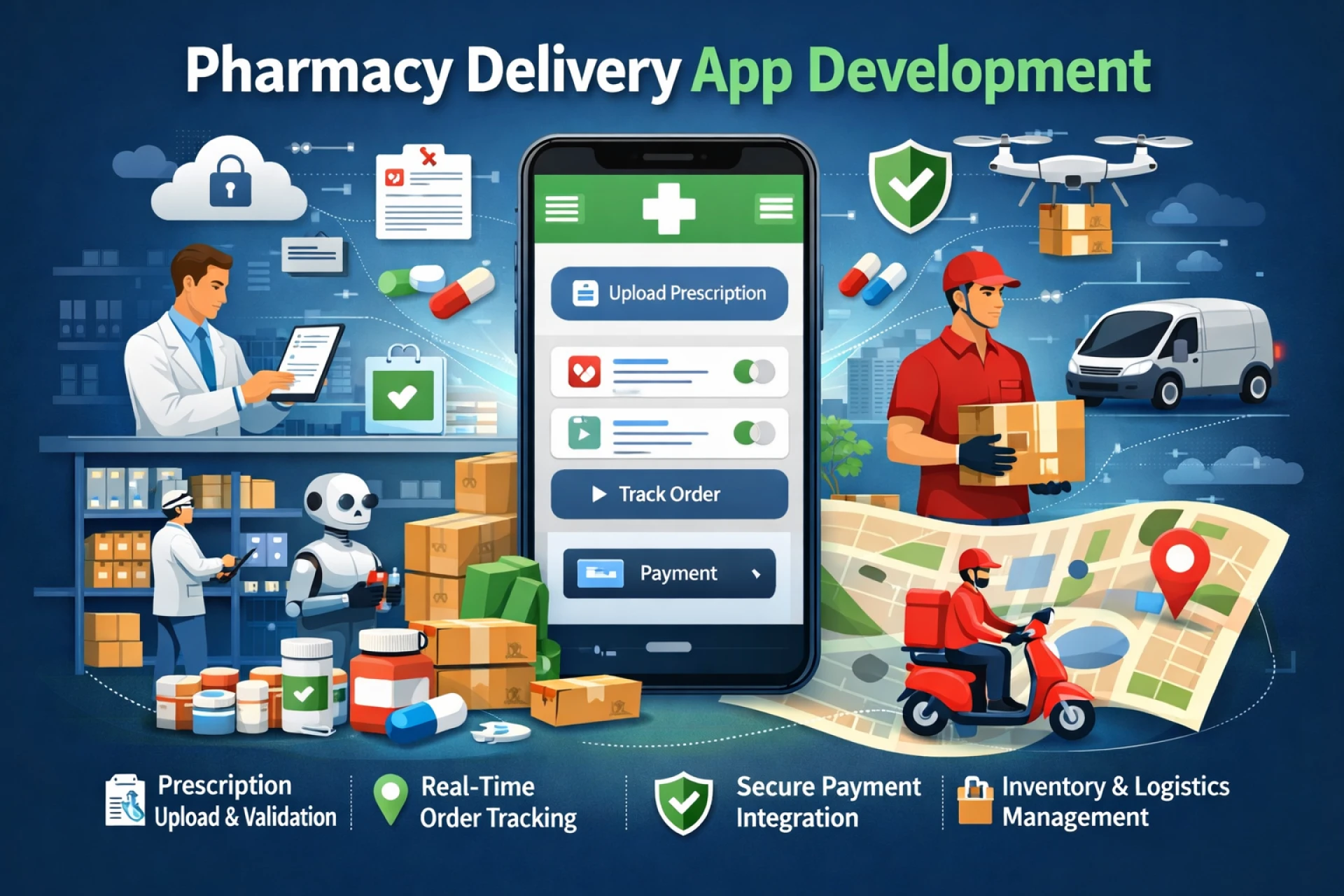

The healthcare industry is steadily adopting digital infrastructure to streamline prescription fulfillment and last-mile medicine distribution. Mobile platforms now enable pharmacies, logistics providers, and patients to coordinate more efficiently while maintaining regulatory compliance. A well-designed Pharmacy Delivery App Development strategy supports secure prescription validation, automated inventory monitoring, and timely delivery scheduling. As healthcare systems modernize, pharmacy logistics applications are becoming essential tools for improving medication accessibility, operational transparency, and patient adherence across both urban and rural healthcare ecosystems.
Digital Transformation in Prescription Fulfillment Systems Today
Healthcare providers and pharmacies increasingly rely on digital systems to manage prescription workflows. Traditional paper prescriptions often lead to delays, transcription errors, and inefficient coordination between pharmacists and delivery personnel. Digital prescription fulfillment platforms address these challenges by centralizing patient records, prescription validation, and order tracking.
Mobile pharmacy platforms enable real-time communication between doctors, pharmacists, and patients. This ensures prescriptions are verified quickly and medicines are dispensed accurately. Digital transformation also improves traceability across the medication supply chain, allowing pharmacies to monitor stock movement and expiration cycles.
Cloud-based systems further enhance accessibility by allowing pharmacists to securely retrieve prescription data from multiple locations. Automated alerts help prevent medication shortages and notify delivery teams about urgent orders. These capabilities improve reliability in medicine distribution while reducing manual administrative work.
The shift toward digitized prescription ecosystems is particularly important in regions with growing telemedicine adoption, where electronic prescriptions must seamlessly connect to pharmacy logistics networks.
Core Features Required for Modern Pharmacy Delivery Platforms
Modern pharmacy delivery applications must balance usability, compliance, and operational efficiency. Several functional modules are considered essential when designing such systems.
Key features typically include:
- Digital prescription upload and verification
- Medicine catalog management with dosage details
- Real-time inventory synchronization
- Order scheduling and delivery tracking
- Secure patient profile management
- Notification and reminder systems
- Pharmacist approval workflows
- Multi-payment support
These components collectively support safe medication dispensing while improving customer convenience. Prescription image recognition tools and barcode scanning features also help pharmacists validate medicines before dispatch.
A robust notification system ensures patients receive updates about prescription approval, packaging, and delivery status. This transparency builds trust and reduces confusion during urgent medication requests.
When planning prescription delivery app development, developers must prioritize both clinical accuracy and logistical efficiency to ensure reliable pharmacy operations.
Technology Architecture Behind Medicine Logistics Solutions Today
A scalable pharmacy logistics platform relies on modular architecture integrating mobile applications, backend services, and pharmacy databases. Application programming interfaces enable communication between prescription management systems, inventory software, and delivery tracking tools.
Microservices architecture is commonly used to support independent modules such as prescription validation, delivery routing, and payment processing. This structure improves system reliability and simplifies updates without interrupting pharmacy operations.
Artificial intelligence tools can assist with demand forecasting and medicine recommendations, while route optimization algorithms help delivery personnel minimize travel time. Secure cloud infrastructure ensures data availability and system scalability during peak demand.
Cost planning is another important consideration. The medicine delivery app development cost typically depends on system complexity, compliance requirements, integration needs, and deployment infrastructure. Advanced analytics and automation features can increase initial investment but improve long-term operational efficiency.
Organizations implementing Pharmacy Delivery App Development often adopt interoperable healthcare standards to ensure compatibility with hospital information systems and electronic health records.
Regulatory Compliance and Data Security in ePharmacy Apps Systems
Digital pharmacy platforms must comply with healthcare regulations governing prescription handling, patient privacy, and medication distribution. These regulations ensure medicines are dispensed safely and only with valid authorization.
Security frameworks typically include encrypted prescription storage, secure authentication protocols, and controlled pharmacist access. Audit logs are used to track prescription approvals and delivery confirmations.
Important compliance considerations include:
- Patient data privacy protection
- Licensed pharmacist verification workflows
- Prescription authenticity validation
- Controlled drug dispensing restrictions
- Secure payment processing standards
Pharmacy applications must also implement strong identity verification mechanisms for both patients and pharmacists. Multi-factor authentication helps prevent unauthorized access to prescription data.
Regular security audits and compliance checks ensure the system continues to meet healthcare data protection requirements. These safeguards protect patient trust while maintaining accountability across the pharmacy supply chain.
User Experience Design for Seamless Prescription Ordering Process
User experience design plays a crucial role in ensuring patients can easily order medicines without confusion. Pharmacy applications must be accessible to users of varying technical proficiency, including elderly patients managing chronic conditions.
Clear navigation, readable typography, and simplified prescription upload workflows improve usability. Step-by-step ordering interfaces help users verify medicines, dosage instructions, and delivery addresses before confirming purchases.
Accessibility features such as voice assistance, language selection, and medication reminders enhance patient engagement. Visual confirmation of prescription approval reduces uncertainty during urgent medical situations.
Design consistency across mobile and web interfaces ensures users can switch devices without losing progress. Performance optimization is equally important, as slow applications may discourage patients from completing medicine orders.
A patient-centric design approach improves medication adherence and reduces the likelihood of ordering errors.
Integration of Payment Gateways and Inventory Tracking Systems
Payment and inventory integration ensures pharmacy delivery platforms operate smoothly from order placement to dispatch. Secure payment gateways support digital wallets, cards, and insurance-linked transactions while maintaining transaction integrity.
Inventory tracking systems automatically update stock levels when orders are confirmed. This prevents overselling and helps pharmacists manage medicine availability more efficiently. Automated alerts notify staff when stock levels fall below defined thresholds.
Batch tracking and expiration monitoring are critical for maintaining medication safety. Integration with supplier databases allows pharmacies to reorder medicines proactively.
Data synchronization between payment confirmation and inventory deduction ensures accurate accounting records. These integrations reduce manual reconciliation efforts and improve transparency in pharmacy operations.
Reliable system integration enables pharmacies to handle high prescription volumes without compromising accuracy or delivery timelines.
Operational Workflow for Pharmacies and Delivery Networks Management
Pharmacy delivery systems coordinate multiple stakeholders, including pharmacists, warehouse staff, and delivery personnel. A structured workflow ensures prescriptions move through verification, packaging, and delivery stages efficiently.
A typical operational sequence includes:
- Prescription submission by patient
- Pharmacist verification and approval
- Inventory allocation
- Packaging and labeling
- Delivery assignment
- Route optimization and dispatch
- Delivery confirmation and record update
Automation tools help pharmacies prioritize urgent prescriptions and manage workload distribution. Delivery tracking systems provide real-time status updates to patients and pharmacy administrators.
By implementing Pharmacy Delivery App Development, organizations can reduce dispensing errors and improve coordination between pharmacy counters and logistics teams. Efficient workflows also minimize delivery delays and improve patient satisfaction.
Analytics dashboards allow pharmacies to monitor delivery performance, prescription turnaround time, and operational efficiency.
Future Trends in Digital Healthcare Logistics Ecosystems Globally
Healthcare logistics platforms continue to evolve with advancements in artificial intelligence, automation, and connected medical systems. Predictive analytics may soon help pharmacies anticipate prescription demand based on seasonal illness patterns.
Drone delivery trials and autonomous delivery vehicles are being explored for remote medicine distribution. Blockchain technology is also gaining attention for secure prescription verification and supply chain transparency.
Telemedicine integration will further strengthen connections between healthcare providers and pharmacies. Smart medication packaging with tracking sensors may improve adherence monitoring in the future.
As healthcare digitization accelerates, Pharmacy Delivery App Development will likely focus on interoperability, automation, and patient-centric service models. Emerging technologies will continue to reshape how medicines are prescribed, verified, and delivered across healthcare networks.
Conclusion
The evolution of digital pharmacy platforms reflects broader changes in healthcare delivery systems. Integrated prescription management, secure data handling, and efficient logistics coordination are becoming fundamental components of modern medication distribution. As technology continues to advance, pharmacy applications will play an increasingly important role in ensuring patients receive accurate medications on time. Careful planning, compliance awareness, and thoughtful system design will determine how effectively these platforms support pharmacies, healthcare providers, and patients in the years ahead.




























Sign in to leave a comment.