
The Philippines remains a top-tier destination for Japanese travelers, whether for the pristine beaches of Palawan or the corporate skyscrapers of Manila. With the official rollout of the Philippine e-Visa system, the journey from Tokyo or Osaka to the tropical islands has become significantly more streamlined. If you are planning a trip, this guide covers everything you need to know about the digital Philippines eVisa application process for Japanese Citizens.
Do Japanese Citizens Need a Visa for the Philippines?
Technically, Japanese passport holders can enter the Philippines visa-free for up to 30 days for tourism. However, if your trip is for business, or if you wish to stay longer than a month without visiting a local immigration office later, applying for an eVisa before you depart is the safest and most efficient choice. It ensures your legal stay is authorized for the full duration of your plans from the moment you land.
What are the Different Philippines eVisa Types Available?
Depending on your travel needs, you can apply for several variations of the Temporary Visitors Visa (9a):
- Single Entry (30 Days): Valid for entry within 90 days.
- Multiple Entry (30 Days): Available with a validity of 180 days.
- Annual Multiple Entry: Valid for 1 year, allowing stays of up to 30 days per visit—ideal for frequent business travelers.
How Long Does the Philippines eVisa Take to Process?
Processing times vary based on urgency. At visa-philippines.info, we offer three distinct speeds to accommodate your timeline:
- Standard Processing: 26–32 Working Days.
- Rush Processing: 20–26 Working Days.
- Super Rush Processing: 14–20 Working Days.
What Documents are Required for a Philippines eVisa from Japan?
Preparation is key to a successful application. Ensure you have clear digital copies of the following documents required for for Philippines eVisa:
- Passport Bio Page: Must be valid for at least 6 months.
- Recent Digital Photo: Standard passport size with a white background.
- Proof of Immigration Status: (e.g., Permanent Residence Card if you are a non-Japanese national residing in Japan).
- Flight Itinerary: Confirmed return or onward flight reservations.
- Current Address: Proof of your residence in Japan.
- Financial Proof: Your bank statements for the latest 3 months.
Is a Daily Schedule or Hotel Information Mandatory?
Yes. The Philippine authorities require a detailed Travel Itinerary which includes your daily schedule and hotel information. This helps immigration officers verify the nature of your visit and your intended whereabouts during your stay.
How Do Minors Apply for a Philippines eVisa?
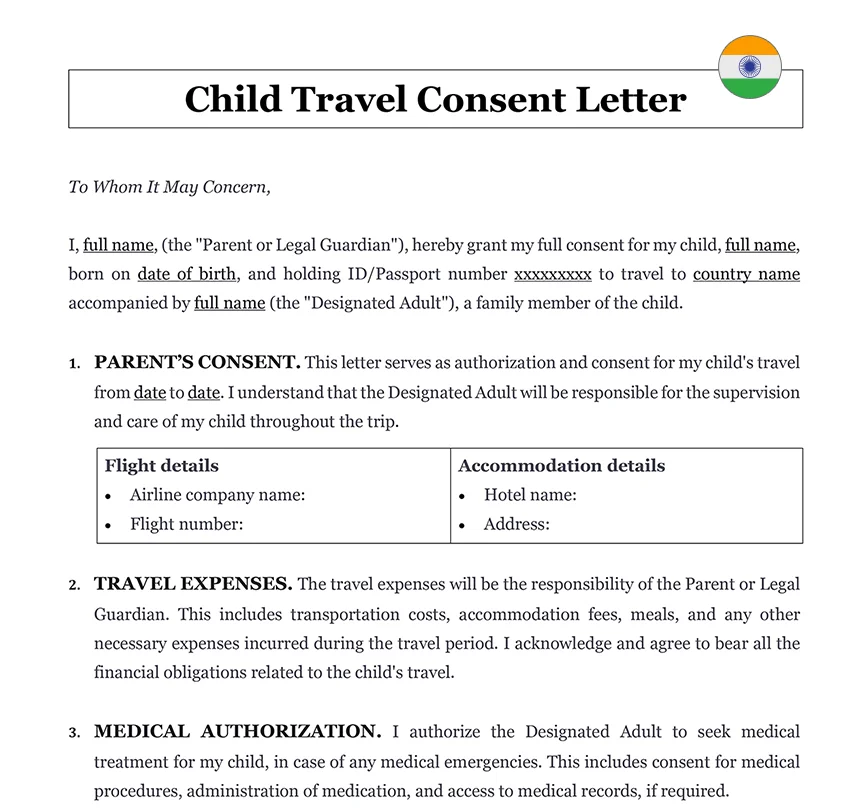
For travelers under 18 who are not accompanied by their legal guardian, a Parental Consent Form is mandatory. This document must be properly filled out and uploaded during the online application process to ensure the safety and legal compliance of the minor's travel.
Can the Agent Update My Application Status?
One of the primary benefits of using visa-philippines.info is the ability to receive real-time updates. Our team tracks your application through the government portal and provides you with status notifications. If any additional information is requested by immigration officers, we act as the bridge to ensure your application remains on track.
What are the Common Reasons for eVisa Rejection?
Understanding why visas are denied can help you avoid the same fate. Most rejections occur due to:
- Inconsistent Information: Discrepancies between your passport data and the application form.
- Insufficient Funds: A bank statement that doesn't show enough liquidity for the duration of the stay.
- Unclear Documents: Blurry scans of the passport bio page or photos that don't meet the white-background requirement.
- Previous Overstays: A history of immigration violations in the Philippines.
Is Travel Insurance Required for Entry?
While the Philippine government has relaxed some pandemic-era mandates, having comprehensive Travel Insurance is highly recommended. It should cover medical emergencies, COVID-19 related expenses, and trip cancellations. Presenting proof of insurance at the border can also facilitate a smoother entry process during random document checks.
What Should I Carry When Traveling to the Philippines?
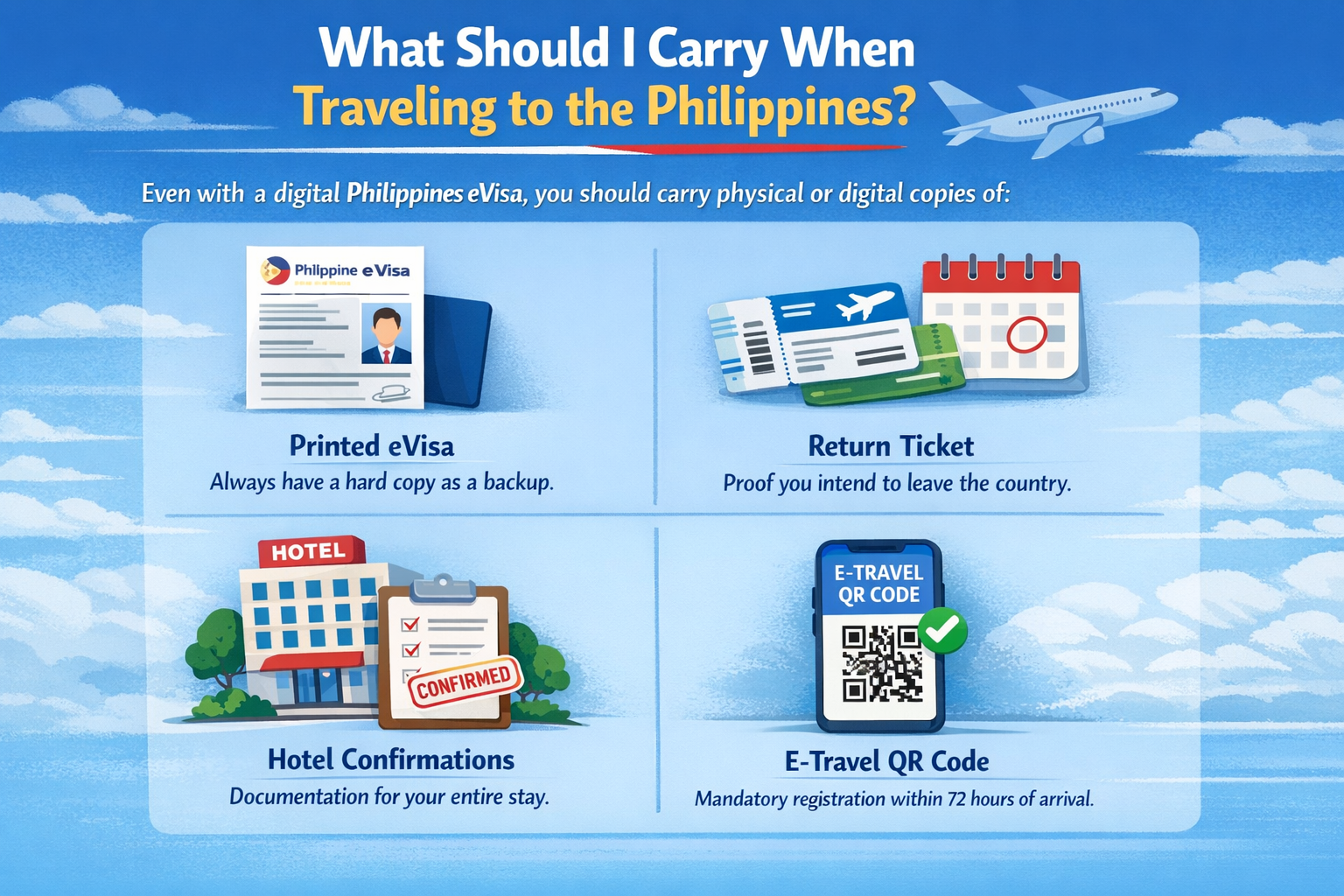
Even with a digital Philippines eVisa, you should carry physical or digital copies of:
- Printed eVisa: Always have a hard copy as a backup.
- Return Ticket: Proof that you intend to leave the country.
- Hotel Confirmations: Documentation for your entire stay.
- E-Travel QR Code: The mandatory registration completed within 72 hours of arrival.
What are the Current Entry Rules for Japanese Citizens?
Currently, travelers must be prepared to present their passport (valid for 6 months), their valid eVisa, and proof of onward travel. Additionally, you must complete the e-Travel registration online before boarding your flight. Failure to do so may result in boarding denial at the airport in Japan.
Can the Philippines eVisa Be Extended?
The eVisa (9a) is a temporary visitor's visa. If you wish to stay beyond the initial 30 days granted upon entry, you must apply for a Visa Extension at the nearest Bureau of Immigration (BI) office in the Philippines. Extensions are typically granted in increments of 1 or 2 months, provided you apply at least one week before your current stay expires.
Single vs. Multiple Entry: Which One Should I Choose?
If you plan to stay in the Philippines for one continuous vacation, a Single Entry visa is sufficient. However, if you plan to use Manila as a hub to visit other countries like Vietnam or Thailand and return to the Philippines, a Multiple Entry visa is essential. Choosing the Multiple Entry 1-year option is the most cost-effective for those visiting for business several times a year.
























Sign in to leave a comment.