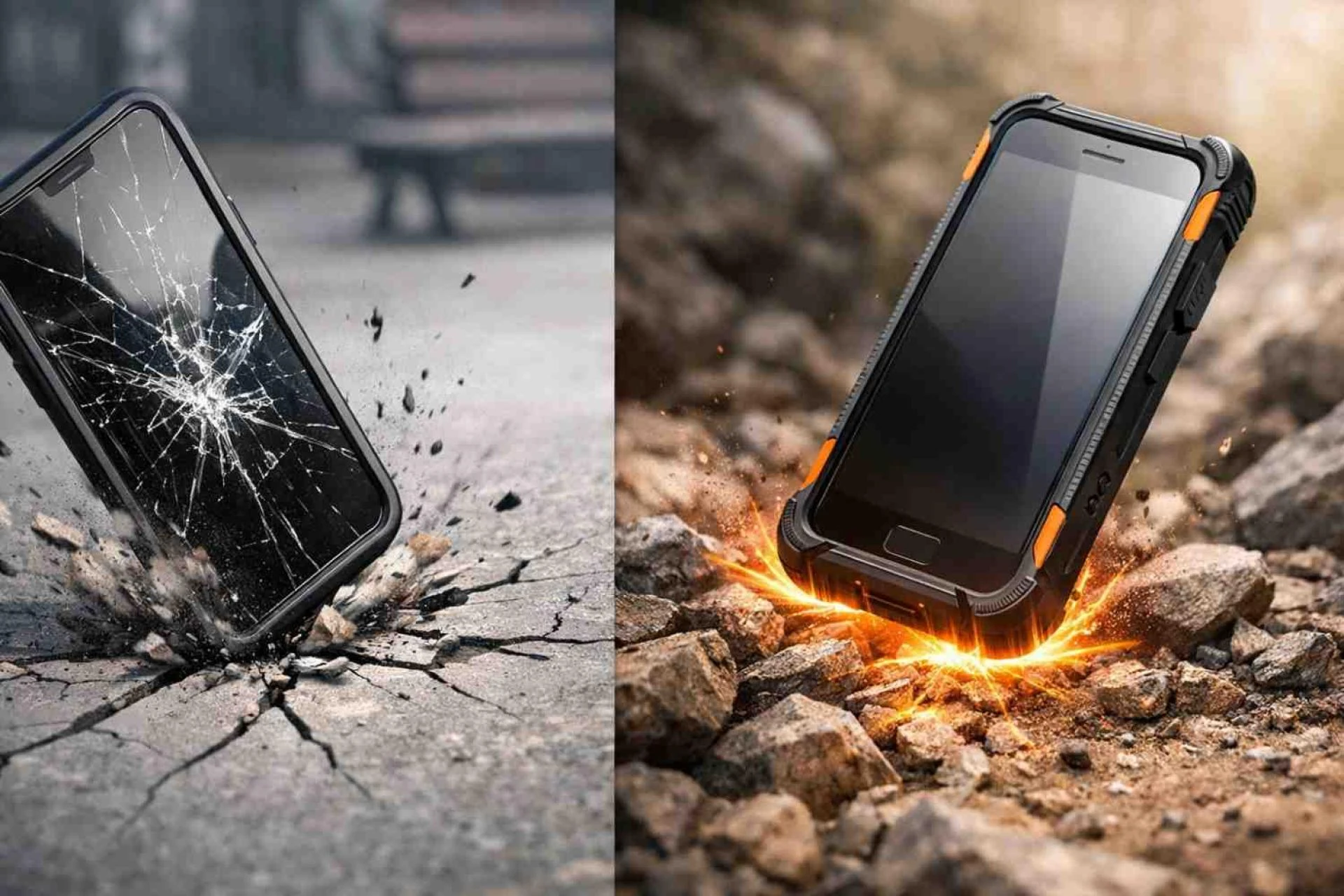

Phones don’t fail because people are irresponsible. They fail because everyday moments aren’t controlled. A device slips as you stand up, tips off a sofa arm, or slides forward during one-handed scrolling. These aren’t dramatic accidents, yet they account for most real-world phone damage.
The biggest mistake buyers make is assuming every drop behaves the same way. Height gets the most attention, but it rarely determines the outcome by itself. Angle, rotation, surface hardness, and how the phone leaves your hand matter far more. Shockproof covers exist because real drops are messy, uneven, and unpredictable—and protection needs to reflect that reality.
The Problem With Imagining a “Clean” Drop
Most people picture a phone falling straight down and landing flat. That scenario is uncommon.
In real life, phones spin, clip edges, or strike the ground mid-rotation. Instead of spreading force evenly, impact concentrates in small, vulnerable areas. Corners, edges, and camera bumps absorb stress first. This is why a phone can crack from a short fall yet survive a higher one—it’s not about distance alone.
Shockproof covers are designed for irregular impacts, not idealized ones.
Corners, Rotation, and Why Damage Escalates Quickly
Corners take the most abuse during drops, and rotation amplifies the damage.
When a phone strikes a corner, force compresses into a tiny contact point while the rest of the device continues moving. This creates torsion—twisting stress that travels through the frame, glass, and internal components. Even a drop from waist height can produce spiderweb cracks or loosen internal hardware if rotation isn’t controlled.
Shockproof covers interrupt this chain reaction. Reinforced corners absorb impact early. Flexible materials slow rotational energy. Instead of stress racing through the device, it dissipates inside the case. That’s why two phones dropped from the same height can experience completely different outcomes.
Surface Type Changes Everything
A phone dropped onto marble behaves nothing like one dropped onto wood. Concrete reflects energy. Tile sends shock straight back into the device. Even carpet can cause damage if the phone lands at the wrong angle.
Shockproof covers account for this unpredictability. Materials like TPU compress slightly on impact, extending the time it takes for force to stop. That small delay reduces peak stress—the main cause of cracked glass and internal fractures.
Rigid cases don’t provide this buffer. They transfer energy directly into the phone, which is why they often fail during short, awkward drops.
Most Drops Begin With Grip Failure
Gravity finishes the fall, but grip failure usually starts it.
Hands relax. Fingers shift. Smooth glass slides against skin. One-handed use increases risk, especially on larger phones. Many drops happen during routine actions—pulling a phone from a pocket, adjusting grip while scrolling, or standing up mid-use.
Shockproof covers reduce these moments by improving grip:
- Textured surfaces increase friction
- Flexible materials conform to fingers
- Slightly thicker edges provide better control
Fewer slips mean fewer drops. This preventive role matters as much as impact protection and explains why users browsing oppo F31 Pro Plus back covers often prioritize shockproof designs for everyday handling rather than extreme scenarios.
Thin Cases Solve the Wrong Problem
Slim cases aim to preserve the phone’s original feel. Shockproof covers intentionally change it.
That change is purposeful. Extra edge thickness gives fingers something to hold. Reinforced corners absorb stress where it concentrates. Textured backs prevent phones from sliding off desks and tables.
Thin cases aren’t poorly made—they’re designed around an oversimplified idea of how phones fall. Shockproof covers exist because drops don’t follow clean rules.
The Hidden Cost of “Survived” Drops
Not all damage is immediately visible.
A phone may look fine after a fall while internal stress builds. Camera stabilization systems loosen. Connectors weaken. Micro-fractures spread beneath the glass. Eventually, a minor drop causes major failure.
Shockproof covers reduce this cumulative damage. By softening repeated impacts and limiting rotational stress, they protect long-term reliability—not just visible surfaces.
One-Handed Use Changed the Risk Profile
Phones grew larger. Hands didn’t.
Modern screens demand thumb stretching that loosens grip. As your thumb reaches, your fingers compensate—and sometimes fail. That’s when phones tip forward or slide sideways.
Shockproof covers extend the usable grip zone. Added thickness allows fingers to wrap more securely around edges. Textured sides maintain friction even when grip pressure drops. This stability matters most during casual use, where attention is divided and movements aren’t deliberate.
Why Air Pockets and Layered Designs Exist
Some shockproof covers include air pockets or layered construction. These features aren’t cosmetic.
Air compresses under impact. Layers slow force transmission. Together, they reduce peak stress during sudden stops. Instead of force halting instantly, it fades gradually—protecting glass, frames, and internal components.
It’s the same principle used in automotive safety. Sudden stops cause damage. Controlled deceleration prevents it.
Real Drops Aren’t Lab Events
Lab tests are useful, but they can’t replicate everyday chaos. Real life adds uneven surfaces, partial impacts, secondary bounces, and unexpected angles.
Shockproof covers perform best in these imperfect conditions. They don’t assume ideal falls. They assume mistakes, distractions, and bad luck—and prepare for them.
That mindset is why they exist.
Balance, Weight, and Handling Confidence
Bare phones often feel top-heavy because of camera modules and internal layouts. Shockproof covers redistribute weight by adding structure around edges and corners.
Better balance reduces forward tipping and uncontrolled slips. The phone feels steadier in the hand, encouraging calmer movements. Calm handling reduces fumbles. Fewer fumbles mean fewer drops.
Small Drops Add Up Over Time
Phones rarely fail from one catastrophic fall. Damage accumulates.
Repeated minor drops weaken glass and strain internal components. Shockproof covers slow this process by reducing the severity of each impact. Over months and years, that difference keeps phones functional far longer than basic protection ever could.
Why Shockproof Covers Exist
They exist because phones don’t fall politely.
They tumble, twist, slide, and clip edges during ordinary moments. They break at corners, not centers. They fail from short drops more often than high ones.
Shockproof covers exist because someone studied how phones actually break—and designed protection for reality instead of assumptions. When protection matches real life, devices last longer.
That’s not marketing.
It’s physics applied thoughtfully.
Sign in to leave a comment.