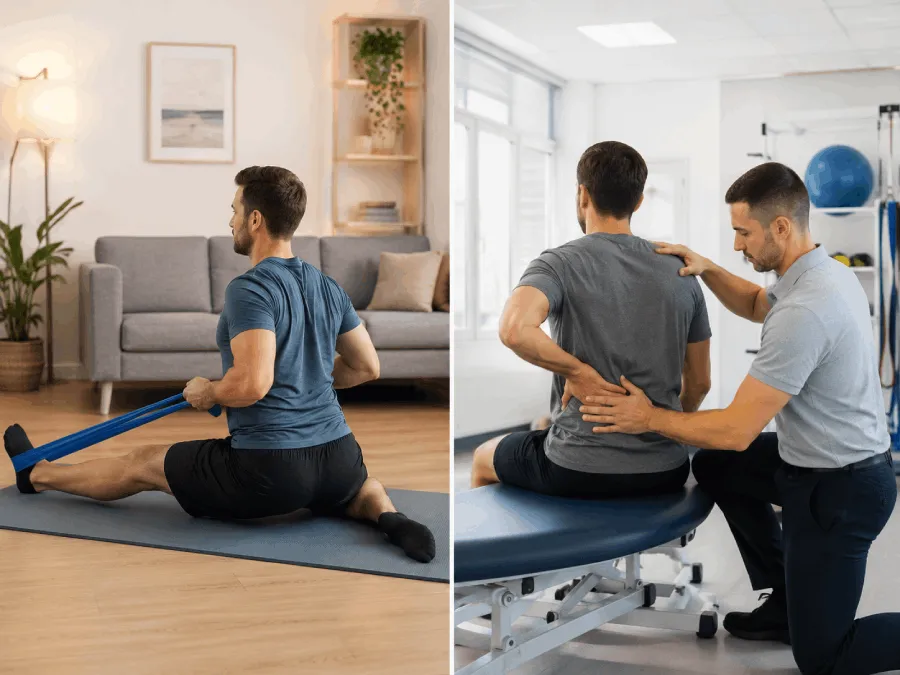

A demanding schedule doesn't pause for back pain. Between meetings, travel, and the general pace of a busy week, finding time to sit in a clinic waiting room can feel like its own kind of ordeal — one that often leads to postponed appointments and inconsistent treatment.
This article compares two approaches to recovery physiotherapy for back pain at home and traditional clinic visits looking at what each actually involves, so the decision can be made based on fit, not just convenience.
Why This Comparison Matters
Back pain rarely responds well to inconsistent treatment. Whether the cause is a long-standing posture issue, a strained muscle, or recovery following a procedure, physiotherapy tends to work best with regular, structured sessions over time.
The format of those sessions — clinic-based or home-based — can directly affect whether that consistency actually happens. For someone balancing a full calendar, the logistics of treatment are often just as important as the treatment itself.
What Clinic-Based Physiotherapy Offers
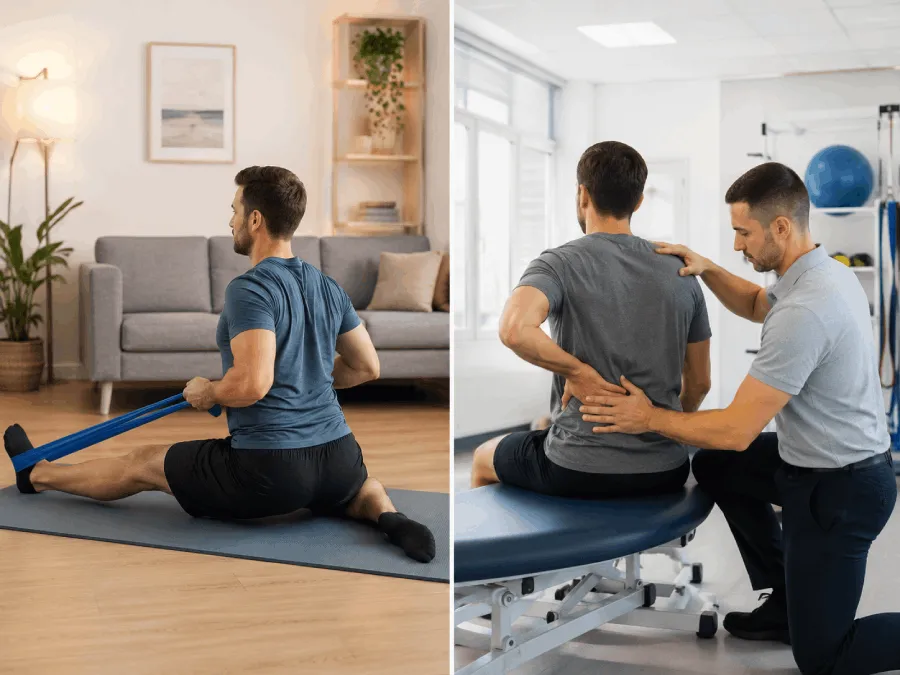
Clinic visits provide access to a fixed treatment space, often equipped with specialized machinery not typically available for home use — traction devices, certain electrotherapy equipment, or specialized exercise apparatus. For certain conditions, this equipment can be a meaningful part of treatment.
Clinics also offer a structured environment separate from daily life, which some patients find helpful for staying focused during a session. That said, this format requires factoring in travel time, parking, and waiting room delays into an already tight schedule — and missed or rescheduled appointments can slow progress considerably.
What Physiotherapy for Back Pain at Home Offers
Physiotherapy for back pain at home removes the logistical barriers that often lead to inconsistent treatment. Sessions are scheduled around the patient's calendar, and the therapist works within the patient's actual living environment — observing posture at a home desk, movement patterns on stairs, or how a mattress and chair may be contributing to strain.
This context often reveals things a clinic session wouldn't capture. A therapist treating someone with home-office-related back pain, for example, can assess the actual desk setup and offer specific, practical adjustments — something that's harder to replicate in a generic clinic consultation.
A Practical Example
Consider a professional who splits time between long video calls and frequent travel, with back pain aggravated by hours of sitting. Clinic visits would mean carving out time between commitments for travel and waiting room delays — often the first thing to get deprioritized during a demanding week. A home-based session, by contrast, fits directly into the existing schedule, with the therapist adapting treatment to the same environment where the pain is triggered day to day.
Comparing the Two: What Actually Differs
The core treatment techniques — manual therapy, targeted exercises, posture correction — are often similar in both settings. The differences tend to come down to logistics, environment, and consistency:
- Time and travel — Home sessions eliminate commute and waiting room time entirely.
- Environmental context — Home-based therapists can assess and adjust the actual spaces contributing to the pain.
- Equipment access — Clinics offer specialized machinery that isn't practical to bring into a home setting.
- Consistency — Reduced friction with home sessions often supports more regular attendance, which matters for steady progress.
Neither format is inherently better for every case — the right fit depends on the specific condition, whether specialized equipment is needed, and how much flexibility the patient's schedule allows for.
What About Cost?
Physiotherapy at home cost and physiotherapy at home price can vary based on session frequency, treatment complexity, and location — for example, physiotherapy at home in Delhi may be priced differently depending on the provider and the specifics of the treatment plan. It's worth discussing pricing directly with a provider before starting a treatment plan, since costs are rarely one-size-fits-all.
Beyond Back Pain: When Home-Based Care Extends Further
The same home-based model applies well beyond general back pain. For patients searching "physiotherapist home service near me" or "physio at home near me," many providers extend this approach to more specialized needs — including neuro physiotherapy at home for patients recovering from neurological conditions, where a familiar, stable environment and a consistent neuro physiotherapist near me can meaningfully support the recovery process.
Making the Right Choice
For patients with a demanding schedule, the decision often comes down to a simple question: which format will actually get done consistently? A treatment plan that looks ideal on paper but gets missed or rescheduled repeatedly is less effective than a slightly different plan that's followed through.
Physiotherapy for back pain at home is built to remove the barriers that most often derail consistent treatment — offering the same clinical expertise without the added time cost of travel and waiting.
For those exploring this option, APRC Home Care offers physiotherapy for back pain at home, along with related services such as neuro physiotherapy at home, tailored to fit around real schedules. Learn more or book a consultation at https://aprchomecare.com/.




























Sign in to leave a comment.