Pineal Gland Calcification: What Research Says, What It Doesn’t, and What to Ask Your Doctor


It is frequently stated that a high proportion of people show some degree of calcification of the pineal gland on imaging, and that this may be responsible for a range of symptoms including difficulty sleeping and 'foggy' thinking. It may be suggested that this can be corrected by diet changes, or by taking supplements and other means of 'detox'.
However, there is relatively little information available on the significance of pineal calcification. Its presence on imaging will not necessarily indicate any abnormality of pineal gland function, nor will it be sufficient to account for any symptoms a person may be experiencing.
Some information is available, however, and there are areas requiring further study. This information may help you formulate appropriate questions to ask the clinician advising you about the imaging result.

What is the pineal gland?
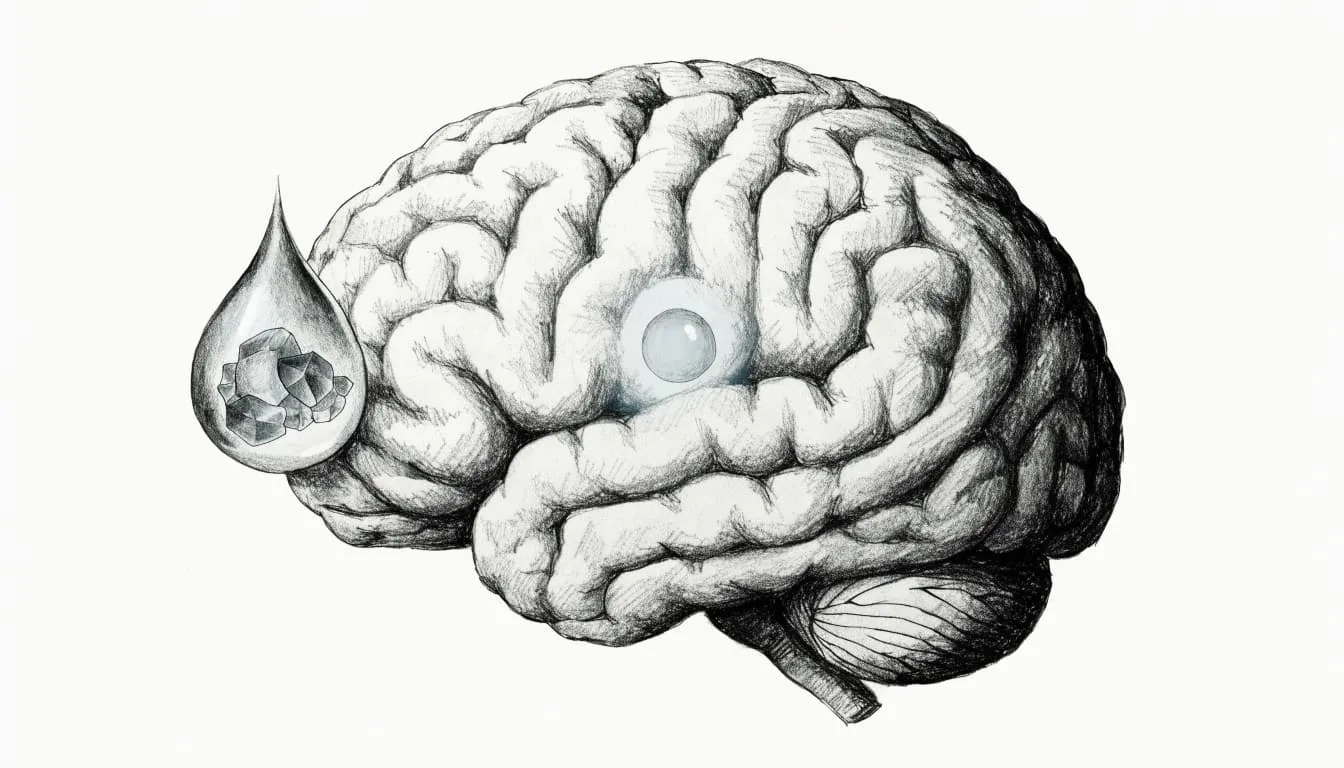
It lies approximately in the middle of the brain, and produces the hormone melatonin. This plays an important role in determining the sleep-wake cycle. As expected, therefore, production of melatonin varies with the day-night light cycle.
A number of other influences will also play a role in determining whether a person sleeps well or not, such as amounts of light received at various times of day and night, regularity of other activities, disease, drug intake and circadian rhythms.
It follows that the presence of calcification on a radiological image tells you nothing about melatonin secretion or, necessarily, that there is dysfunction of the pineal gland.
For more background, see how the pineal gland produces melatonin and supports the sleep-wake cycle.
What is calcification?
Many tissues may become calcified. Deposition of calcium in the pineal gland is sometimes referred to as "corpora arenacea" ("sand bodies").
It was found in about 62% of subjects in a 2023 systematic review and meta-analysis. There was considerable variation between studies as to subjects' ages, type of imaging, and criteria used to determine and measure calcification, so this figure should only be taken as a rough guide.
It appears to increase with increasing age and so will commonly be picked up incidentally.
Example
For example: following minor head trauma, imaging shows calcification of the pineal gland with no mass or other abnormality. This may well be of no significance, which the clinician requesting the scan will be able to advise on, taking into account the patient's particular presentation.
Is it responsible for any symptoms?
A number of papers have investigated a relationship with melatonin levels, sleep disturbance, age and various pathologies, and some positive associations have been reported. This of course is not sufficient to conclude that it will be responsible for, for example, insomnia, headaches, impaired memory, or any other specific pathology.
It may be associated with the relevant factor, or it may merely be coincidental; or some other factor may be responsible for both. Further, it is not known to what extent, if any, it may be significant clinically for an individual.
So a person presenting with insomnia may well be found to have a calcified pineal gland. Many other reasons could account for poor sleep in that individual, and the clinician would be advised to investigate these. It would not be appropriate simply to attribute this to the calcification seen.
Similarly, although various studies may investigate possible associations between pineal calcification and particular pathologies, its presence should not be considered diagnostic of any specific condition, nor necessarily be expected to result in any problem.
How will it appear on imaging?
Calcium will be readily apparent on CT. Various techniques available on MRI may demonstrate it to a greater or lesser degree. Obvious types of imaging will be chosen according to the clinical question.
Note that a simple comment about calcification of the pineal gland should be distinguished from the presence of a mass and other features such as dilatation, local effects, and so on. Any such additional description should be clarified with the clinician, and the significance determined, including whether further imaging is warranted.
For more help understanding scan terminology, see common terms in a pineal gland MRI report.
Example
For example: "calcification of the pineal gland" versus "mass in the region of the pineal gland," with advice of further imaging. It will be appreciated that these are very different descriptions, and it would be inappropriate to draw conclusions from one phrase only. The patient will need to discuss this in detail with their own clinician.
Is decalcification possible?
No treatment has been established as effective to decalcify a normally calcified pineal gland. There are various products and regimens which claim to achieve this, for example, by dietary modification and elimination, and "detoxification." There is no adequate evidence to support their efficacy.
There are doubtless many general measures, such as regular hours, avoiding light at night, and ensuring a comfortable temperature, that will be helpful for many people to promote good sleep. However, these would not be expected to affect calcification.
So one would be wary of accepting claims of benefits from any agent to "detox" or otherwise clear the pineal gland, alleviate symptoms, or otherwise improve the state of health. It would be prudent to seek medical advice before ingesting any agent and before ceasing or altering any prescribed therapy.

Questions to ask the clinician
There are a variety of views available, particularly on the internet, as to the significance of this finding, many of them alarming. You may wish to raise any of the following points with your clinician:
"The report refers to calcification of the pineal gland. Do you consider this likely to be an incidental finding?"
"Are there other features described around the pineal gland that warrant comment or further investigation?"
"Are there other causes of my signs and symptoms that should be investigated?"
"Would you recommend any further imaging?"
And any other terms or descriptions used, which you may wish explained further. If you are concerned, you may wish to say:
"I have obtained various views from other sources, such as the Internet. I am understandably concerned, and would be grateful if you could tell me what can and cannot be inferred from this investigation."
Such queries could easily be modified to suit your needs.
Further Medical Assessment
Any such finding on imaging should be discussed with the clinician who requested the investigation, and in particular if there is a recommendation for further imaging, or comment regarding a mass or dilatation.
Appropriate assessment would also be warranted if there are other current symptoms, of significant duration, persistence, or progression. For example, severe headaches, vomiting, visual disturbance, gait disturbance, or excessive somnolence. All of these could be due to other causes, and should be investigated as indicated, without assuming a relationship with pineal calcification.
Appropriate urgent assessment would, of course, be required if there are severe and sudden symptoms. Again, it would be important to establish what may be causing the relevant features.
Summary
Calcification of the pineal gland will be seen in a large number of people undergoing various imaging. Its relationship to melatonin levels and other parameters continues to be investigated. There is no clear evidence to suggest that calcification per se would give rise to any specific features or pathology.
Accordingly, this should be viewed simply as one aspect of an investigation. Further advice should be obtained from the responsible clinician regarding its significance relative to other features on imaging and the person's presentation. Various claims regarding methods of "decalcification" should be viewed with considerable caution. Symptoms should be appropriately assessed and treated, as indicated.
All information given here is general only. Your clinician will be able to advise you as to what may apply in your own case.







Sign in to leave a comment.